
DNSは、WannaCryランサムウェア攻撃の阻止に貢献しました
2017年、世界はランサムウェア攻撃に直面し、DNSの可視性と制御がいかに多層的なセキュリティ戦略の鍵となるかが明らかになりました。



 主なポイント要点はAIの支援により生成されています。自動生成された要約には、時折誤りがあったり、重要な文脈が抜け落ちたりする場合があるため、完全な情報を得るには、必ずブログ記事の全文をご参照ください。
The 2017 WannaCry ransomware attack affected over 150 countries and was stopped inadvertently by a security researcher who registered an unregistered domain and created a DNS sinkhole, which triggered the malware's sandbox detection mechanism and halted its spread. DNS played a critical role in both the attack's propagation and its eventual containment, demonstrating how visibility and control over DNS infrastructure are essential components of a multi-layered security strategy. Organizations can leverage DNS-based security solutions and adaptive DNS infrastructure to prevent malware downloads, identify patient zero, and respond to incidents more effectively by centralizing DNS management and utilizing DNS data for improved control, compliance, and security.
How did the WannaCry malware use DNS in its attack design?
WannaCry was specifically designed to test whether it was running in a sandbox environment by attempting to resolve an unregistered domain. If the malicious domain existed and resolved, the malware would cease activity to avoid detection. This sandbox evasion technique relied on DNS resolution behavior, making DNS both a critical component of the malware’s operation and ultimately its vulnerability. A security researcher exploited this by registering the domain and setting up a DNS sinkhole, unintentionally triggering the kill switch mechanism that stopped the attack’s spread across affected systems.
What role does BlueCat platform play in responding to network attacks like WannaCry?
The BlueCat platform provides immediate visibility into lateral movement and identifies “patient zero” within compromised organization networks. By implementing an adaptive DNS infrastructure, BlueCat enables enterprises to centralize and automate DNS services while leveraging DNS data for enhanced control, compliance, and security. This approach allows security teams to apply policies to critical devices that can block malware initial downloads and helps incident response teams prioritize and accurately address affected devices, demonstrating how comprehensive DNS management supports multi-layered defense strategies.
Why does BlueCat emphasize a multi-layered security approach?
BlueCat emphasizes multi-layered defense because no single security solution can address all threats. A comprehensive security strategy must span boundaries, cloud, endpoints, networks, data, and applications. WannaCry, designed to evade sandbox tools, highlighted the limitations of relying on single defense mechanisms. By implementing multiple, integrated security solutions, organizations can compensate for functional gaps in individual systems. DNS-based security solutions, combined with other controls, enable companies to block remote connections, detect anomalies, assess risks, and respond immediately to threats more effectively than isolated security measures.
2017年のWannaCryランサムウェア攻撃は、この10年間で最も甚大な被害をもたらした攻撃の一つであり、150カ国以上の個人や組織に影響を及ぼしました。この攻撃により、英国の病院は機能不全に陥り、製造ラインは停止し、人々の生活は一変しました。
ランサムウェアが出現してから数時間後、22歳のセキュリティ研究者がコード内に未登録のドメインを発見しました。 追加のデータを収集するために、そのドメイン(覚えやすい「iuqerfsodp9ifjaposdfjhgosurijfaewrwergwea.com」)を登録してDNSシンクホールを構築したところ、彼は意図せずキルスイッチを起動してしまい、それが多くの被害者に役立った。
DNSシンクホーリングの重要な役割
この攻撃を阻止する上でDNSが果たした役割は興味深いものです。このマルウェアは、未登録のドメインを解決しようとすることで、自身がサンドボックス環境で実行されているかどうかをテストするように設計されていました。もしその悪意のあるドメインが存在していた場合、WannaCryは、それ以外の挙動が露見するのを防ぐために活動を停止しました。
研究者が10ドルを支払ってドメインを登録したのは、追加情報を収集するためのシンクホールサーバーを構築するだけのつもりでした。しかし、その行為によって、サンドボックスチェックがトリガーされてしまったのです。 結果として、単一のDNSサーバーからの悪意のあるトラフィックをブロックすることで、攻撃を阻止することに成功しました。基本的なDNSの概念と対応が、根本的な問題の特定において極めて重要でした。これらの対応により、悪意のあるコマンド&コントロールサーバーが、感染したデバイスからのDNSクエリを受信することを阻止できたのです。
このインシデントは、可視性と制御が、あらゆる多層的なセキュリティ戦略においていかに重要であるかを如実に示しています。例えば、DNSを活用したセキュリティソリューションであれば、重要なデバイスに対してポリシーを適用できた可能性があります。そうすれば、今回の攻撃で使用されたマルウェアの初期ダウンロードを阻止できたでしょう。また、DNSを活用すれば「患者ゼロ」を容易に特定できたはずであり、インシデント対応チームは影響を受けたデバイスを優先的に的確に対処できたはずです。
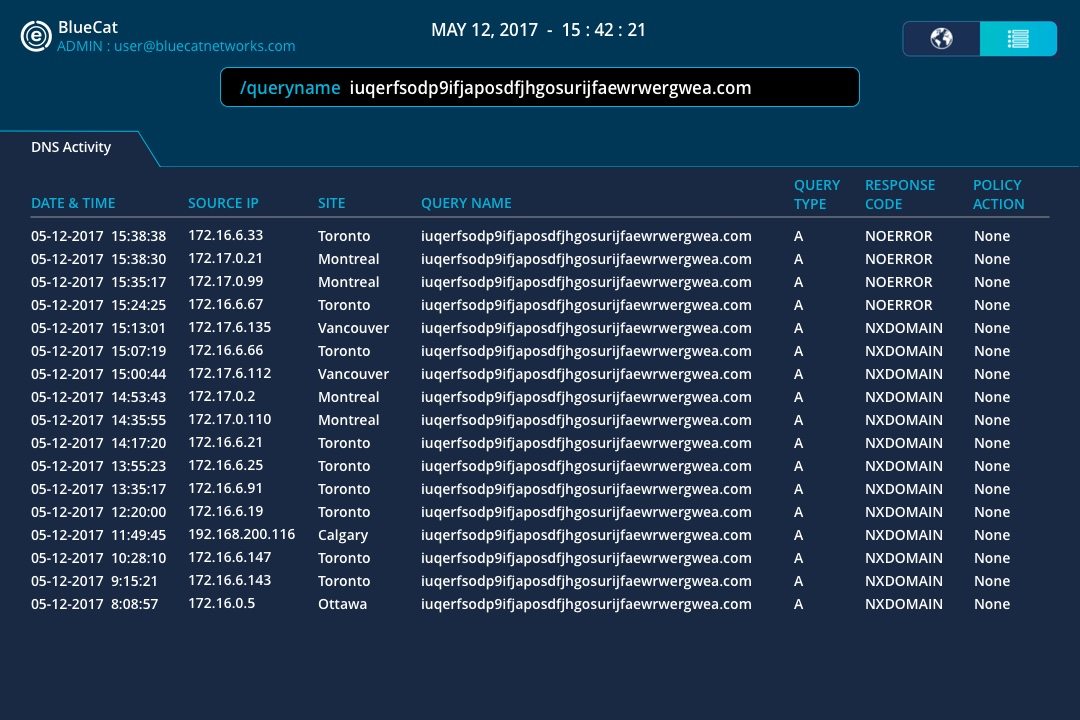
BlueCatプラットフォームは、侵害された組織のネットワーク内における横方向の移動や「パティエント・ゼロ」を即座に可視化します。
多層防御戦略の重要性
BlueCatは、顧客にDNSセキュリティについて説明する際、多層防御アプローチの重要性を強調しています。セキュリティは、境界、クラウド、エンドポイント、ネットワーク、データ、およびアプリケーションを網羅する必要があります。
WannaCry攻撃は、サンドボックス化ツールを回避するために特別に設計されたものでした。これを阻止するには、企業がマルウェアによるリモートサーバーへの接続試みをブロックするための並行した手段を講じる必要がありました。多層的なセキュリティアプローチの概念と利点は単純明快です。つまり、異なるセキュリティソリューションを包括的に導入することで、各ソリューションの機能上のギャップを補完できるのです。
WannaCry攻撃からは多くの教訓が得られます。明らかに、包括的かつ厳格な更新ポリシーは不可欠です。多層的なセキュリティポリシーは、情報セキュリティ担当者にとって賢明な戦略です。しかし、次の論理的なステップは、リスクを評価し、問題を特定し、即座に措置を講じるための新しい手法や(DNSのような)新たなデータソースを見つけることです。
適応型DNSインフラストラクチャにより、企業はDNSサービスをシームレスに一元化・自動化できます。このインフラストラクチャを導入することで、DNSデータを活用し、優れた制御、コンプライアンス、セキュリティを実現できます。 [email protected]