
How the Medical University of South Carolina Became Future-Proof
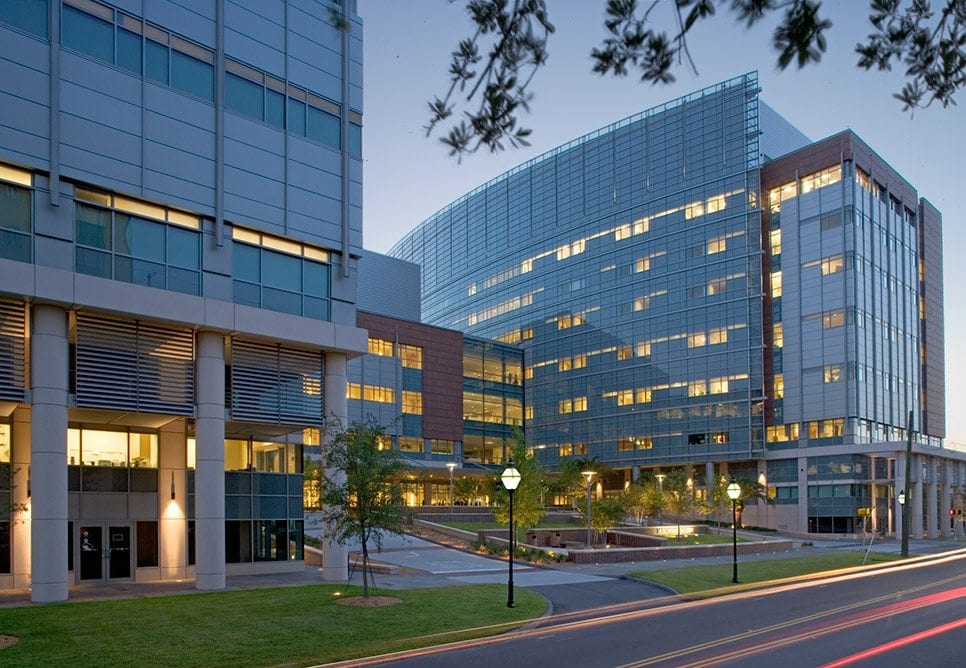
The Medical University of South Carolina (MUSC) is complex, high performance environment.


 Key takeawaysKey takeaways are generated with AI assistance. Because automated summaries can occasionally contain errors or miss important context, always refer to the full blog post for complete information.
The article describes how the Medical University of South Carolina (MUSC) modernized its complex, high-performance network by replacing an obsolete DNS/DHCP/IPAM solution with BlueCat to centralize and automate IP address management across 30,000 IPs and 30+ remote sites. Faced with heavy demands from 3,000 students, 1,500 teaching staff, and 83,000 patients plus numerous IoT devices, MUSC required improved visibility, delegation and reliability to reduce manual intervention and optimize IP space. After migration, MUSC achieved faster request handling, better data coordination, system redundancy, and scalable infrastructure positioned for IPv6 adoption and future growth.
Why did MUSC decide to move away from their previous DNS/DHCP/IPAM provider?
MUSC moved away from its previous provider because that solution had become obsolete and could not meet the institution’s needs for centralized management, automation, and delegation across a complex environment. With 30,000 IP addresses, more than 30 remote sites, and a broad mix of users and IoT devices, MUSC needed an efficient automated IPAM to optimize IP space and reduce human error in a medical environment where reliability is critical. Prior vendor experience was described as less-than-ideal, prompting MUSC to evaluate alternatives focused on reliability, redundancy, and workflow delegation.
What operational impacts did BlueCat’s solution have after migration?
After implementing BlueCat’s consolidated DNS, DHCP and IPAM, MUSC experienced reduced manual intervention and fewer support calls, enabling network engineers to focus on higher-value tasks. Automation accelerated request handling and allowed delegated workflows, improving resource management and IP utilization through better data coordination. The single-interface visibility provided expansive insight into network activity, and the migration itself was executed with minimal disruption and high quality, described metaphorically as replacing an engine while cruising down the highway.
How does the new BlueCat deployment prepare MUSC for future network needs?
The BlueCat deployment provides MUSC with a scalable, future-facing network architecture that supports growth—planned or unplanned—by centralizing DNS/DHCP/IPAM and improving automation and visibility. System redundancy and enhanced insight into network activity position MUSC to manage increasing numbers of devices and delegate administrative tasks safely in a clinical environment. Importantly, the improved infrastructure and comprehensive IP management give MUSC a strong foundation to move toward IPv6 integration with confidence.
Company Profile

The Medical University of South Carolina (MUSC) is complex, high performance environment. This nationally ranked educational institution serves 3,000 students, 1,500 teaching staff, and 83,000 patients and offers programs in the biomedical sciences, dentistry, health, medicine, nursing and pharmacy.
“Our faculty, staff and students are extremely demanding users of technology.” -Patrick J. Lazorchak, Network Engineer, MUSC
With a diverse selection of network users all relying on a growing number of IoT devices like smart phones, tablets and even wireless IV pumps, they need a robust network that’s got their back. That being said, efficiency is king. Network engineers rely heavily on automation and network visibility to handle their day to day admin so everyone, users and engineers alike, can focus on getting their jobs done.
Before BlueCat…
“To maintain the reliability of our network and better serve our users, we needed an efficient way to manage, automate and delegate day-to-day network administration tasks.”
In 2011, after their previous provider became obsolete MUSC began their hunt for a new DNS provider. Their network consists of 30,000 IP addresses and 30+ remote sites, and they needed a serious revamp in order to centralize their network to support the diverse needs of their users. As is the case in any environment where human lives are on the line, there is very little room for error (if any) in a medical institution. MUSC needed a way to simplify their IP address management and optimize their current IP space, so an efficient, automated IPAM was crucial. MUSC network users demand a lot from their network and the network engineers need to deliver. They required better control, better visibility and improved automation in order to better delegate tasks. With previous, less-than-ideal experiences with another DDI vendor, MUSC considered making the switch to VitalQIP and BT Diamond before ultimately choosing BlueCat.
After BlueCat…
“We chose BlueCat based on its ease of use, track record of reliability, system redundancy… and built-in ability to delegate workflows.”
With their new consolidated DNS, DHCP and IPAM solutions in place, MUSC network engineers find themselves fielding fewer calls resulting in less manual intervention and better resource management. They’re able to push requests faster by automating processes and IP management. With better data coordination, they now leverage the DNS data to their advantage and put their IP space to better use.
With expansive network visibility, they can see everything that’s going on from a single interface. This increased visibility gave them greater insight into their network activity while freeing up tons of time and resources. Migration was a breeze with minimal disruption. However, fast migrations are a dime a dozen, it’s the quality of the migration that was the differentiating factor. MUSC likened their seamless, smooth migration process to “replacing the engine in your car while you’re cruising down the highway.”
What does the future look like?
With their new scalable, future-facing network, MUSC is prepared for growth, whether planned or unplanned. With the inevitable movement towards IPv6 integration, MUSC has a strong infrastructure they can count on thanks to increased network visibility and greater insight.
Published in:

Anna is a passionate content writer who’s always eager to learn something new about cyber security.
Related content

Get answers from the LiveNX data you already have with LiveAssist
Learn how LiveAssist, the AI-powered add-on for LiveNX, turns your network data into fast, guided answers, with value you can see in days.

Get total control of your DDI infrastructure with Micetro’s unified API
Stop juggling between network tools and use Micetro’s RESTful API for complete control over your DDI infrastructure and cloud environment.

BlueCat MCP servers bring network intelligence to your AI assistant
Our MCP servers provide a standard integration layer that makes it easy to connect the AI tools you already use to BlueCat products.

We bet on Intelligent NetOps two years ago. Infoblox now has too.
With Infoblox acquiring Kentik, BlueCat’s CEO confirms its vision for a single platform unifying DDI, network monitoring, and observability.