
BlueCat Integrity 9.3: Deliver DNS like a boss
With the BlueCat Integrity 9.3 release, network admins can get more audit data, manage complexity, and ramp up automation, without compromising performance.



 Key takeawaysKey takeaways are generated with AI assistance. Because automated summaries can occasionally contain errors or miss important context, always refer to the full blog post for complete information.
BlueCat Integrity 9.3 is a major product release that adds more than 40 notable features and fixes to strengthen DNS, DHCP and IP address management (DDI) for enterprise networks. It addresses real-world problems of limited visibility, complex multi-cloud/virtualized network relationships, and slow manual provisioning by providing improved audit and DNS traffic capture, tools to define and navigate logical network links across clouds, and automation features such as automated appliance provisioning and API load sharing. The release aims to reduce operational risk, simplify compliance and incident investigation, and accelerate deployments while preserving runtime performance and flexible data management for large distributed environments.
How does Integrity 9.3 improve visibility and compliance for network and security teams?
Integrity 9.3 enhances visibility and compliance by enabling capture and secure archival of extensive DNS activity and audit trail data without degrading day-to-day network performance. Customers can capture DNS queries and responses on BlueCat DNS/DHCP Servers (BDDS), export or archive transaction history, and use granular audit data retention fields to remove old audit data selectively. Exported records can be sent to SIEM tools like Splunk so security teams gain additional context for investigations, helping organizations meet data compliance requirements and reduce risk.
What capabilities in Integrity 9.3 help manage complex cloud and virtualized networks?
Integrity 9.3 provides features to document and navigate logical relationships across clouds and virtualized networks, enabling faster troubleshooting of outages and service delays. Users can define user-created links via new REST APIs to visually connect IP addresses, networks, or blocks in BlueCat Address Manager (BAM), and navigate NATs, dual-stack IPv4/IPv6 setups, VPCs/VNets and other constructs. The release also increases DHCP visibility by exposing all lease states (including abandoned leases) and allowing changes to DHCP reserved or static statuses, which aids in understanding dependencies and resolving complex network issues.
Which automation improvements does Integrity 9.3 introduce to accelerate deployments and reduce manual effort?
Integrity 9.3 introduces automation features designed to speed deployments and reduce manual configuration of appliances. Network teams can automate provisioning across many servers using automated appliance provisioning and modify standard JSON service descriptors plus REST APIs to apply configuration changes fleet-wide. API load sharing allows read-only API calls to be directed to a secondary BAM to distribute load, and Gateway functionality along with Adaptive Applications and Plugins can be deployed on BDDS appliances to simplify deployments. These capabilities free primary resources from repetitive tasks and help teams support strategic initiatives.
One of BlueCat’s core values is to listen to—and guide—our customers. When BlueCat started the journey to strengthen Integrity, our flagship offering, we did just that.
The scope of new additions to our latest release, Integrity 9.3, is larger than any BlueCat release to date. It includes more than 40 notable new features and fixes to known issues.
(P.S. Want to see all of the new Integrity 9.3 features in action? Sign up for our technical webinar and workshop series for live and on-demand viewing options.)
The Integrity 9.3 release at-a-glance
Integrity 9.3 equips users with the ability to deliver DNS services with even more confidence and flexibility. These are the three main themes of our Integrity 9.3 release:
The following sections go into more detail about each of these themes.
Improved visibility & compliance
In response to an increase in IT security breaches and recent cloud adoption trends, internal compliance standards have become more complex—and compliance directives more ambitious. For network teams, compliance is difficult with limited visibility. That includes both visibility into what endpoints are querying the network and system-level audit data that provides insight into user behavior.
BlueCat Integrity 9.3 closes the visibility gap by allowing customers to capture and securely archive vast amounts of data without impacting day-to-day network performance. For organizations that manage extensive distributed networks, this capability allows for flexible data management that helps protect against exceeding data storage capacities.

Customers can proactively and flexibly manage their audit data in Integrity 9.3. For example, network teams can now provide both DNS request and response data to security teams by easily exporting data into a SIEM (security information and event management) tool like Splunk. With more context to aid security teams in investigating incidents, organizations can better reduce risk and meet data compliance requirements.
Some features that deliver Improved visibility & compliance:
- DNS activity: Capture DNS query and response data on BlueCat DNS/DHCP Servers (BDDS). Watch the demo.
- Export records: Export or archive audit trail or transaction history.
- Audit data retention fields: Remove old audit data with granular control. Watch the demo.
Manage complex networks
For many network teams, more cloud means more problems that can grind its adoption to a halt. To increase network resilience, it’s important to have visibility to effectively navigate complex network relationships. Solutions could range from a simple understanding of DHCP lease states in IP address management to more challenging investigations of endpoints that have logical dependencies across multiple cloud networks.
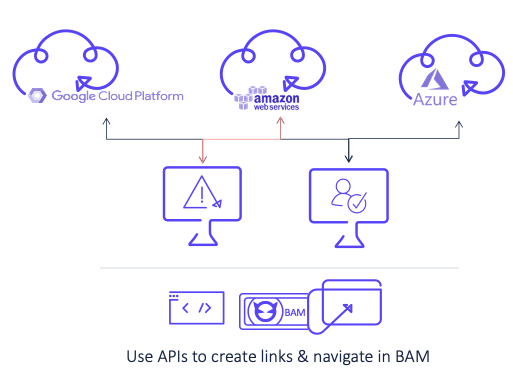
With BlueCat Integrity 9.3, users can document and navigate complex relationships across clouds and virtualized networks to quickly resolve outages and service delivery delays. Integrity 9.3 provides a flexible way to define and manage logical network relationships and link known BlueCat Address Manager (BAM) entities. Customers can leverage new REST APIs to easily create links and navigate various NATs, dual-stack IPv4/IPv6 networks, VPCs/VNets, and other logical network constructs.
Some key new features that provide more visibility to manage complex networks:
- User-defined links: Use APIs to create visual links between IP addresses, IP networks, or blocks in BAM. Watch the demo.
- Greater visibility into DHCP: View all lease states, including abandoned leases, and change DHCP reserved or static statuses. Watch the demo.
Ramp up automation
BlueCat Integrity 9.3 provides optimized system performance and flexible deployment options to help prevent service interruptions and speed up innovation. Network teams can deploy automation capabilities without logistical headaches. And they can free up primary resources for managing day-to-day operations using secondary servers.
For instance, 66% of network teams admit they struggle with supporting strategic business initiatives, especially when they still manually configure or reconfigure their appliance fleet. Making automation tools available to network teams can help eliminate these manual tasks. However, for busy teams, implementing automation can be difficult. To automate provisioning with Integrity 9.3, network teams can modify standard JSON service descriptors and leverage REST APIs to make sweeping configuration changes to an entire fleet of appliances.
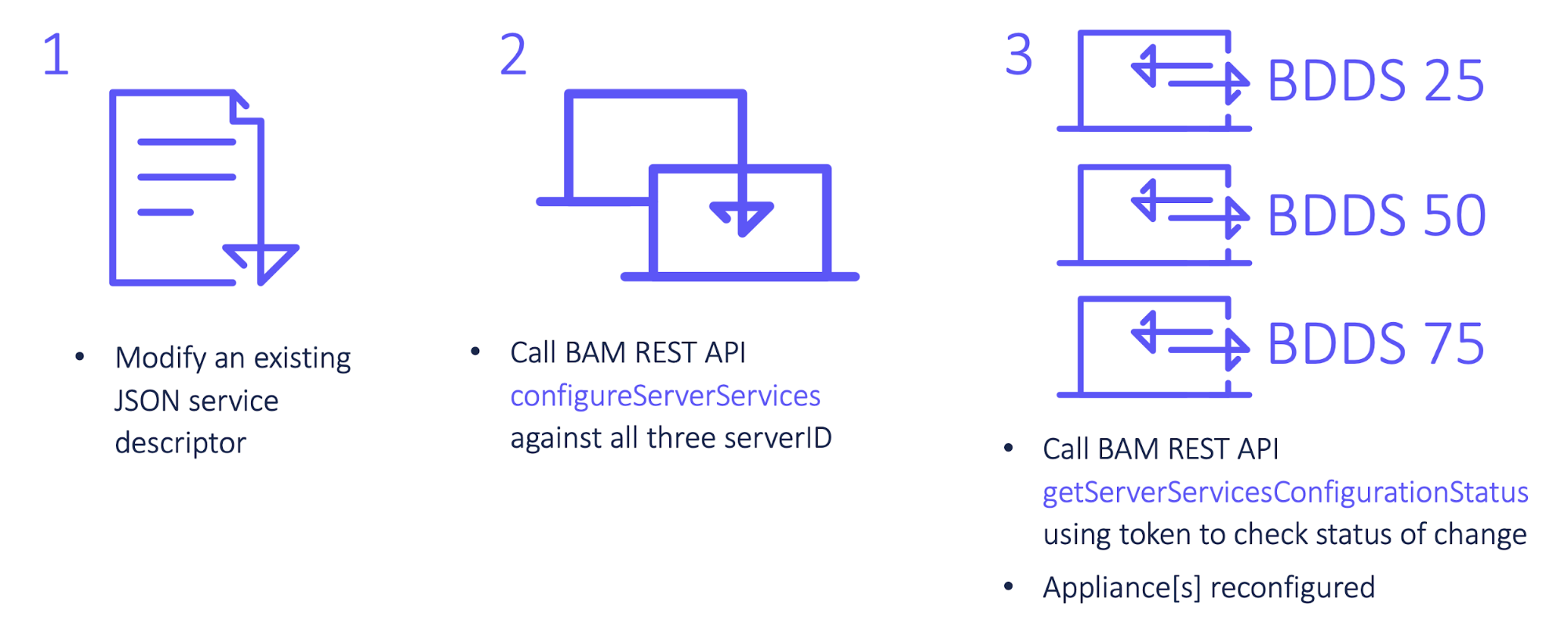
New features that help ramp up automation:
- Automated appliance provisioning: Speed up deployments across many servers. Watch the demo.
- API load sharing: Make read-only API calls to a secondary BAM. Watch the demo.
- Gateway on a BDDS: Make Gateway and Adaptive Applications and Plugins easy to deploy on BlueCat Integrity appliances. Watch the first demo and second demo.
Sign up for an insider look before the release
Ready for a deeper dive into BlueCat Integrity 9.3? Sign up for our launch webinar series beginning March 23 to learn how you can manage DDI like a boss. You’ll get an insider view of how Integrity 9.3 uses Adaptive DNS to provide improved visibility & compliance, ramp up automation, and accelerate cloud adoption without compromising performance.
Published in:

Mark is a Senior Product Marketing Manager at BlueCat Networks.
Related content

Get answers from the LiveNX data you already have with LiveAssist
Learn how LiveAssist, the AI-powered add-on for LiveNX, turns your network data into fast, guided answers, with value you can see in days.

LiveWire GEN3 device offerings
BlueCat LiveWire is a packet capture and network forensics platform that provides deep packet-level visibility across hybrid enterprise environments to help…

Get total control of your DDI infrastructure with Micetro’s unified API
Stop juggling between network tools and use Micetro’s RESTful API for complete control over your DDI infrastructure and cloud environment.

BlueCat MCP servers bring network intelligence to your AI assistant
Our MCP servers provide a standard integration layer that makes it easy to connect the AI tools you already use to BlueCat products.