
What We Learned at DODIIS



Another fantastic DODIIS conference is in the books, and BlueCat learned a ton about how DNS plays into the strategic priorities of the defense and intelligence communities. After three days in Omaha talking to agencies about their needs, here are some key takeaways:
- JEDI is still an amorphous concept for most DOD agencies. Everyone seems to be aware that there’s a gigantic public cloud RFP out for bid, but few IT managers really know what that means for their day-to-day work. There’s a sense that all the planning is happening “up there” with little guidance down to the combatant commands about how they’re going to implement the solution that comes down. At BlueCat, we know that preparing the groundwork for JEDI will require some significant attention to network infrastructure and how it is managed. We’ve been talking with many agencies now about the role that DNS can play in a successful cloud migration.
- DNS security is the next big thing. It’s fun to be trendy, and that’s what DNS seems to be right now. The underlying infrastructure of DNS is nothing new, of course. But using all of that valuable DNS data for security purposes is something that DOD and intelligence agencies are just starting to wake up to. As we’ve explained the critical role that DNS can play in security, we’ve seen a lot of lightbulbs go on. Even more, DOD and intelligence agencies are starting to come to us – they’ve heard about this DNS security thing, and they want to know more.
- When you say “we’ve got our DNS locked down” it rarely is. We’ve heard that line from quite a few people during DODIIS – “we’re all set on DNS, our DNS is locked down”. The question is, locked down where? When we explain that boundary-level filters and firewalls leave internal DNS traffic open to advanced persistent threats, we get a lot of surprised looks. Placement of that DNS security is critical to truly securing the network.
- Visibility is key. There were quite a few folks at DODIIS who offer network mapping and other ways to figure out what large, complicated networks look like. Unfortunately, most of these companies stop at the “where”, providing no sense of what all those devices are actually up to. By collecting DNS data at the client level, BlueCat provides true visibility – not just into what’s on the network, but what all those devices are doing.
That’s a wrap for DODIIS 2018! We’re already looking forward to the next iteration – see you all in Tampa next year. (Mic drop.)
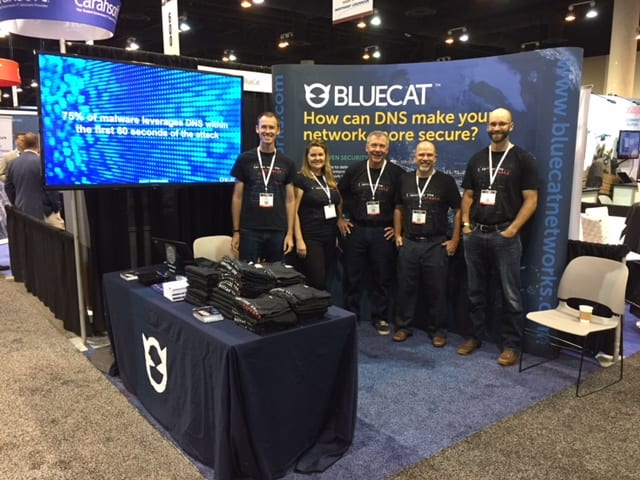
BlueCats at the ready to talk DNS!
Published in:

BlueCat provides core services and solutions that help our customers and their teams deliver change-ready networks. With BlueCat, organizations can build reliable, secure, and agile mission-critical networks that can support transformation initiatives such as cloud adoption and automation. BlueCat’s growing portfolio includes services and solutions for automated and unified DDI management, network security, multicloud management, and network observability and health.
Related content

Agentic AI adoption in network observability propels NetOps teams
Network observability is crucial for today’s networks and even more capable with agentic AI, according to new Omdia and BlueCat research.
Stop the ticket bottleneck: Automate DNS, DHCP, and IPAM with Quick Service
Automated DNS, DHCP, and IPAM (DDI) service delivery enables organizations to replace manual, ticket-based workflows with policy-driven, self-service…

Stay ahead of network issues with real-time metrics with BlueCat Integrity X
Get real-time DNS, DHCP, and IPAM metrics with BlueCat Integrity X. Detect issues early using native Prometheus telemetry and proactive DDI observability.

Adding business context to DDI with tagging in BlueCat Integrity X
Add business context to DNS, DHCP, and IPAM with tagging in BlueCat Integrity X. Improve visibility, automation, and governance across complex networks.