
Security glossary

What is geocast?

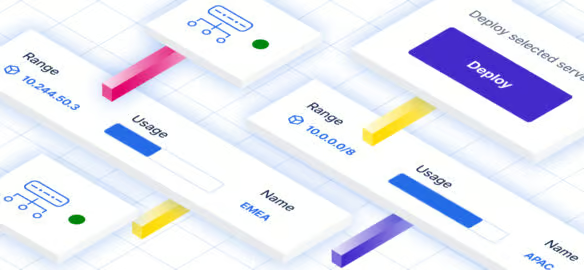
Abstract isometric UI showing network ranges, usage bars, region names (EMEA/APAC), and a purple "Deploy" button
Key takeawaysKey takeaways are generated with AI assistance. Because automated summaries can occasionally contain errors or miss important context, always refer to the full blog post for complete information.

Geocast is an addressing and routing method that delivers messages to all nodes within a specified geographic area rather than to explicitly named hosts or group members, making it ideal for location-based applications like vehicular hazard warnings and emergency alerts. Unlike multicast which relies on group membership, geocast determines message delivery based on a node's physical position, requiring nodes to know their location and intermediate routers to intelligently forward packets toward the defined region. Deployments face operational challenges including position accuracy requirements, local flooding overhead within regions, dead-end forwarding scenarios, and the lack of native support in standard IP networks, necessitating overlays or application-layer implementations paired with authentication and rate limiting.

  • Geocast regions can be defined by simple geometric shapes—circles with center and radius, rectangles, or coordinate polygons—placed in the message header to enable spatially targeted delivery.
  • Greedy geographic forwarding can fail when no neighbor node is closer to the target region than the current node, creating dead ends that require recovery methods or message caching to prevent dropped packets.
  • Standard IP routers do not natively support geocast routing because they forward based on address prefixes rather than geographic coordinates, requiring specialized overlays, application-layer logic, or purpose-built network protocols for implementation.

Geocast at a glance

AttributeValue
Full nameGeocast
CategoryAddressing and routing method
Primary useDelivering messages to all nodes within a defined geographic region, such as in vehicular and wireless ad hoc networks
Related termsMulticast, Anycast, Unicast, Broadcast

How geocast works

A geocast message carries a description of a target region instead of a host address or group identifier. Nodes and forwarding logic use their own location to decide whether to accept or relay the message.

  1. Define the target region: The sender specifies a destination area, for example a circle with a center point and radius, a rectangle, or a polygon of coordinates, and places it in the message header.
  2. Forward toward the region: Intermediate nodes that know their own position and that of their neighbors relay the message in the direction of the region, often using greedy geographic forwarding.
  3. Deliver inside the region: Once the message reaches the region, nodes within it accept it. Some designs flood the message locally, while others forward it only along selected paths to limit overhead.
  4. Stop at the boundary: Nodes outside the region do not deliver the message to applications. A lifetime or expiry value can also limit how long it remains valid.

Implementations vary widely. Geocast depends on nodes knowing their position, commonly from satellite positioning, and it is mostly studied and used in mobile ad hoc, sensor, and vehicular networks rather than in conventional IP routing on the public internet.

Why geocast matters in enterprise networks

Geocast matters where the relevant audience is defined by place rather than by identity. Examples include warning vehicles about a hazard on a stretch of road, alerting devices near an emergency, or sending a command to sensors in one part of a site. Addressing by region removes the need to maintain group membership lists for devices that constantly move in and out of the area.

Operationally, geocast shifts the burden to location accuracy and forwarding efficiency. Poor position data can cause messages to miss intended nodes or reach unintended ones, and unrestricted local flooding inside a region can consume scarce wireless capacity. Designers must also decide how to handle regions with no nodes, where a message can stall without a path to deliver it.

Security is a significant concern because location claims are easy to falsify unless they are authenticated. A malicious node can forge its position to receive messages meant for a region, or inject false messages targeting one. Location privacy is also at stake, since region-based delivery can reveal where recipients are. Deployments typically pair geocast with message authentication, trust in position sources, and limits on message rate and lifetime.

Geocast vs Multicast

Multicast delivers to hosts that have joined a group, while geocast delivers to whichever nodes are located inside a defined geographic region. What is Multicast?

AttributeGeocastMulticast
Destination definitionGeographic region such as a circle, rectangle or polygonGroup address that receivers join
MembershipImplied by a node's current positionExplicit, signaled by hosts joining the group
Sender needs to knowTarget area coordinatesGroup address only
Node requirementNodes must know their own locationNodes need group membership support, not location

Geocast vs Broadcast routing

Broadcast routing sends a message to every node in a network or segment, while geocast limits delivery to nodes within a specified area. What is Broadcast routing?

AttributeGeocastBroadcast routing
ScopeNodes inside a defined regionAll nodes in the network or segment
Targeting basisPhysical locationNo targeting beyond the broadcast domain
ForwardingDirected toward the region, then delivered locallyFlooded to all reachable nodes

Common geocast issues

Nodes that rely on weak or stale location fixes may wrongly decide they are inside or outside the target region. The result is missed deliveries near the region boundary or messages reaching unintended nodes.

Greedy geographic forwarding can stall when no neighbor is closer to the region than the current node, such as around a coverage gap or obstacle. Messages are then dropped unless the design includes a recovery method.

Designs that flood the message locally inside the region can create bursts of duplicate transmissions in dense areas. This consumes bandwidth and can cause collisions on shared wireless links.

Nodes move while a message is in transit or while being retransmitted. A device that enters the region after the message was sent may never receive it unless the sender repeats it or nodes cache it.

Standard IP routers do not forward on geographic destinations. Geocast usually needs an overlay, application-layer logic or a purpose-built network, so deployments often fail when assumed to work over ordinary IP paths.

See how unified DDI simplifies network operations

Manage DNS, DHCP and IP addresses from one platform with automation, visibility and control built in.

Geocast FAQ

Related terms

Article

Multicast

Group communication where data transmission is addressed to a group of destination computers simultaneously.

Learn more
Article

Broadcast routing

Packets are sent to all nodes even if they do not want it.

Learn more
Article

Unicast (routing)

One-to-one transmission from one point in the network to another point with one sender and one receiver, each identified by a network address.

Learn more
Article

Anycast

A traffic routing algorithm used for the speedy delivery of website content that advertises individual IP addresses on multiple nodes.

Learn more
Article

Internet Protocol Address (IP Address)

A numerical label assigned to each device connected to a network that uses IP for communication.

Learn more
Article

OSI model

A conceptual model that characterizes and standardizes the communication functions of a telecommunication or computing system.

Learn more
Article

User Datagram Protocol (UDP)

An alternative protocol to TCP used primarily for establishing low-latency and loss-tolerating connections between applications on the internet.

Learn more