
For Microsoft DNS and AD-integrated environments
Move to enterprise DDI when Microsoft DNS can’t keep up
BlueCat Integrity gives you the visibility, automation, and resilience Microsoft DNS lacks, with a staged migration that keeps Active Directory running
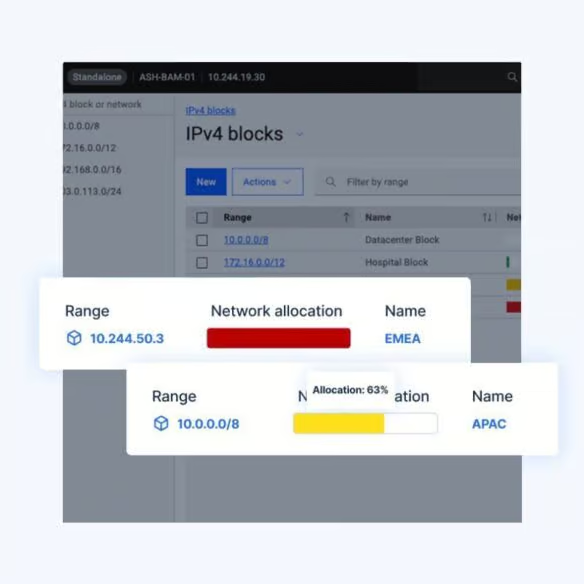
When Microsoft DNS management becomes a migration decision
Native Microsoft DNS works until scale changes the equation. Once zones span multiple domains and forests, MMC consoles and per-server scripts stop being an administrative inconvenience and start being an availability and audit risk. At that point, the question is no longer how to manage Microsoft DNS more carefully, but whether it should remain your primary platform.
Here are some indicators you’ve outgrown Microsoft DNS

Operational fragility and drift
Manual MMC changes and ad hoc scripts cause misconfigurations and outages. Every additional DNS server widens the blast radius for drift.

Governance and audit gaps
Distributed servers and thin audit trails make it difficult to prove control or reconstruct what changed during an incident.

Scale limits, not feature limits
Microsoft DNS handles a few hundred zones fine. At thousands across multiple forests, the architecture itself becomes the constraint.

No license fee, high operating cost
No license fee hides the real spend. Engineering time on manual changes, incidents, and audit prep adds up fast.
Integrity as your DDI platform for Microsoft DNS
BlueCat Integrity becomes your primary DDI platform, replacing Microsoft DNS as the system managing your zones. Migration runs in controlled stages, with each zone validaated before it cuts over, so you move at your own pace with no downtime.
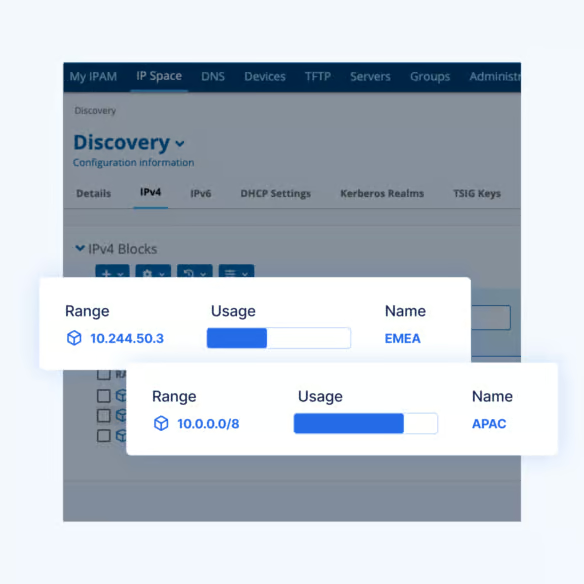
Key Integrity capabilities for Microsoft DNS, DHCP, and IPAM

Centralize enterprise DNS, DHCP, and IPAM
Replace fragmented Microsoft DNS management with a single platform that unifies DNS, DHCP, and IPAM across your enterprise.

Automate network operations at scale
Accelerate DNS, DHCP, and IPAM changes with APIs, workflows, and automation that reduce manual effort and improve operational efficiency.

Strengthen governance and compliance
Apply role-based access control, approval workflows, centralized auditing, and policy-driven administration to maintain consistent governance.

Unify hybrid and multicloud infrastructure
Manage on-premises, cloud, and hybrid DNS environments from one platform with consistent visibility, policies, and control.

Improve resilience and service availability
Support business continuity with highly available DNS and DHCP services designed to minimize downtime and maintain reliable network operations.

Scale with confidence
Expand your DDI environment without increasing administrative complexity, supporting enterprise growth, distributed teams, and evolving network demands.
Enterprise DDI outcomes for Microsoft environments
Replace Microsoft DNS.
One stage at a time.
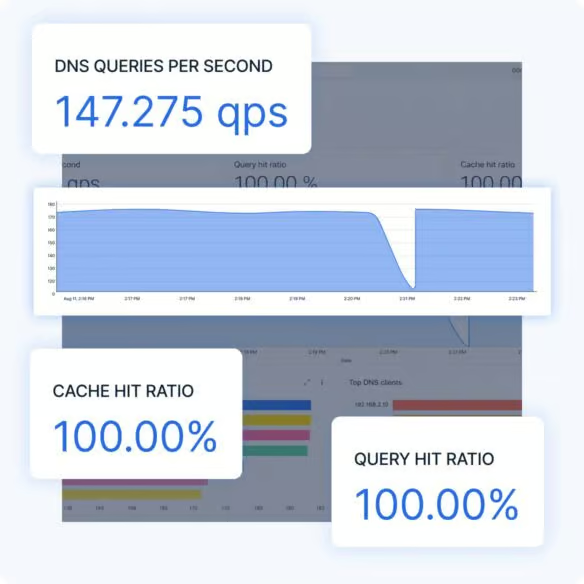
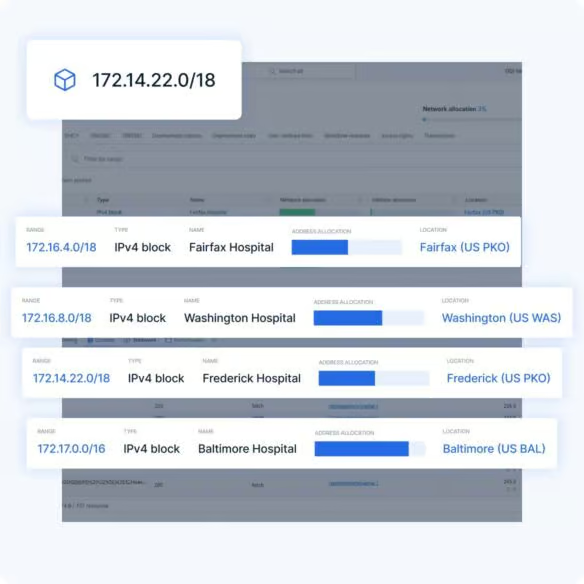
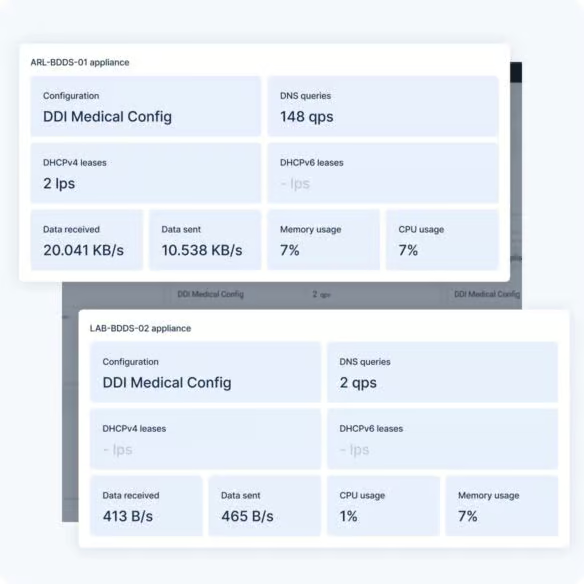
Import your Microsoft DNS and DHCP data into Integrity to build a complete inventory of what you are migrating. You get a unified view of zones, records, and IP space, along with the configuration problems that need resolving before any cutover. This discovery stage is what makes the rest of the migration predictable.
- Import Microsoft DNS zones, records, and DHCP scopes into Integrity
- Identify configuration drift, stale records, and overlapping IP space
- Scope and sequence the Microsoft DNS migration from real inventory data
Before zones move, Integrity becomes the control point for how DNS changes are made. Role-based access control, approval workflows, and audit trails replace ad hoc MMC edits, and automation takes over routine updates. Drift is resolved and records standardized so every zone is migration-ready.
- Enforce RBAC and approval workflows on DNS changes
- Automate routine updates instead of scripting against individual hosts
- Establish a single audited record of who changed what, and when
With the estate mapped and cleaned up, zones move onto Integrity’s DNS, now the platform of record. Migrate by application, site, or business unit. Domain controllers and clients are repointed progressively rather than in a single window, and each cutover is validated before the next begins.
- Migrate by application, site, or business unit at a controlled pace
- Repoint domain controllers and clients progressively, not in one window
- Validate resolution and keep rollback paths open at every stage
Once zones are cut over and resolution is confirmed from BlueCat servers, the DNS role can be removed from your domain controllers. Data is synchronized, configurations are clean, and runbooks are proven. Integrity is the primary DDI platform across the environment, and Active Directory continues to operate against it.
- Retire legacy Microsoft DNS servers as zones complete cutover
- Remove the DNS role from domain controllers once clients resolve via BlueCat
- Standardize on one DDI platform for ongoing automation and scale
Find the right solution for your environment
Not ready to migrate, or want a SaaS-based platform? BlueCat has options for both
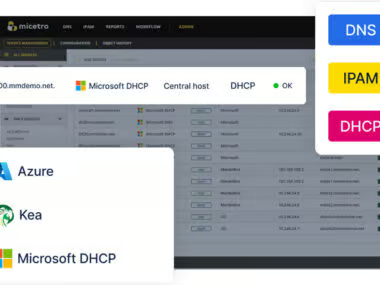

Not ready to replace Microsoft DNS? Overlay with Micetro.
Need centralized Microsoft DNS management without replacing your existing infrastructure? Micetro integrates with Microsoft DNS to deliver centralized visibility, governance, and automation, making it an ideal first step toward modern DDI.
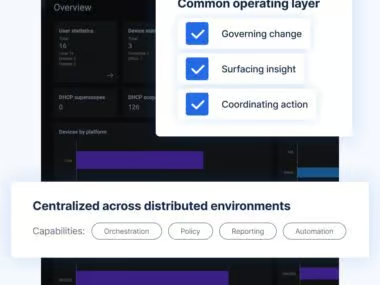

Need a SaaS-based option? Discover Horizon
BlueCat Horizon delivers DDI Orchestration as a SaaS platform, bridging your existing Active Directory, BIND, Kea, and cloud DNS environments through lightweight service points. You can centralize policy, governance, and automation without replacing your infrastructure.

Prepare for the future of the Intelligent Network
The market is rapidly building toward a future state of more intelligent networks: self-healing, self-optimizing multi-vendor networks that operate autonomously, using AI and machine learning to predict, detect, and resolve issues in real time. It’s maximum agility, resilience, and future-readiness.
This advanced state depends on unifying DDI and linking foundational network services with a deep and predictive understanding of network health and performance. Learn more about the path to building the Intelligent Network.