Centralized DDI control for distributed networks
Get SaaS-based orchestration and local execution to modernize DNS, DHCP, and IPAM
 Key takeawaysKey takeaways are generated with AI assistance. Because automated summaries can occasionally contain errors or miss important context, always refer to the full blog post for complete information.
The article explains how BlueCat Horizon delivers centralized SaaS-based orchestration for DNS, DHCP, and IP address management (DDI) while preserving local execution across distributed on-premises, branch, and cloud environments. It addresses the real-world problem of fragmented, appliance-bound DDI tools that create operational risk, inconsistent governance, and slow incident response by providing a control plane that enforces consistent identities, policies, reporting, and automation without forcing infrastructure replacement. Key outcomes include low-risk adoption, unified governance, resilient local service continuity during WAN or cloud disruption, built-in reporting, bi-directional synchronization for auditability, and a platform foundation for advanced DNS services and AI-assisted NetOps over time.
How does BlueCat Horizon enable centralized control without requiring replacement of existing DDI infrastructure?
BlueCat Horizon functions as a SaaS-based orchestration and control plane that connects to existing DNS, DHCP, and IPAM systems via lightweight agents and service points. Those agents use outbound-only communication to securely link on-premises, branch, and cloud environments to the Horizon control plane, allowing Horizon to apply consistent identities, policies, and automation while services continue to execute locally. This preserves native workflows, data sovereignty, and local performance, enabling centralized governance and reporting without appliance replacement or disruptive migrations.
What mechanisms ensure consistent state and safe changes across distributed DDI environments?
Horizon uses bi-directional synchronization between the shared control plane and connected systems so that changes made centrally or locally are reconciled automatically. This bi-directional orchestration maintains alignment of policy and state, provides auditability for configuration changes, and reduces operational risk by ensuring consistent states across heterogeneous deployments. The platform’s orchestration and reconciliation capabilities enable safe, auditable change management without forcing consolidation of infrastructure.
What built-in operational visibility and reporting does Horizon provide, and how is data handled?
Horizon includes built-in reporting as a core capability that lets operators create and export reports for IP utilization, DHCP lease activity, and configuration changes. Reporting relies on selectively surfaced metadata from connected systems rather than requiring full centralized data ingestion or additional licenses. This approach provides immediate operational visibility while preserving local data sovereignty and minimizing the need to move sensitive operational data into the SaaS control plane.
The solution: BlueCat Horizon
BlueCat Horizon is a SaaS-based orchestration and control plane for DDI that centralizes policy, identity, reporting, and automation across heterogeneous environments. Using lightweight agents and service points, Horizon connects existing DNS, DHCP, and IP address management (IPAM) systems and applies consistent governance without forcing infrastructure replacement or disruptive migrations. Where performance and resiliency matter, services continue to execute locally, while Horizon selectively surfaces metadata required for centralized insight and coordination. Built-in reporting provides immediate operational visibility, and bi-directional orchestration ensures safe, auditable change across environments.
Horizon is designed as a long-lived platform for intelligent network operations that delivers immediate value for DDI management today. It establishes a foundation for advanced DNS services, observability, and AI-assisted operations over time—all without re-architecting the network.
Features

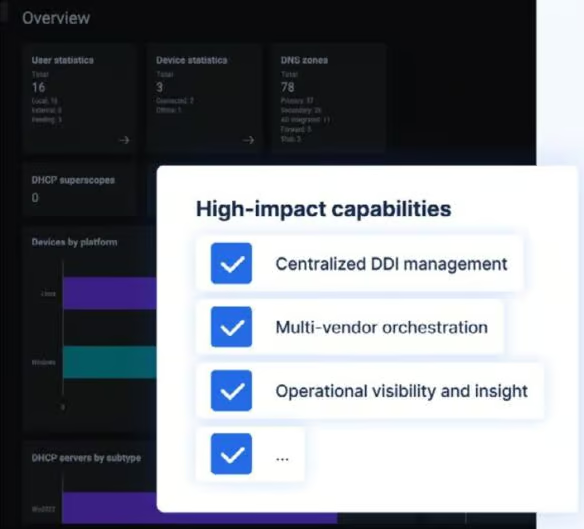
DDI orchestrator
Horizon orchestrates DDI lifecycle and policy management through a shared control plane while allowing services to continue operating locally. This approach reduces operational risk, preserves native workflows where required, and enables safe modernization without consolidation mandates.

Agent connectivity
Lightweight agents securely connect on-premises, branch, and cloud environments using outbound-only communication. Horizon can orchestrate policy and synchronize states while preserving local execution for performance, resiliency, and data sovereignty.

Bi-directional synchronization
Horizon maintains alignment between the control plane and connected systems through bi-directional synchronization. Changes applied centrally or locally are reconciled automatically, ensuring consistent states, auditability, and safe operations across distributed environments.

Built-in reporting
Create and export reports for IP utilization, DHCP lease activity, and configuration changes directly within Horizon. Reporting uses selectively surfaced metadata from connected systems and is included as a core platform capability—without additional licenses or centralized data ingestion.
BlueCat’s Intelligent Network Operations (NetOps)
BlueCat’s Intelligent NetOps solutions provide the analytics and intelligence needed to enable, optimize, and secure the network to achieve business goals. With an Intelligent NetOps suite, organizations can more easily change and modernize the network as business requirements demand.