Structured, non-disruptive DDI modernization
Proven Professional Services for complex DDI production environments
 Key takeawaysKey takeaways are generated with AI assistance. Because automated summaries can occasionally contain errors or miss important context, always refer to the full blog post for complete information.
The article explains BlueCat Professional Services' structured, non-disruptive methodology for DDI (DNS, DHCP, IP address management) modernization in complex enterprise networks where risk typically appears during change events like migrations, upgrades, and automation projects. It describes how latent data issues, undocumented dependencies, and inconsistent configurations that are benign in steady-state can surface during change and cause errors, extended windows, or outages, and how the Professional Services approach emphasizes preparation, validation, staged testing, data normalization, and targeted automation to preserve production stability. The outcome is faster, lower-risk execution of migrations, upgrades, and special DDI initiatives through packaged and custom engagement options that align with operational priorities and staffing constraints.
What kinds of DDI risks typically surface during network change events?
During network change events—such as platform replacements, migrations, upgrades, and automation initiatives—DDI risk manifests when accumulated data issues, undocumented dependencies, and inconsistent configurations that were harmless during steady-state become exposed. These latent problems can lead to errors during execution, extended maintenance windows, delays to projects, and even production outages. Limited staff capacity, budget constraints, and fragmented tooling further increase the chance that these surfaced issues will cause operational disruption.
How does BlueCat Professional Services mitigate risk while modernizing DDI in production environments?
BlueCat Professional Services employs a structured delivery methodology used over two decades that prioritizes stability in production DDI environments. The approach includes analyzing and normalizing existing data and configurations before making changes, staging and testing activities to preserve service continuity, and applying automation selectively to improve accuracy and reduce manual effort. Work is delivered through defined phases emphasizing preparation and validation so latent data issues and undocumented dependencies are resolved before they impact production.
What engagement options are available and how do they support different operational needs?
Professional Services provides both packaged and custom engagement options to fit a range of environments and project scopes. Packaged services address common DDI initiatives with defined deliverables and timelines to help teams move quickly without scope creep, while custom engagements support specialized needs like phased rollouts, automation projects, and other complex initiatives. This flexibility enables organizations to align services to operational priorities and staffing constraints, resulting in confident execution and maintained production stability.
A proven, structured methodology for complex enterprise DDI environments
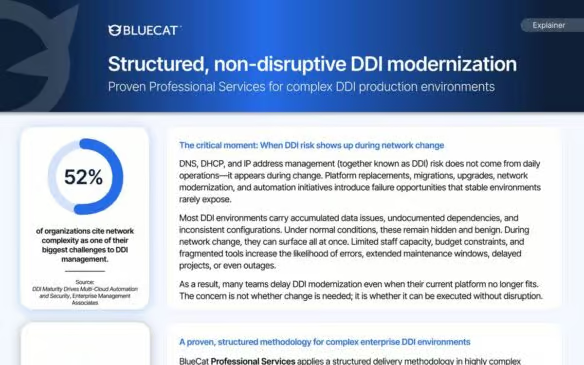
BlueCat Professional Services applies a structured delivery methodology in highly production DDI environments that has been proven over more than two decades of execution. The approach supports change while maintaining active DDI services. In enterprise networks, stability is the priority, so our process mitigates risk during transitions.
Work is delivered through defined phases that emphasize preparation and validation. Existing data and configurations are analyzed and normalized before changes are introduced. Activities are staged and tested to preserve service continuity, with automation applied where it improves accuracy and reduces manual effort.
This ensures that latent data issues or undocumented dependencies are resolved before they can impact production. This model supports both rapid execution and complex special projects. It is used for migrations, upgrades, new implementations, and targeted DDI initiatives that require precision. The result is faster progress, fewer surprises, and stable production services throughout.

BlueCat’s Intelligent Network Operations (NetOps)
BlueCat’s Intelligent NetOps solutions provide the analytics and intelligence needed to enable, optimize, and secure the network to achieve business goals. With an Intelligent NetOps suite, organizations can more easily change and modernize the network as business requirements demand.