
The Reality of Observability Unification in Modern IT Operations
New EMA research surveyed 365 enterprise IT professionals navigating observability unification

 Key takeawaysKey takeaways are generated with AI assistance. Because automated summaries can occasionally contain errors or miss important context, always refer to the full blog post for complete information.
EMA research of 365 enterprise IT professionals examines the challenge of observability unification across cloud, application, network, and infrastructure monitoring and shows that while 97% prioritize unification only 17% have completed it, creating real operational risk from fragmented toolchains. The report highlights that underestimated integration complexity is the primary barrier—cited as the top mistake by 33.1%—and that AI augments maturity but cannot substitute for unified, high-quality data. BlueCat positions its Network Observability portfolio (LiveNX, LiveWire, LiveAssist, LiveAssurance) and DDI products (Integrity, Micetro) as solutions that consolidate visibility and pair authoritative DNS/DHCP/IPAM context with telemetry to reduce incident-response friction and produce measurable ROI.
AI adoption and multi-cloud complexity are pushing enterprises toward observability unification at the same time that fragmentation is getting more expensive to sustain. The gap between intent and execution shows up in measurable ways: slower incident resolution, weaker service-impact visibility, and AI initiatives that underperform when built on fragmented data. This report is most relevant to IT operations leaders, network and observability engineering teams, and ServiceOps/ITSM leads who are mid-journey on a unification initiative and want to know what separates the organizations pulling ahead from the ones stuck in the messy middle.
What the research reveals
Across 356 enterprise IT organizations actively unifying their observability tools:
-
Governance and staffing beat budget. Centralized ownership predicts success more than company size.
-
AI doesn’t fix fragmented operations; it amplifies whatever maturity already exists.
-
ServiceOps integration is one of the strongest predictors of AI maturity and unification success.
Key findings
One theme cuts across it all: unification is being redefined as operational transformation, not tool consolidation, measured by MTTR, availability, and collaboration, not tools retired. Integration complexity remains the #1 barrier and most common mistake teams report.
What the data shows
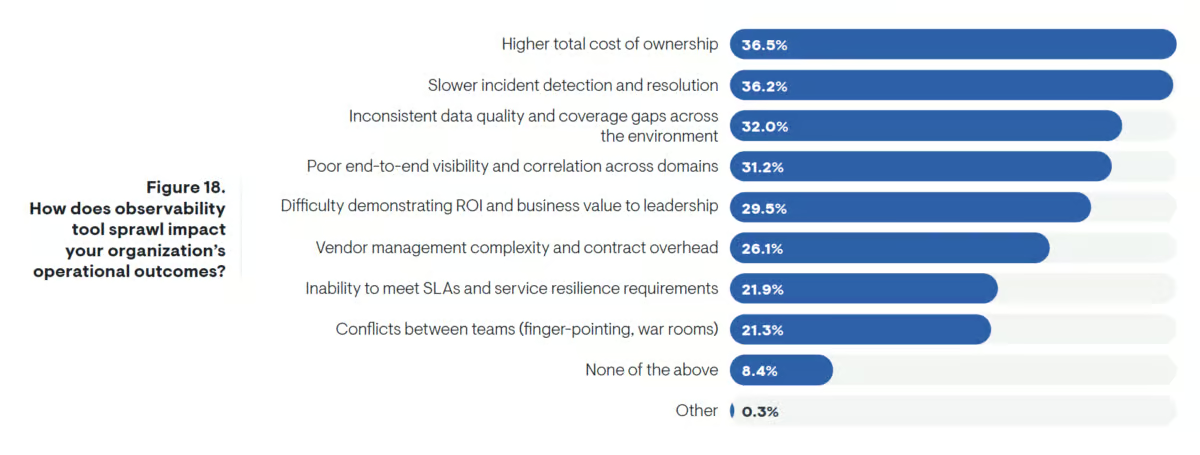
How tool sprawl impacts outcomes. TCO, incident speed, ROI. Sprawl is a business problem before it’s a tooling problem.
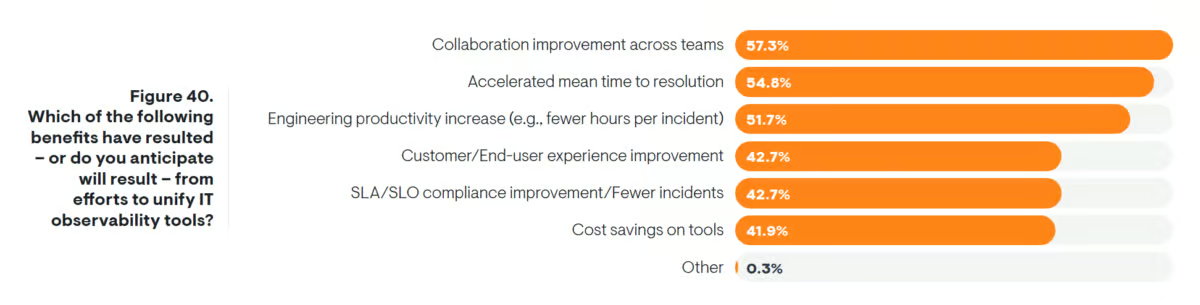
Benefits attributed to unification: collaboration (57.3%) outranks cost savings (41.9%) as the top expected benefit.
What this means for IT operations leaders
For IT operations leaders currently mid-journey on a unification initiative, this research has direct operational implications:
-
Expect friction to worsen before it improves — the middle stage is hardest.
-
Governance and staffing matter more than which tools you consolidate first.
-
AI on fragmented data underperforms. Unify the data foundation first.
-
Treat ServiceOps integration as a priority, it strongly predicts AI maturity.
-
Budget for integration complexity: it’s the #1 self-reported mistake, by far.
The leaders aren’t the ones with the biggest budgets, they’re the ones with clear ownership and a real plan.
Get the full EMA research report
See how top performers turn unification into measurable ROI
What you’ll learn from the report:
- Why 97% of enterprises prioritize observability unification, and why only 17% have finished it
- The specific governance, staffing, and ServiceOps factors that separate unification leaders from everyone else
- What organizations wish they’d known before starting, including the #1 self reported mistake