
Blog
IPAM glossary
 Key takeawaysKey takeaways are generated with AI assistance. Because automated summaries can occasionally contain errors or miss important context, always refer to the full blog post for complete information.
A default gateway is a routing configuration that directs host traffic destined for addresses outside the local subnet to a router interface, typically learned through DHCP or static configuration. In large enterprise environments with thousands of subnets, misconfigured gateways—such as typos in DHCP scopes, overlapping addresses, or incorrect subnet masks—cause hosts to lose off-subnet connectivity while maintaining local communication, often misreported as application outages. Implementing redundancy protocols like VRRP and maintaining accurate IPAM records with security controls such as DHCP snooping and dynamic ARP inspection help prevent gateway failures and detect spoofing attacks that could redirect traffic to malicious devices.
A host compares each destination IP address with its own address and subnet mask to decide whether the destination is local. If it is not local, the host hands the packet to the default gateway.
Hosts typically receive the gateway address from DHCP, though it can be set statically. In IPv6, hosts can learn a default router from router advertisements. The gateway must be on the host's own subnet to be reachable.
A typo in the router option of a scope gives every client on that subnet an unreachable gateway. Clients reach local neighbors but nothing beyond, and the fault persists until leases are renewed with the corrected option.
If the gateway address does not fall inside the host's subnet under its mask, the host cannot resolve it directly and off-subnet traffic fails. This often follows a mask change on the host or a copied configuration from a different subnet.
When a static host or reservation takes the address configured on the router interface, an address conflict follows. Gateway ARP entries flip between two MAC addresses and users see intermittent loss of remote connectivity.
Hosts with several network adapters that each define a default gateway may choose an unexpected route. Traffic can leave through the wrong interface, which causes asymmetric paths or blocked flows at firewalls.
If a single router interface is the gateway and it fails, every host on the subnet loses off-subnet access even though the network has another path. A first-hop redundancy setup with a shared address avoids this, but hosts must be configured with the shared address rather than a physical one.

 Article
A subnet mask is a 32-bit number that divides an IP address into network address and host address portions.
Article DHCP (Dynamic Host Configuration Protocol) is the standard mechanism to dynamically assign IP addresses within a network.
Article A DHCP scope defines the range of IP addresses and related configuration settings that a DHCP server can assign to devices on a network segment.
Article A DHCP relay agent forwards DHCP messages between clients and servers on different network subnets, enabling centralized DHCP services.
Article Internet Protocol version 4 (IPv4) is the fourth version of Internet Protocol using 32-bit addresses to route most current internet traffic; its global supply is exhausted.
Article Internet Protocol version 6 (IPv6) is the most recent version of Internet Protocol, using 128-bit address space with approximately 340 undecillion available addresses.
Article Address Resolution Protocol (ARP) maps IPv4 addresses to physical MAC addresses within a local network, allowing devices to identify and communicate with one another.
Article A VIP (virtual IP address) is an IP address that doesn’t correspond to an actual physical network interface, used for network address translation, fault-tolerance, and mobility.
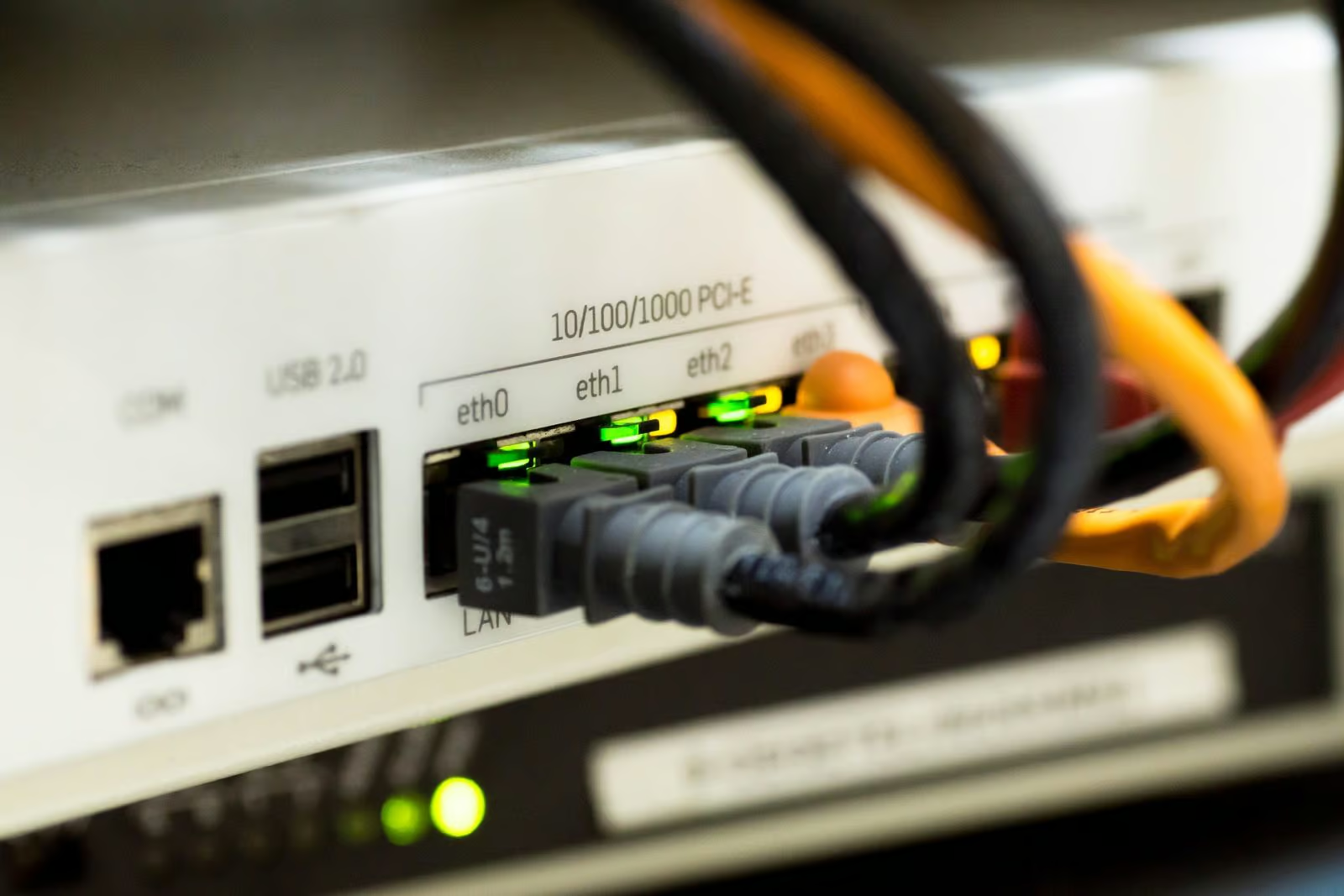
MAC address vs IP address: One is a unique hardware identifier, while the other identifies a device's network connection. Learn more with BlueCat.
Read moreHaving issues configuring routers in an HSRP’s Virtual IP setup? Check out how to solve the issue using indeni's predictive analytics for IT. Learn…
Read moreSo what is BGP? In this series of posts I will be explaining the main principles of BGP. BGP–Border Gateway Protocol–is the de facto core…
Read moreindeni monitors the critical stats of all network interfaces and ports 24/7/365. If issues are found, such as drops, indeni attempts to determine the…
Read more
Scenario Let’s consider a typical real-world BGP scenario: peering with your ISP. Maybe you don’t have a powerful enterprise router or maybe you want…
Read more