





Multi‑Provider DNS Failover

DNS redundancy and failover with Micetro xDNS®

Achieve Redundancy & DDoS Protection with BlueCat Micetro xDNS

Over 350 customers trust Micetro

How Micetro xDNS Redundancy Works

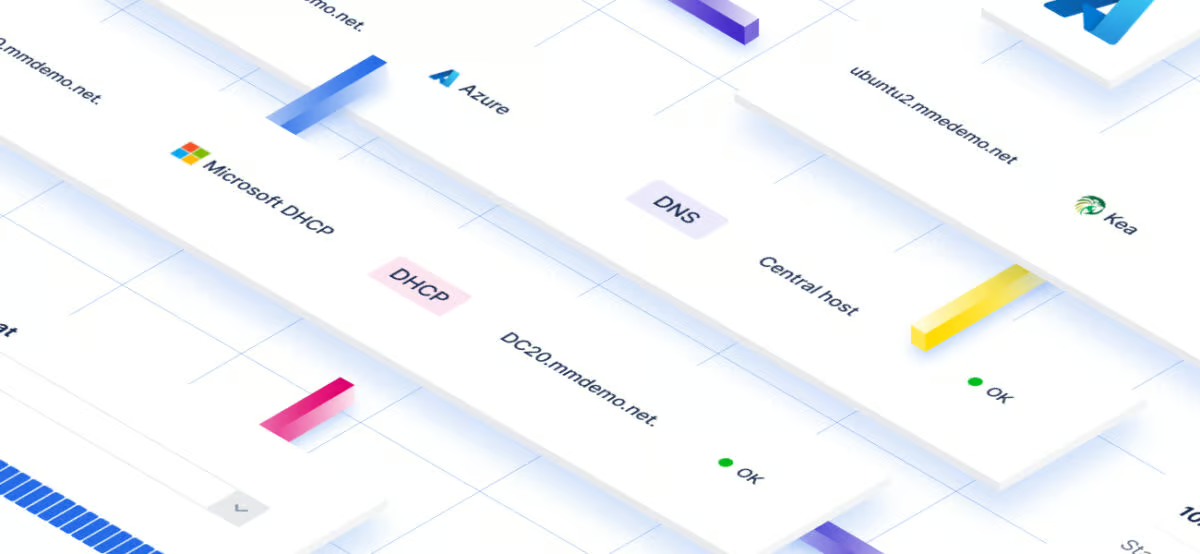
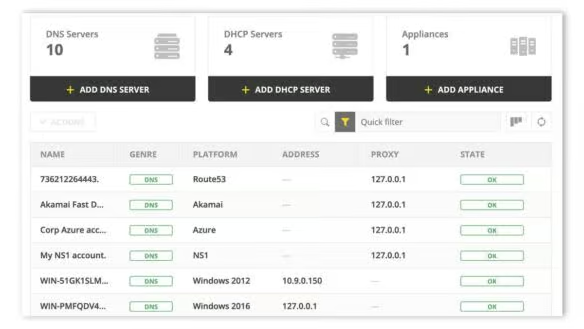
Micetro xDNS acts as a vendor‑agnostic DNS redundancy overlay, orchestrating multiple providers from a single interface. You define xDNS redundancy groups that replicate critical zones across BIND, Windows DNS, Azure DNS, Amazon Route 53, NS1, Dyn, Akamai Fast DNS, and more. During a provider outage or attack, alternate members of the group continue serving identical DNS data, eliminating single points of failure without replacing your existing DNS networks.

xDNS-redundancy

Why choose Micetro xDNS for redundancy?

Micetro xDNS synchronizes live zone copies across providers, reducing the risk of a single point of failure while keeping updates consistent everywhere.

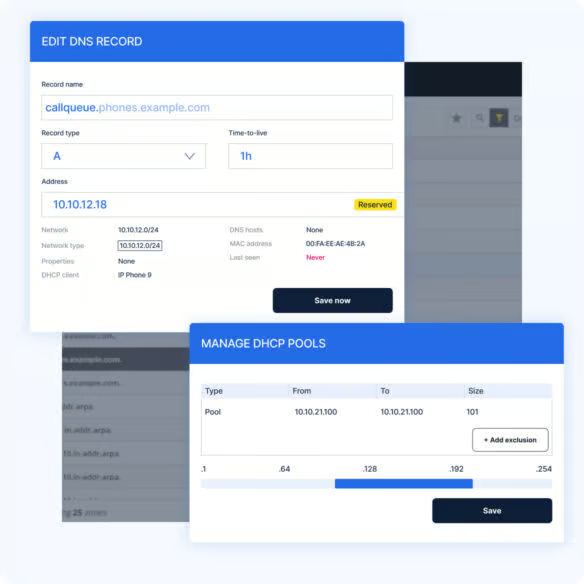
DNS management UI showing "Edit DNS Record" form with A record for callqueue.phones.example.com and a "Manage DHCP Pools" pan

Native DNS and most DDoS services expect you to standardize on their stack. Micetro xDNS instead overlays your existing BIND, Microsoft, and cloud DNS, coordinating redundancy without forcing a migration. You gain multi-provider DNS redundancy and hybrid cloud DNS management while keeping the authoritative platforms you already trust.

Manually keeping zones in sync across multiple consoles is slow and error-prone. xDNS redundancy groups replicate critical zones across providers while preserving appropriately unique NS and SOA records. Other records remain synchronized automatically, helping eliminate configuration drift and reducing the risk of outages from inconsistent DNS data.

Cloud-native DNS tools stop at their own edge. Micetro xDNS spans on-premises DNS, Azure DNS, Amazon Route 53, and more, giving you a single control plane for DNS redundancy wherever workloads run. Teams can standardize change workflows and automation for hybrid cloud DNS management instead of juggling separate point consoles.

Switching DNS providers or moving zones between environments is risky when done manually. With xDNS redundancy groups, you can introduce a new provider, synchronize zones, validate behavior, and then retire the old platform on your schedule. Bulk moves become an orchestrated workflow instead of a weekend-long, high-stress cutover.

Resilience under DDoS and DNS failures

Maintain DNS availability even when providers fail or come under attack.

Proven ROI

$123,700

  • 1,040 hrs of manual DDI work eliminated every year
  • <2 weeks to realize value — 65% of users saw impact immediately

See exactly where the savings come from — and how to build the business case for Micetro.

Enable network automation with centralized DDI

Live demo

See how Micetro simplifies xDNS redundancy in your environment.

See Micetro in action

Contact Us

Let’s talk about how unified DNS, DHCP, and IPAM management can simplify and strengthen your network.

Contact Us

Frequently asked questions

Get quick answers on how xDNS boosts DNS resilience, supports multi-provider architectures, and fits into your existing DDI stack.

Isometric blue UI tiles showing gear, shield, chip, and magnifying glass icons on a grid background

Prepare for the future of the Intelligent Network

The market is rapidly building toward a future state of more intelligent networks: self-healing, self-optimizing multi-vendor networks that operate autonomously, using AI and machine learning to predict, detect, and resolve issues in real time. It’s maximum agility, resilience, and future-readiness. 

This advanced state depends on unifying DDI and linking foundational network services with a deep and predictive understanding of network health and performance. Learn more about the path to building the Intelligent Network.

📣  Now live: Explore BlueCat Horizon, our SaaS-first Intelligent NetOps platform.