Forensic investigation using DNS for faster incident response
In this video, learn how BlueCat DNS Edge provides investigative insight and faster responses for security breaches and helps reduce attack surfaces.


 Key takeawaysKey takeaways are generated with AI assistance. Because automated summaries can occasionally contain errors or miss important context, always refer to the full blog post for complete information.
The article describes a video demonstration of using DNS Edge to accelerate incident response by providing forensic DNS data that helps teams identify infected clients, compromised services, and affected data sources. In the shown breach investigation, DNS Edge supplies investigative insight that lets responders trace the origination point of the attack, take focused remediation actions, and reduce the organization’s attack surface. The outcome highlights faster, more targeted responses and improved network protection through DNS-based visibility and control.
What investigative value does DNS Edge provide during a security incident?
DNS Edge provides forensic DNS data that helps incident response teams identify infected clients, potentially-breached services, and data sources involved in an incident. By surfacing DNS queries and patterns, it enables investigators to trace the origination point of malicious activity, determine which internal hosts communicated with suspicious domains, and understand the scope of compromise. This visibility supports faster, more focused investigations and informs remediation steps to reduce the attack surface.
How does using DNS Edge change the operational impact of a breach investigation?
Using DNS Edge reduces time-to-insight during breach investigations by delivering targeted DNS telemetry that highlights where activity originated and which assets are affected. Instead of broad, time-consuming sweeps, responders can focus on specific infected clients or services revealed by DNS artifacts, enabling quicker containment and remediation. The operational impact is fewer disrupted resources, more efficient use of response team effort, and a reduced organizational attack surface due to informed protective actions.
What actions can responders take after DNS Edge identifies the origination point of an attack?
After DNS Edge pinpoints the origination point, responders can take focused actions such as isolating infected endpoints, blocking malicious domains at the DNS layer, and remediating compromised services or data sources. The DNS-derived evidence guides prioritization of containment and recovery tasks, helping to prevent further exfiltration or lateral movement. These steps collectively harden the network and limit the attacker’s ability to continue exploiting identified vectors.
When a security incident occurs, incident response teams have to quickly get to the root of the issue – identifying infected clients, potentially-breached services, or data sources.
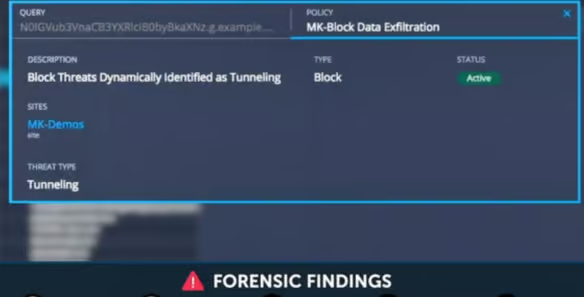
This video demonstrates the forensic value of DNS Edge to provide investigative insight, faster and more focused responses, and the ability to reduce attack surfaces. Watch as we demonstrate a comprehensive investigation of a breach, identifying the origination point and taking action to further protect the network.