
5 Ways to Ensure High Availability of F5 Network Environments



Notice: This blog post was originally published on Indeni before its acquisition by BlueCat.
The content reflects the expertise and perspectives of the Indeni team at the time of writing. While some references may be outdated, the insights remain valuable. For the latest updates and solutions, explore the rest of our blog
 Key takeawaysKey takeaways are generated with AI assistance. Because automated summaries can occasionally contain errors or miss important context, always refer to the full blog post for complete information.
The article discusses common configuration mistakes in F5 BIG-IP clustered environments that can accidentally take networks offline and how Indeni helps detect them. It outlines five operational best practices — ensuring cluster configuration sync, consistent NTP servers, disabling preemption, matching static routing tables, and identical HA-group configurations — to prevent failover issues and minimize downtime. Implementing these checks with Indeni improves operational visibility, reduces incident recurrence, and helps maintain high availability for application traffic processing.
Why is it important to keep cluster configuration synchronized across BIG-IP devices?
Keeping cluster configuration synchronized is important because unsynced changes made on one node may not be active after a failover, potentially causing disruption to application traffic. When full configuration synchronization is supported and not maintained, the secondary node could operate with outdated settings, leading to unexpected behavior during failover events. Indeni addresses this risk by alerting when configuration is out of sync so administrators can ensure consistent configurations across cluster members and avoid operational impact.
How can mismatched NTP settings and preemption lead to operational problems in a cluster?
Mismatched NTP settings across cluster members can cause clock drift, complicating log correlation and potentially leading to certificate validation failures if clocks diverge significantly. Preemption (auto failback) causes a primary node to forcibly reclaim active status after reboot; if the primary reboots due to a critical failure, repeated failback can trigger crash loops between primary and secondary systems. Indeni detects both issues — differing NTP servers and preemption being enabled — and alerts so teams can standardize time settings and disable preemption to avoid instability.
What risks arise from non-identical static routes and HA-group configurations in an F5 cluster?
Static route mismatches between cluster members can cause downtime during failover because traffic steering expectations differ per node. Non-identical HA-group configurations create inconsistent criteria for triggering failover (for example, trunk or pool health monitoring), increasing the risk of flapping or preventing intended failovers. Additionally, manual ha-group weight changes recommended by F5 can be forgotten, leaving clusters in an unintended state. Indeni identifies when devices belong to the same cluster or device group and alerts on differing static routes and HA-group settings so administrators can align configurations and reduce failover risk.

Everyone has an IT Horror Story of taking parts of, or the entire network in many cases, down by accident. When an issue like this occurs it is important to understand the symptoms, and ensure it never happens again. With Indeni our customers are able to turn the tribal knowledge around network outages into code, and automatically check for the symptoms if / when they happen again in the future.
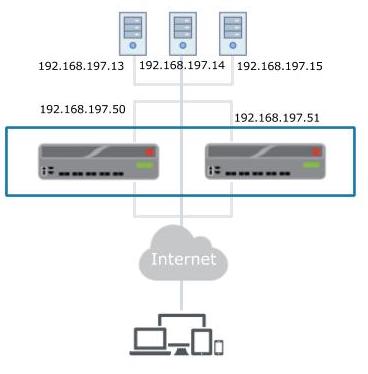
Using a high availability configuration ensures your BIG-IP system is always available to process application traffic. Multiple BIG-IP devices work together in a cluster to reliably process requests and responses from multiple applications, regardless of interruptions on any one system. Here are some of the top best practices to keep your F5 load balancers up and running in a clustered environment:
1. Cluster configuration not synced
It is normally desirable for clusters to have their configuration synced. Else, changes made on one node in a cluster might not be active in the event of a fail over. This might cause disruption. For devices that support full configuration synchronization, Indeni will alert if the configuration is out of sync.
View source code
2. NTP servers do not match
Not configuring the same NTP server across cluster members could make the clock slowly drift. This makes log entries and other information harder to summarize among devices. If the clock drifts very far apart, there could also be issues with validating certificates. Indeni will alert if this happens.
View source code
3. Preemption enabled
Preemption, or auto failback as F5 calls is, is a function in clustering which sets a primary member of the cluster to always strive to be the active member. The trouble with this is that if the active member that is set with preemption on has a critical failure and reboots, the cluster will fail over to the secondary and then immediately fail over back to the primary when it completes the reboot. This can result in another crash and the process would happen again and again in a loop. It is generally a good idea not to have the preemption feature enabled. Preemption is generally a bad idea in clustering, although sometimes it is the default setting. Indeni will alert if it’s on.
View source code
4. Static Routing Table mismatch
Static routes must be the same for all members of the same cluster. Otherwise there can be downtime in the event of a failover. Indeni will identify when two devices are part of a cluster and alert if the static routs on a BIG-I system in use is different.
View source code
5. Non-identical HA-Group configuration
HA-groups are one of the ways to determine if an F5 cluster should fail over or not by keeping track of trunk health and/or specific pool statuses. Should a link in a trunk fail, or a pool member stop responding this could trigger a fail-over. To minimize the risk of flapping an active bonus is highly recommended. Since this configuration is not synchronized it is ideal for it to be identical in all units of the cluster. Even more so, since F5’s recommended way of manually failing over a cluster with ha-groups is to change the weight of the ha-group members. This is easily forgotten once done, which in turn could lead to the system not failing over when components fail. Indeni will identify when two F5 devices are part of a device group and alert if the HA-group configuration is different.
View source code
Want more best practices? Download Indeni today.
Published in:

Ulrica de Fort-Menares is the Vice President of Product Management for Infrastructure Assurance.
Related content

Get answers from the LiveNX data you already have with LiveAssist
Learn how LiveAssist, the AI-powered add-on for LiveNX, turns your network data into fast, guided answers, with value you can see in days.

Get total control of your DDI infrastructure with Micetro’s unified API
Stop juggling between network tools and use Micetro’s RESTful API for complete control over your DDI infrastructure and cloud environment.

BlueCat MCP servers bring network intelligence to your AI assistant
Our MCP servers provide a standard integration layer that makes it easy to connect the AI tools you already use to BlueCat products.

We bet on Intelligent NetOps two years ago. Infoblox now has too.
With Infoblox acquiring Kentik, BlueCat’s CEO confirms its vision for a single platform unifying DDI, network monitoring, and observability.