
Automate your DDI modernization path by migrating with Micetro
Automate cross-platform DNS and DHCP migration with Micetro to reduce risk, eliminate manual effort, and modernize infrastructure faster.



 Key takeawaysKey takeaways are generated with AI assistance. Because automated summaries can occasionally contain errors or miss important context, always refer to the full blog post for complete information.
The article explains how BlueCat Micetro modernizes DDI (DNS, DHCP, IPAM) migrations by replacing manual, risky exports and scripts with deterministic, wizard-driven workflows and API-based orchestration for hybrid, cross-platform environments. It addresses real-world operational pain points like stranded data on decommissioned hardware, late-night cutovers, and multi-vendor heterogeneity by enabling zero-export transfers, offline recovery from cached backups, and pre-flight validation to prevent outages. The result is faster, verifiable modernization—supporting automated, large-scale migrations to platforms such as BIND, Kea, Microsoft, Cisco IOS, Azure DNS, and AWS Route 53—while preserving transactional integrity and simplifying disaster recovery and decommissioning.
DNS and DHCP are the invisible pulse of the network. But they often become infrastructure anchors—rigid, legacy environments that are too risky to move and too critical to ignore.
Historically, migrating DNS and DHCP zones and scopes meant days of manual exports, specialized scripting, and the late-night cutover anxiety that keeps network teams on edge.
BlueCat Micetro ends the migration tax. By replacing manual effort with deterministic, wizard-based workflows, Micetro, BlueCat’s orchestration platform for DHS, DHCP, and IP address management (together known as DDI), can transform DDI modernization from a high-stakes project into a routine, verified operation.
In this post, we’ll explore how Micetro is built for today’s hybrid environments to support cross-platform migration. Next, we’ll highlight key features, including migration from offline or decommissioned hardware and pre-flight validation to eliminate change risk. Finally, we’ll cover Micetro’s value in addressing common migration challenges and how it makes modernization easy for network teams.
Verified, cross-platform migration for hybrid environments
Micetro’s migration engine abstracts the underlying complexity of moving configurations between disparate environments. Whether you are consolidating legacy Microsoft servers or shifting workloads into Azure and AWS, Micetro provides a single, API-driven path forward.
Ultimately, Micetro provides unified orchestration for hybrid realities. Several Micetro features support DDI migration in today’s complex network environments, enabling easy modernization.
- Transactional integrity: Leveraging the same object model that powers the Micetro REST API, every migration is treated as a secure transaction, ensuring data consistency across the target environment.
- Zero-export workflows: Move configurations directly between servers within the web interface—eliminating the need for fragile CSV exports or custom glue code.
- Platform agnostic: Seamlessly transition between Microsoft, BIND, Kea, Cisco IOS, and Micetro DNS/DHCP Servers (MDDSes), or bridge the gap to cloud-native services like Azure DNS and AWS Route 53.
Migrate the unreachable from failed or legacy hardware
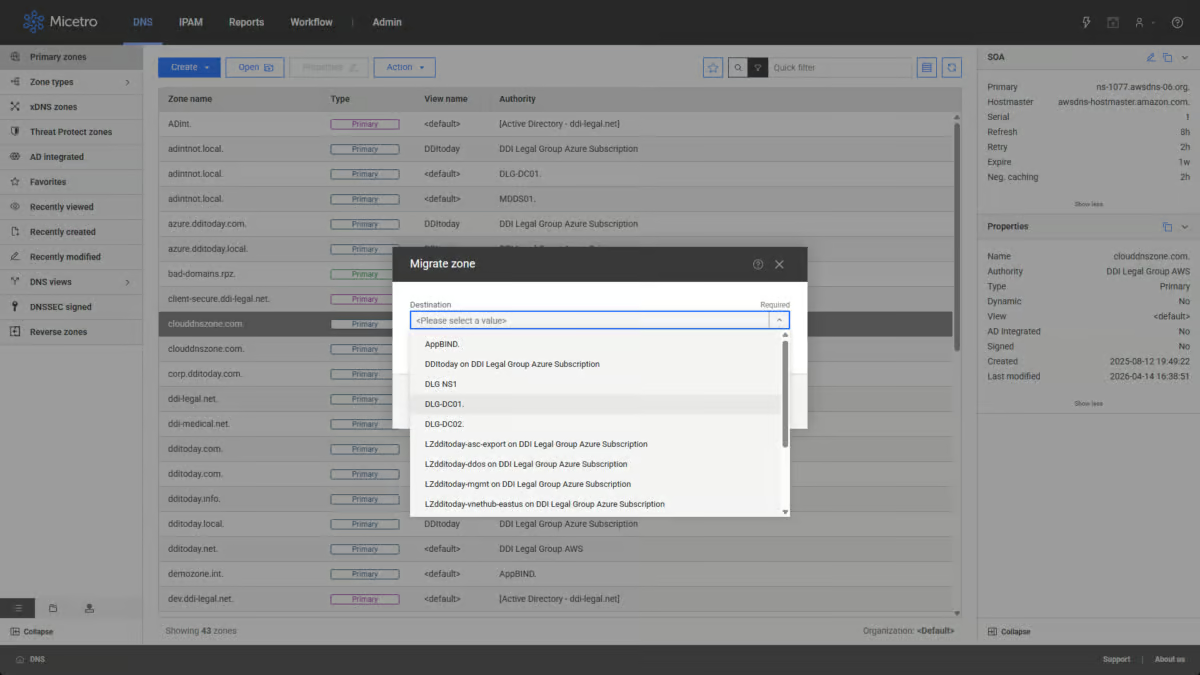
One of Micetro’s most powerful architectural advantages is its ability to interact with the centralized data cache. This allows administrators to migrate DNS zones and DHCP scopes from servers that are already offline or decommissioned.
By utilizing backups and cached metadata, Micetro enables you to recover and redeploy configurations from failed or legacy hardware without ever bringing the old assets back online. This is a strategic game-changer for data center decommissioning, rapid disaster recovery, and aggressive cloud transitions.
Pre-flight validation eliminates change risk
In a manual migration, you don’t know that something is broken until the service fails. Micetro flips this model by introducing pre-flight verification. Features of pre-flight verification include:
- Logic auditing: Before a single byte is moved, Micetro scans for configuration conflicts, missing dependencies, and cross-platform incompatibilities.
- Automated halt on error: If a validation rule is triggered, the system pauses the operation and provides actionable intelligence on the fix, preventing downstream outages.
- Instant rollback: Every migration creates a reversible transaction. If a post-migration test fails, you can return to a “known-good” state with one click.
Micetro’s strategic value: Modernization without friction
Micetro’s migration tools deliver measurable outcomes for a number of common migration challenges that network teams face. The table below provides specific examples of how Micetro solves them.
|
Challenge |
Micetro solution |
Value delivered |
|
Legacy Microsoft DNS and DHCP environments are hard to decommission |
Automated migration to Kea, BIND, or MDDSes |
Accelerated modernization, reduced dependency on legacy Windows infrastructure |
|
Manual zone and scope transfer processes are time-consuming and prone to errors |
Wizard-based migration with built-in validation |
60 to 80% reduction in migration effort; fewer post-migration incidents |
|
Server replacement or hardware failure leaves data stranded |
Offline migration from backups and cached data |
Rapid recovery and redeployment of DHCP scopes |
|
Multiple disjointed tools and scripts for DDI management |
Unified orchestration under one interface |
Simplified operations, consistent governance |
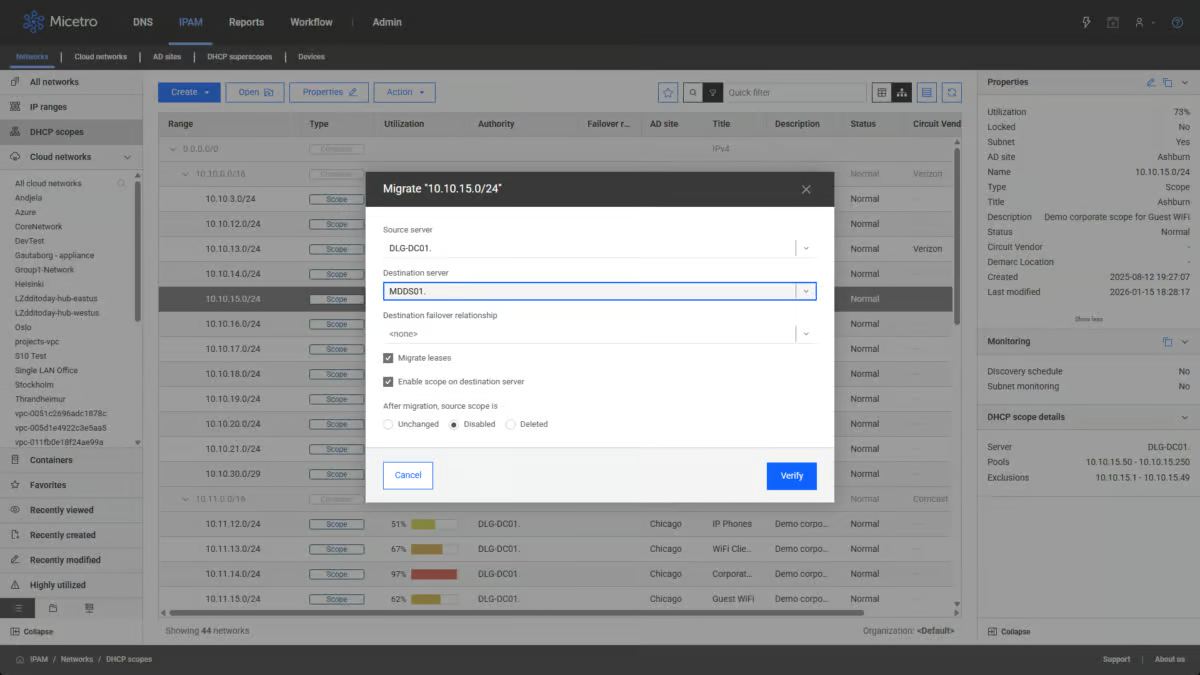
Built for automation and scale, Micetro makes DDI modernization easy
Because every migration function is exposed via the Micetro REST API, bulk migrations can be triggered programmatically, accelerating enterprise-scale transitions across hundreds of scopes or zones. Plus, it’s easy to integrate Micetro with automation frameworks such as Ansible and Terraform, helping network admins efficiently incorporate DDI workflows into DevOps and NetOps pipelines.
Micetro removes the technical debt associated with modernizing DNS and DHCP. It provides a safe, automated, platform-agnostic bridge to the future, so network teams can modernize at the speed of business—not at the speed of manual configuration.
Ready to retire your legacy infrastructure anchors? Learn more about BlueCat Micetro today.
Frequently asked questions
Find answers to common questions about automating cross-platform DNS and DHCP migration with Micetro on your path to DDI modernization.
Still have questions?
Get real answers from a BlueCat representative.
Published in:

Josh Townsend is a Senior Technical Marketing Manager at BlueCat Networks.
Related content

Get answers from the LiveNX data you already have with LiveAssist
Learn how LiveAssist, the AI-powered add-on for LiveNX, turns your network data into fast, guided answers, with value you can see in days.

Get total control of your DDI infrastructure with Micetro’s unified API
Stop juggling between network tools and use Micetro’s RESTful API for complete control over your DDI infrastructure and cloud environment.

BlueCat MCP servers bring network intelligence to your AI assistant
Our MCP servers provide a standard integration layer that makes it easy to connect the AI tools you already use to BlueCat products.
We bet on Intelligent NetOps two years ago. Infoblox now has too.
With Infoblox acquiring Kentik, BlueCat’s CEO confirms its vision for a single platform unifying DDI, network monitoring, and observability.