
Scaling the Business of Culture
When company growth calls for 100 new positions to be added to your ranks, attracting the right talent is likely your #1 priority.


 Key takeawaysKey takeaways are generated with AI assistance. Because automated summaries can occasionally contain errors or miss important context, always refer to the full blog post for complete information.
The article summarizes a CIX conference panel featuring HR leaders from BlueCat, Hubba, Uberflip, League, and MaRS, discussing how to scale company culture during rapid hiring and growth. It addresses real-world challenges such as reassigning early contributors, balancing quantity with quality in hiring, maintaining connection across offices, and using tools and processes (e.g., assessments, surveys, 30/60/90 check-ins, town halls) to preserve values and measure culture fit. Key outcomes include prioritizing HR leadership early, defining non-negotiable values to enable scalable diversity, and implementing systematic recruiting and retention practices to reduce costly hiring mistakes.
What practical steps does BlueCat recommend for maintaining culture as it scales?
BlueCat recommends evolving culture deliberately as the company scales by defining and reinforcing core values or ‘non-negotiables’ (such as transparency and ownership) so a diverse workforce shares a common foundation. They move beyond gut feel for fit by using apps and surveys to measure culture and gather employee sentiment, and they give leaders easy access to this feedback for quick action. BlueCat also emphasizes reassigning original contributors into roles where they can still add value when growth changes role requirements, acknowledging that this is difficult but necessary for long-term success.
How do other panelists suggest balancing hiring volume with quality in high-growth periods?
Panelists recommend implementing systematic recruiting processes and assessment points to balance quantity with quality. Uberflip described changing interview approaches and running a ‘Super Interview Day’ where candidates meet multiple assessors to evaluate different skills and fit efficiently. Hubba splits interviews into a technical panel and a cultural panel and ensures visible diversity on hiring teams to broaden perspective. Multiple panelists also stressed that retention becomes a focus as headcount grows, using structured check-ins (e.g., 30/60/90 day reviews) and investing resources in employee experience to validate fit post-hire.
What role does HR leadership play in avoiding hiring mistakes during rapid growth?
The panel advised hiring HR leadership early and positioning HR as a strategic partner to the C-suite rather than treating recruiters as the sole people strategists. They noted recruiters function as sales-oriented roles and recommended finding an HR lead who can advise the CEO and shape people strategy. Prioritizing HR and recruitment infrastructure helps reduce costly hiring mistakes by ensuring shared values, scalable diversity practices, and tangible culture mechanisms (town halls, budgets for wellbeing, regular check-ins, surveys) are in place to guide hiring and retention decisions as the organization grows.
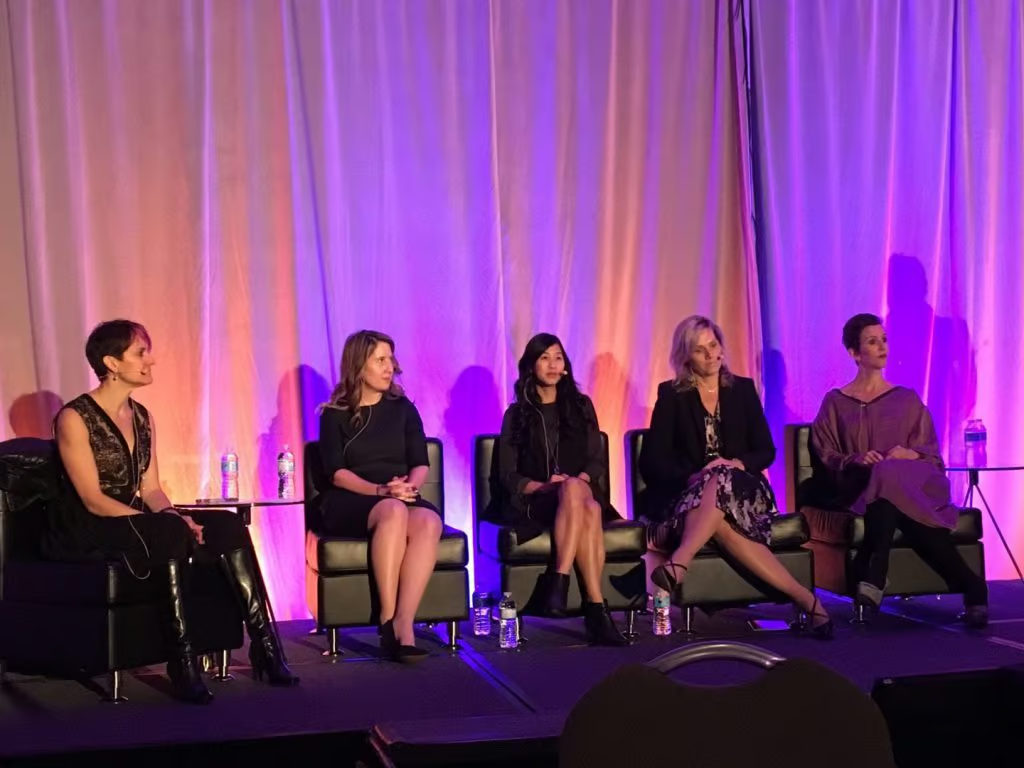
When company growth calls for 100 new positions to be added to your ranks, attracting the right talent is likely your #1 priority. Maintaining your company culture and figuring out how to scale it is just as important. So says Cheryl Kerrigan, BlueCat’s VP People, who was in good company on a panel that included HR leaders from Hubba, Uberflip, and League, at the recent CIX conference in Toronto. Daneal Charney, Director of Talent at MaRS Discovery District, moderated the discussion.
It’s en vogue to talk about culture these days. Everyone touts the virtues of “culture fit” hiring – so much so, that companies are leveraging tools to help define what culture means to them.
Here are some key learnings from this panel on scaling culture in high-growth organizations.
On Pain Points When Scaling

BlueCat – Cheryl Kerrigan, VP People
When scaling, the hardest thing is realizing that the people who got you here are not necessarily the people that can get you to that next level. It takes a lot of courage to admit this. We work hard to find those original contributors other roles in our organization where they can provide value. It’s tough to reassign top players; it’s tough on everyone.
Uberflip – Lisa Chang, Head of People and Culture
There is so much competition in finding talent – and even more finding top talent. Our biggest challenge is balancing quantity with quality. One way we’ve tried to overcome this is by implementing new recruiting processes and systems. We now use systematic assessment points and change the way we interview. Our Super Interview Day is an exercise in efficiency, where candidates meet many people in a single day, all of whom assess different aspects of skills and fit.
League, Inc – Lori Casselman, Chief Health Officer
At League, maintaining our unique culture as we grow is accomplished through communication. We hold bi-weekly town hall meetings led by our CEO, where we share key wins and client success stories. That way, everyone feels connected to company goals. Of course, we revisit processes and practices as we grow, to make sure they serve us as we scale.
Hubba – Danielle Brown, Chief Marketing Officer
With growth comes increased specialization; so when growth means revising roles, we don’t want people to feel that their spheres of influence have been reduced. We help them understand that greater specialization means greater focus and the ability to have more of an impact in a particular area. “Letting go as you grow” is sort of our growth mantra as we reframe roles to adapt to new demands.
On the StartUp Lifecycle
BlueCat
As you scale, your culture needs to evolve. As new people come aboard, and as we pass new milestones and meet new business goals, culture shifts. When there is an obvious culture miss, it can have ripple effects throughout the organization. As we grow, we can no longer rely on gut feel to gauge culture fit, so we use apps and surveys to apply the same level of rigour to the process of fit after the hire. We listen to our people and give leaders easy access to what employees are thinking so they can provide quick feedback.
Uberflip
As we grow, our focus shifts from recruiting to retaining, and we consider culture a business objective. We want to create great experiences for our employees, so we allocate resources and conduct 30/60/90 day check-ins to make sure what we thought was a fit still is.
League
We’re a health-focused company so our six core values revolve around health, from mental health to fiscal health. This is why we have a 4-pillar health strategy for our people. Our department oversees a budget to fund positive team activities and events on topics that keep employees positively engaged and healthy.
It has been a challenge to unify our culture across global offices. Similar signage, equal programming and focus on our core values has helped create a sense of belonging in other geographies.
On Scalable Diversity
BlueCat
Parallel to culture, we give thought to our ‘non-negotiables’ – and by that we mean our values. If you value transparency and ownership as much as we do, your organization can support a lot of diversity but still maintain a common foundation, which in turn supports the essence of our culture.
Hubba
It’s important to have a diversity mindset. More diversity equals stronger teams. We often ask, “Is this the right person for the team?” It’s not just about finding the right background and skill set for the role. We have a visibly diverse hiring team and we break our interview process into two: a technical panel and a cultural panel.
Parting Thoughts
By prioritizing HR and recruitment, you can avoid costly hiring mistakes.
Fast-growing organizations should:
- Hire HR leadership early
- Understand that recruiters are not people strategists. They are in sales.
- Find an HR lead that is a partner to the C-suite and confidante to the CEO
It is said that culture is behavior that your organization is willing to tolerate. Shared values, diversity, and a tangible culture help your company stay grounded as you grow.

Growth by Content is what I do. I’m fuelled by conversations, coffee and sarcasm.
Related content

Get answers from the LiveNX data you already have with LiveAssist
Learn how LiveAssist, the AI-powered add-on for LiveNX, turns your network data into fast, guided answers, with value you can see in days.

LiveWire GEN3 device offerings
BlueCat LiveWire is a packet capture and network forensics platform that provides deep packet-level visibility across hybrid enterprise environments to help…

Get total control of your DDI infrastructure with Micetro’s unified API
Stop juggling between network tools and use Micetro’s RESTful API for complete control over your DDI infrastructure and cloud environment.

BlueCat MCP servers bring network intelligence to your AI assistant
Our MCP servers provide a standard integration layer that makes it easy to connect the AI tools you already use to BlueCat products.