
Unlock DNS redundancy with BlueCat Micetro’s xDNS®
Discover how Micetro’s xDNS® simplifies hybrid cloud DNS management with redundancy, protection against DNS attacks, and enhanced visibility.



 Key takeawaysKey takeaways are generated with AI assistance. Because automated summaries can occasionally contain errors or miss important context, always refer to the full blog post for complete information.
The article explains how BlueCat Micetro’s xDNS® addresses DNS management challenges in hybrid cloud environments by unifying on-premises and cloud DNS, DHCP, and IPAM (DDI) to improve resilience, performance, and security. It outlines real-world problems—single points of failure, limited attack mitigation, and fragmented visibility—and describes xDNS® capabilities such as multi-provider redundancy, synchronized zone replication, centralized visibility with policy-based synchronization, and comprehensive API automation. The practical outcome is reduced downtime and risk, simplified hybrid DNS operations, and operational cost savings through automated failover and consistent DNS records across providers.
How does Micetro xDNS® prevent DNS outages caused by a single provider or server failure?
Micetro xDNS® prevents outages by creating xDNS® redundancy groups that replicate zone content identically across multiple DNS service providers and servers (for example BIND, Windows DNS, Azure DNS, Amazon Route 53, NS1, Dyn, Akamai Fast DNS). Each member maintains appropriately unique NS and SOA records while other record types (A, CNAME, MX, etc.) remain synchronized. If one provider or server goes offline or is attacked, an alternate provider in the redundancy group continues to authoritatively serve DNS requests, providing automatic failover and reducing single-point-of-failure risk.
What mechanisms does Micetro xDNS® use to keep DNS data consistent across hybrid environments?
Micetro xDNS® uses centralized management with policy-based synchronization to ensure consistency across on-premises and cloud DNS. Administrators define granular synchronization policies that determine how updates propagate between environments; once a change is made (including via API), xDNS® replicates that change automatically to all members of the redundancy group. The platform also preserves appropriate per-server NS and SOA uniqueness while keeping other record types synchronized, providing unified visibility into configurations and records across hybrid cloud deployments.
How can organizations automate DNS workflows with Micetro xDNS® and what operational benefits does that provide?
Micetro offers comprehensive API support (REST, SOAP, JSON-RPC) enabling organizations to automate DNS management workflows, from record adds/changes to provisioning and synchronization across xDNS® groups. Record changes performed through the API are automatically replicated to all redundancy group members, reducing manual tasks and human error. Operational benefits include enhanced efficiency, faster change propagation, fewer configuration mistakes, consistent hybrid DNS state, and lower risk of costly outages due to improved orchestration and automated failover capabilities.
In today’s complex IT landscape, managing DNS across hybrid cloud environments can be challenging. Networks spanning on-premises infrastructure, Microsoft Azure, AWS, and beyond face numerous threats and potential points of failure.
To overcome these challenges, enterprises require robust, intelligent DNS solutions capable of ensuring resilience, optimizing performance, and enhancing security.
BlueCat Micetro’s xDNS® feature is designed to deliver redundancy, mitigate DNS-based attacks, and simplify management in heterogeneous DNS environments and across multiple clouds.
In this post, we’ll explore why traditional DNS management tools fall short in hybrid environments. Then, we’ll look in depth at how Micetro’s xDNS® brings added capability by unifying management of on-premise and cloud DNS. Finally, we’ll discuss why you should choose Micetro xDNS® and provide a demo of it in action.
Traditional DNS tools fall short
Managing DNS with traditional tools or individual cloud-provider consoles introduces several critical issues:
- Single points of failure: Traditional DNS setups can become single points of failure, risking costly downtime if one server or service provider goes offline.
- Limited attack mitigation: Without redundancy, DNS servers become vulnerable to attacks such as Distributed Denial of Service (DDoS), leading to severe disruptions.
- Lack of hybrid visibility: Enterprises struggle with fragmented DNS management across multiple platforms, lacking cohesive visibility and control.
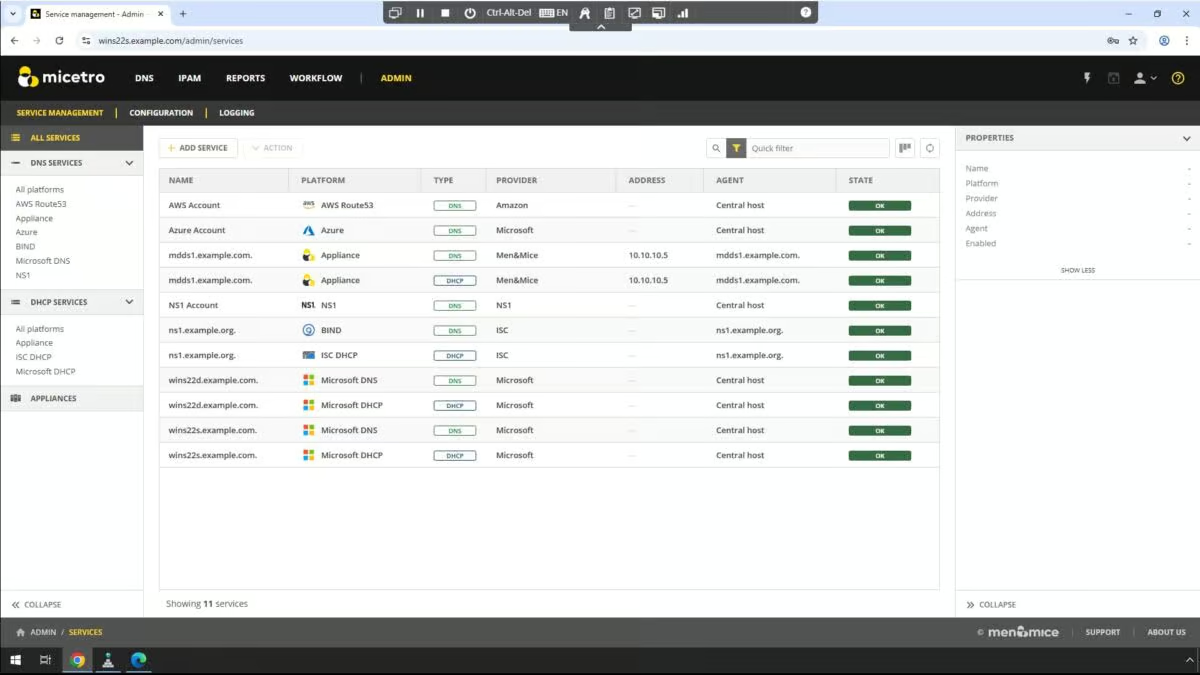
How xDNS® changes the game
In previous posts, we looked at how easy Micetro makes managing on-premises Microsoft DNS and DHCP servers, as well as managing cloud-based DNS and IP spaces in Azure and AWS.
Micetro’s xDNS® takes managing on-premises and cloud-based DNS, DHCP, and IP address management (together known as DDI) from simple management and orchestration to transforming enterprise DDI by offering powerful, intuitive controls to overcome traditional DNS shortfalls.
By unifying management of on-premises and cloud DNS, Micetro’s xDNS® enhances IT capabilities, ensuring DNS availability and managing hybrid cloud environments in several ways:
Built-in redundancy and failover
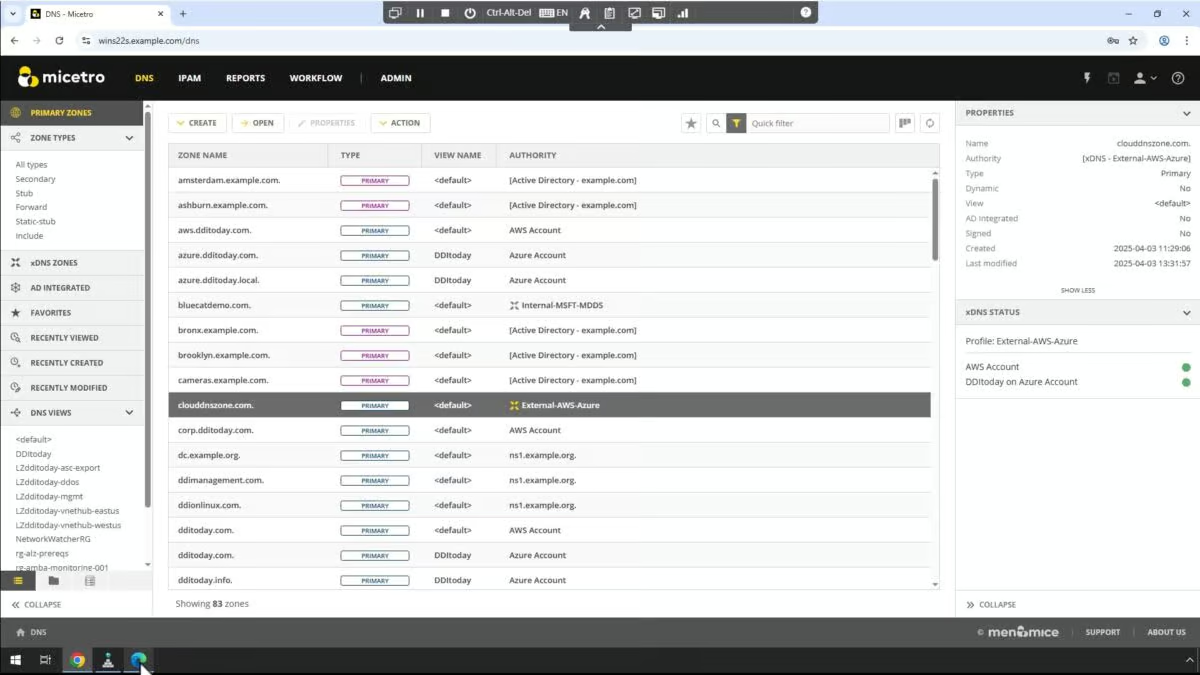
With xDNS®, administrators can effortlessly configure DNS redundancy groups across multiple service providers. This includes BIND, Windows DNS, Azure DNS, Amazon Route 53, NS1, Dyn, and Akamai Fast DNS.
Once an xDNS® zone redundancy group has been created, xDNS® creates identically replicated zone content, resulting in multiple identical primary zones. Additional DNS zones can be added or removed from the xDNS® group as required.
Enhanced protection against DNS failure and attacks
Micetro’s xDNS® maintains DNS zone records across multiple service providers or DNS servers. xDNS® ensures that each server within the xDNS® profile maintains appropriately unique NS and SOA records for the zone, while keeping other record types (A, CNAME, MX, etc.) in sync across providers.
In the event of an outage or attack, an alternate service provider will continue to authoritatively serve DNS requests.
Centralized visibility and policy-based synchronization
Micetro’s unified platform delivers complete visibility into DNS configurations and records across hybrid cloud environments. Administrators have the flexibility to define granular synchronization policies, determining exactly how DNS updates propagate between on-premises and cloud environments. This further reduces complexity and ensures consistency.
Robust automation and efficiency
Micetro’s comprehensive API support—including REST, SOAP, and JSON-RPC—empowers organizations to automate and customize DNS management workflows. By automating repetitive DNS management tasks, organizations reduce manual overhead, prevent human errors, and significantly enhance operational efficiency.
Record adds or changes done through the API are automatically replicated to all members of the xDNS® redundancy group.
Why choose Micetro’s xDNS®?
There are several reasons to choose Micetro’s xDNS®:
- Reduce downtime and risk: Multiple primary zones across service providers provides automatic failover and proactive attack mitigation to ensure constant DNS reliability and security.
- Simplify hybrid DNS management: A centralized interface and powerful automation simplify management, reduce complexity, and enable scalability.
- Cost efficiency: Prevent costly DNS outages, as research shows outages can cost businesses several times more than maintaining a redundant DNS service.
Experience xDNS® in action
Ready to see xDNS® in action? Here’s a quick demo showcasing how Micetro xDNS® provides robust DNS redundancy, whether on-premises, in hybrid cloud scenarios, or across multiple cloud providers.

Don’t settle for fragmented DNS management solutions. BlueCat Micetro’s xDNS® empowers your network teams to build secure, reliable, and redundant internal and external DNS zones.
Ready to simplify and secure your DNS management? Request a free Micetro trial today to see Micetro’s powerful capabilities for yourself.
Published in:

Josh Townsend is a Senior Technical Marketing Manager at BlueCat Networks.
Related content

Get answers from the LiveNX data you already have with LiveAssist
Learn how LiveAssist, the AI-powered add-on for LiveNX, turns your network data into fast, guided answers, with value you can see in days.

Get total control of your DDI infrastructure with Micetro’s unified API
Stop juggling between network tools and use Micetro’s RESTful API for complete control over your DDI infrastructure and cloud environment.

BlueCat MCP servers bring network intelligence to your AI assistant
Our MCP servers provide a standard integration layer that makes it easy to connect the AI tools you already use to BlueCat products.
We bet on Intelligent NetOps two years ago. Infoblox now has too.
With Infoblox acquiring Kentik, BlueCat’s CEO confirms its vision for a single platform unifying DDI, network monitoring, and observability.