
Three business-focused reasons to embrace Unified DDI
Discover with BlueCat how cost optimization, risk reduction, and accelerated digital transformation offer three reasons to adopt Unified DDI.



 Key takeawaysKey takeaways are generated with AI assistance. Because automated summaries can occasionally contain errors or miss important context, always refer to the full blog post for complete information.
This blog post, first in a three-part series, explains why moving from legacy, fragmented DNS/DHCP/IPAM (DDI) to a unified DDI management solution is a strategic imperative for enterprises. It outlines three business-focused benefits—cost optimization, risk reduction, and accelerated digital transformation—showing how unified DDI reduces hidden operational costs, decreases human-error outages, and enables faster cloud and DevOps adoption. The post also describes BlueCat’s two product approaches—Micetro as a non-disruptive management overlay and Integrity as a full enterprise DDI platform—that help organizations modernize DDI while protecting existing investments and enabling automation, security, and cloud integration.
What hidden costs do legacy, fragmented DDI approaches create and how does Unified DDI address them?
Legacy, DIY DDI approaches create hidden costs through prolonged engineering hours on routine tasks, infrastructure sprawl, and significant downtime costs—EMA research cited in the article notes an average enterprise loss of $12,900 per minute during IT outages. Unified DDI addresses these costs by automating routine operations, consolidating infrastructure to reduce hardware needs, and minimizing downtime through centralized management. The article presents EMA findings showing a large enterprise realized $1.5 million in economic benefits within the first year of adopting BlueCat’s Unified DDI and typically reached ROI in under three months, freeing engineers to focus on strategic initiatives like automation and cloud transformation.
How does Unified DDI reduce operational risk and improve security compared to fragmented systems?
The article explains that fragmented DDI systems suffer from inconsistent security controls, limited visibility, and manual processes, with EMA reporting that 60% of network outages stem from human error. Unified DDI reduces these risks by providing centralized policy enforcement, role-based access controls, and real-time threat detection, which collectively cut configuration errors and speed detection and response. EMA data cited indicates enterprises using Unified DDI experienced a 75% reduction in configuration errors and an 80% improvement in threat detection speed, while features like automated audit trails and consistent policy enforcement also simplify regulatory compliance and protect reputation and the bottom line.
What operational benefits does BlueCat claim Unified DDI brings to digital transformation and cloud/DevOps workflows?
According to the article, legacy DDI often bottlenecks initiatives such as hybrid/multicloud adoption, application modernization, and DevOps because manual IP and DNS tasks can take hours or days. BlueCat’s Unified DDI enables seamless cloud integration, automated workflows, and real-time network visibility, allowing DDI to be integrated into DevOps pipelines and reducing IP allocation and DNS change times from hours to minutes. The article cites EMA customer outcomes: one enterprise reported a 90% reduction in service delivery time and another a 92.9% decrease in cloud DNS management effort, demonstrating how Unified DDI frees teams from routine tasks to focus on innovation.
This is the first of three blog posts exploring nine key reasons to move managing your DNS, DHCP, and IP address management (together known as DDI) from a legacy approach to a unified management solution. The posts in this series are drawn from our white paper, Nine reasons to unify your DDI: Strategic advantages for modernizing your DNS, DHCP, and IP address management.
Many network teams embrace the “if it ain’t broke, don’t fix it” mindset regarding their DDI infrastructure.
After all, those spreadsheets tracking IP addresses and that collection of DNS servers have been working for years. Why invest in a new solution when the current setup is free?
But here’s the reality: Your DIY approach to DDI is far from free. It’s probably costing your organization significantly. And not just financially but in lost opportunities to reduce risks to your critical infrastructure and to speed up digital transformation initiatives.
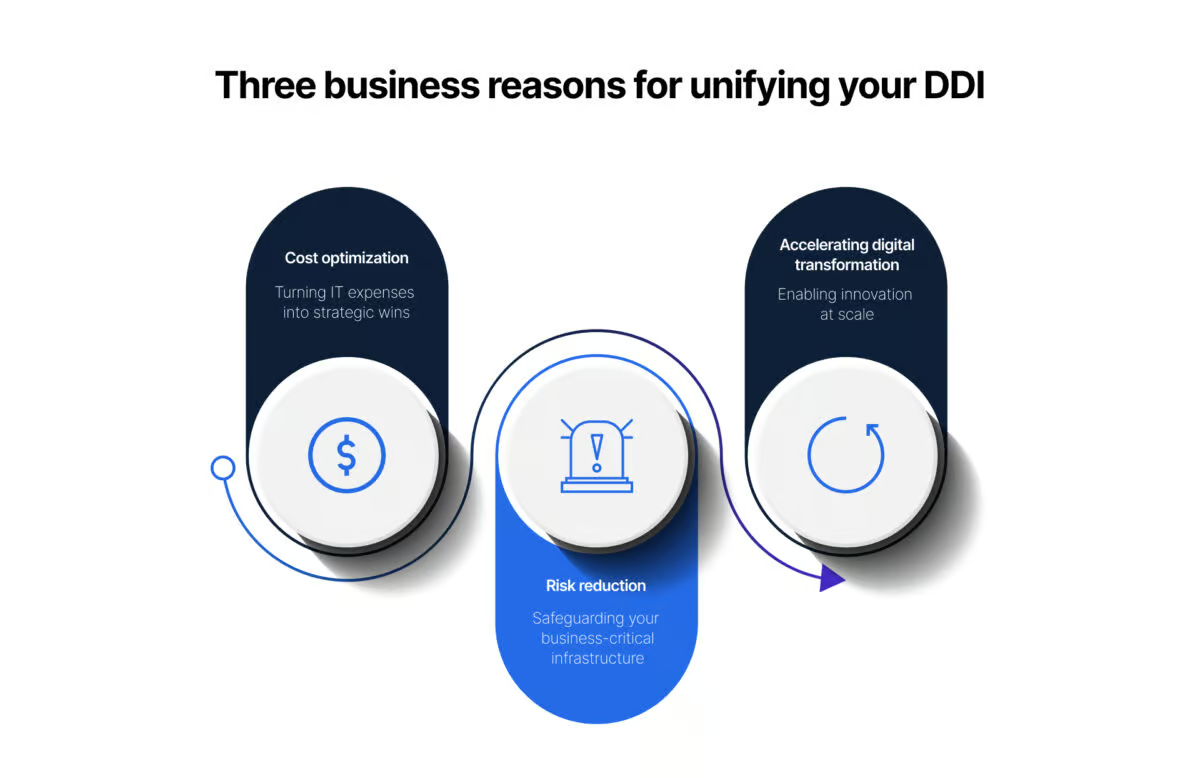
Transitioning to a Unified DDI platform offers transformative benefits for organizations using legacy DDI systems. There are three compelling business-focused reasons why unifying your DDI is not just a smart move but a strategic imperative. These are:
- Cost optimization
- Risk reduction
- Accelerating digital transformation
In this post, we’ll explore how each of these business-focused reasons helps optimize your core network infrastructure. Furthermore, we’ll highlight BlueCat’s solutions for unifying your DDI.
Cost optimization: Turning IT expenses into strategic wins
Many organizations stick with outdated, fragmented DDI systems because they perceive them as “free.” But the reality is far from it. The hidden costs of maintaining these legacy approaches quickly add up: endless hours of engineering time spent on routine tasks, expensive infrastructure sprawl, and the high price of network downtime.
According to Enterprise Management Associates (EMA) research, the average enterprise loses $12,900 per minute during IT outages. That’s not just a financial drain—it’s a direct hit to customer satisfaction and brand reputation. Unified DDI can reverse this trend by streamlining operations and significantly reducing costs. EMA found that one large enterprise saved $1.5 million in economic benefits within the first year of implementing BlueCat’s Unified DDI platform, with a typical return on investment achieved in under three months.
Unified DDI transforms DDI management from a cost center into a value-generating asset by automating routine tasks, reducing hardware requirements, and minimizing downtime. With engineers free to focus on strategic projects like automation and cloud transformation, the savings don’t just conserve dollars and cents but drive innovation.
Risk reduction: Safeguarding your business-critical infrastructure
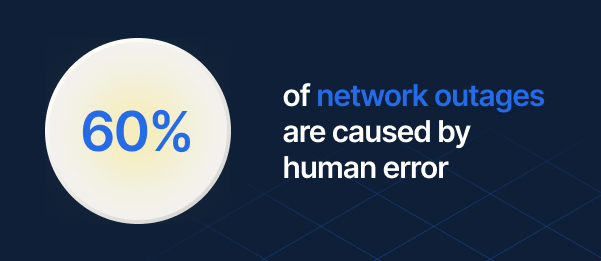
The stakes are high when it comes to securing your DDI infrastructure. Legacy systems riddled with fragmented security controls, limited visibility, and manual processes are a recipe for disaster. In fact, according to EMA, 60% of network outages are caused by human error—avoidable mistakes that cost organizations precious time and money.
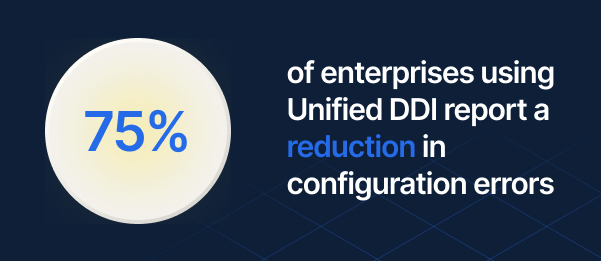
BlueCat’s Unified DDI introduces a robust foundation for operational security, with features like centralized policy enforcement, role-based access controls, and real-time threat detection. These capabilities drastically reduce the risk of human error and bolster your organization’s resilience against cyber threats. EMA research found that enterprises using Unified DDI report a 75% reduction in configuration errors and an 80% improvement in threat detection speed, empowering teams to respond faster and more precisely.
In addition to securing network operations, Unified DDI ensures compliance with regulatory standards. Automated audit trails and consistent policy enforcement make demonstrating adherence to industry regulations easier. The result is the protection of your reputation and bottom line.
Accelerating digital transformation: Enabling innovation at scale
For many organizations, legacy DDI is a bottleneck that slows progress on critical initiatives like hybrid or multicloud adoption, application modernization, and DevOps. Manual processes that take hours—or days—to complete block the agility required to compete in today’s digital-first economy. Even the most modern apps will remain inaccessible without name resolution or IP addresses.
BlueCat’s Unified DDI solutions remove these barriers. They enable seamless integration with cloud platforms, automated workflows, and real-time visibility into network resources. With Unified DDI, organizations can integrate DDI into their DevOps pipelines. This reduces the time for IP allocation and DNS changes from hours to minutes.
EMA found that one enterprise BlueCat customer reported a 90% reduction in service delivery time. Another achieved a 92.9% decrease in cloud DNS management efforts. By freeing IT teams from routine tasks and enabling them to focus on innovation, Unified DDI creates a springboard for digital transformation.
Get Integrity or Micetro for Unified DDI
BlueCat offers two distinct approaches to Unified DDI. Whether you’re looking to overlay management capabilities onto existing infrastructure or implement a complete DDI platform, BlueCat has a solution that aligns with your business objectives.
BlueCat Micetro provides a non-disruptive path to Unified DDI. It orchestrates your existing DNS, DHCP, and IP address management infrastructure through a centralized management overlay. Organizations can benefit immediately while maintaining their current DDI investments. Meanwhile, BlueCat Integrity delivers a comprehensive, enterprise-grade DDI platform. It offers complete control over your DDI infrastructure with built-in automation, security, and cloud integration capabilities.
Unified DDI is more than a technology upgrade. It’s a business transformation tool that empowers organizations to reduce costs, mitigate risks, and embrace digital innovation. Adopting a Unified DDI platform is an investment in agility, security, and growth for enterprises looking to stay competitive in a rapidly evolving world.
Contact us today to learn how Integrity or Micetro can help unify your DDI.
Be sure to read the other two posts in this series, where we explore the three operational reasons and the three technical reasons why Unified DDI can optimize your enterprise network.
Published in:

Josh Townsend is a Senior Technical Marketing Manager at BlueCat Networks.
Related content

Get answers from the LiveNX data you already have with LiveAssist
Learn how LiveAssist, the AI-powered add-on for LiveNX, turns your network data into fast, guided answers, with value you can see in days.

Get total control of your DDI infrastructure with Micetro’s unified API
Stop juggling between network tools and use Micetro’s RESTful API for complete control over your DDI infrastructure and cloud environment.

BlueCat MCP servers bring network intelligence to your AI assistant
Our MCP servers provide a standard integration layer that makes it easy to connect the AI tools you already use to BlueCat products.

We bet on Intelligent NetOps two years ago. Infoblox now has too.
With Infoblox acquiring Kentik, BlueCat’s CEO confirms its vision for a single platform unifying DDI, network monitoring, and observability.