
2018 Network & Security Automation Survey Results Are In



Notice: This blog post was originally published on Indeni before its acquisition by BlueCat.
The content reflects the expertise and perspectives of the Indeni team at the time of writing. While some references may be outdated, the insights remain valuable. For the latest updates and solutions, explore the rest of our blog
 Key takeawaysKey takeaways are generated with AI assistance. Because automated summaries can occasionally contain errors or miss important context, always refer to the full blog post for complete information.
BlueCat and GNS3 surveyed nearly 700 network and security professionals to identify automation trends and barriers in NetOps and SecOps, finding a significant programming knowledge gap that reduces productivity and threatens network availability. Respondents report spending over 60% of their time on repetitive support and troubleshooting while lacking skills to create, parse, and analyze scripts needed for automation, even as 68% of automation projects are commissioned to ensure network availability. The report shows broad migration to virtual machines but limited use of automated provisioning (33%), and recommends automating repetitive tasks, improving cross-department collaboration with shared runbooks, and growing talent through certifications to improve availability, security, and operational efficiency.
What specific programming knowledge gaps did the survey identify as hindering network and security automation?
The survey identified three primary programming-related gaps preventing effective automation: knowing how to create scripts and which commands to use to extract data from devices; how to parse the data returned by those scripts; and how to process and analyze device data for operational decision-making. These gaps mean practitioners struggle to build and operate automated workflows that collect telemetry, convert raw outputs into structured formats, and derive insights or triggers for remediation. As a result, teams spend more time on manual troubleshooting and less on strategic initiatives that improve availability and security.
How does the lack of automation and programming skills impact operational time allocation and network availability?
According to the survey, respondents without sufficient programming skills spend over 60% of their time on repetitive support and troubleshooting activities, with more than one-third citing urgent support and troubleshooting as the most time-consuming task. Because 68% of automation projects are initiated specifically to ensure network availability, this time sink reduces capacity for proactive work such as architecture improvements, security hardening, and automated high-availability configurations. The net operational impact is increased risk to availability and slower response to evolving security and infrastructure demands.
What practical recommendations does the report offer for organizations to improve automation adoption and operational resilience?
The report offers three actionable recommendations: automate repetitive, availability-related tasks using runbooks and dynamic documentation—organizations that use runbooks report them as 82% effective; facilitate collaboration across engineering, operations, and third-party vendors by providing shared tools and processes to exchange knowledge; and grow internal talent through certifications so teams can implement best practices consistently. Additionally, the report notes many organizations are migrating to virtual machines (73%) but only 33% automate provisioning, implying that focusing automation efforts on high-availability, visibility, and security/compliance tasks will yield strong operational benefits.
We partnered with GNS3® on a survey with the intention of uncovering existing trends in the network and security automation space. We’re excited to announce that the results are now in!
From the nearly 700 responses that we collected, we found that a programming knowledge gap is having an impact on the productivity of the businesses that were surveyed, putting network availability at risk. Our respondents identified creating, parsing, and analyzing scripts as the biggest gaps in their knowledge for managing network and security efforts. Due to a lack of programming experience, we found that our respondents spend over 60% of their time on repetitive support and troubleshooting activities and less time contributing to strategic initiatives.
After we analyzed the results of the survey, we saw three main findings that need to be addressed in order for companies to ensure their networks stay secure and available.
Automation is a Necessity to Keep the Business Running
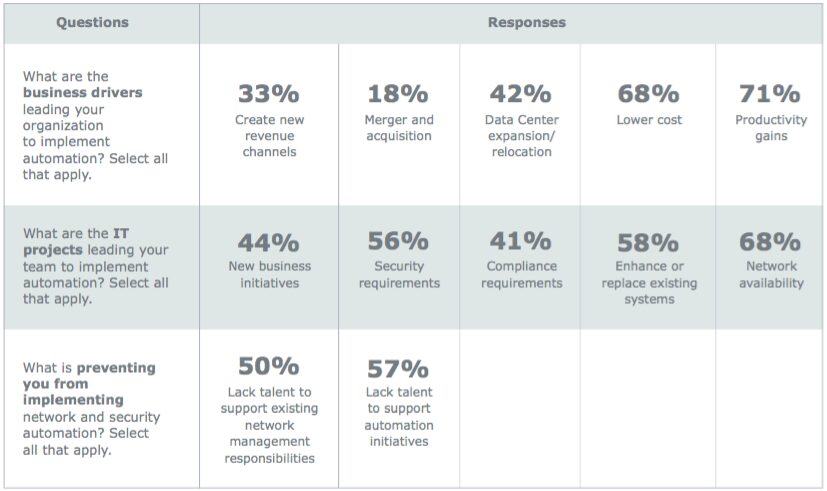
Managers and individual contributors in engineering and IT operations agree automation is a priority to keep the lights on as 68% of automation projects are commissioned to ensure network availability:
Programming Knowledge is Needed
Talent is the biggest barrier to automation and it’s understandable as to why. As the security threat landscape evolves and the innovation continues in Infrastructure as a Service (IaaS), monitoring and managing the network has become more than a full-time job.
Over ⅓ of respondents say that “urgency support and troubleshooting” is the single most time-consuming task. We asked respondents where they need knowledge and the top three gaps are:
- How to create scripts / what commands to use to extract data
- How to parse data returned from scripts
- How to process and analyze device data
Provisioning is Last on the Automation List
Nearly every organization is moving their applications and servers to the cloud. When it comes to network and security components, Enterprises are following suit by migrating bare- metal services to virtual machines.
Our survey shows that the majority (73%) of individuals surveyed are migrating to virtual machines, yet only 1/3 (33%) have begun to use these services to automate provisioning. Tasks related to high availability, network visibility, and security and compliance are indicated by survey respondents to be better candidates for automation.
Upon analyzing the results of the survey and uncovering these findings, we came up with three recommendations for NetOps and SecOps teams to take into consideration.
Automate Repetitive, Mundane Tasks Related to Network Availability
Less than 1/3 of IT organizations are leveraging runbooks to reduce cost and increase productivity. However, those leveraging this kind of dynamic documentation find it 82% effective. Identify solutions that enable you to document runbooks jointly across Engineering, Operations, and third-party vendors (eg. Firewall Manufacturer, Managed Service Provider, etc).
Facilitate Collaboration Across Departments
Every organization is unique and technologies will continue to evolve. As a result, IT must learn how to become more agile. Taking steps to creating a culture that is collaborative is crucial to facilitating collaboration between departments. To do so, you can provide your team with the technology and processes to share knowledge across departments.
Grow Your Talent From Within Through Certifications
The technology landscape is constantly evolving and your network and security teams need to be fluent in the latest technologies to address opportunities to maintain and scale your business. The way to scale and make the network high availability secure and compliant is through consistent implementation of best practices.
We hope you found our findings and recommendations helpful and that you can implement these practices into your organization.
To dive deeper into each of our findings and recommendations download the full 2018 Network and Security Automation Trends Report.
Related content

Get answers from the LiveNX data you already have with LiveAssist
Learn how LiveAssist, the AI-powered add-on for LiveNX, turns your network data into fast, guided answers, with value you can see in days.

LiveWire GEN3 device offerings
BlueCat LiveWire is a packet capture and network forensics platform that provides deep packet-level visibility across hybrid enterprise environments to help…

Get total control of your DDI infrastructure with Micetro’s unified API
Stop juggling between network tools and use Micetro’s RESTful API for complete control over your DDI infrastructure and cloud environment.

BlueCat MCP servers bring network intelligence to your AI assistant
Our MCP servers provide a standard integration layer that makes it easy to connect the AI tools you already use to BlueCat products.