
3 Examples of Security Infrastructure Automation in Action


Notice: This blog post was originally published on Indeni before its acquisition by BlueCat.
The content reflects the expertise and perspectives of the Indeni team at the time of writing. While some references may be outdated, the insights remain valuable. For the latest updates and solutions, explore the rest of our blog
Prioritizing cybersecurity and security operations can feel
like an overwhelming obligation for organizations. As threats continue to
evolve and become more dangerous, decision makers find themselves searching for
more effective and efficient cybersecurity resources.
To address this problem more systematically, companies now
allocate more network and security operations responsibilities toward security
operations centers, or SOCs. Tasked with developing and enforcing security
policy, SOCs respond to threats in real time and provide operational assurance
that cyberdefenses perform IT
infrastructure management as intended.
Having a single team oversee all security concerns is undoubtedly more effective, but this approach can be problematic if the team is unable to keep up with the scale of the work. Security infrastructure automation, or SIA, can help teams fill any potential gaps to ensure a smooth end-to-end security process.
SIA in Practice
Security automation represents the ideal solution because it can handle the operational workloads a security operations center doesn’t have the time or resources to handle. SIA involves collecting performance and configuration data from security devices, performing routine administrative verification tasks, and triaging events that require immediate attention. In short, SIA significantly reduces the liability and legwork of security engineering and operations professionals.
Automation is built to do the work that humans shouldn’t have to do, making SIA a real asset for SOCs that are stretched too thin. Once SIA is in place, everything about your security infrastructure improves as a result. Here are three real-world examples of the benefits of infrastructure automation:
- Trinity Health: Improved Visibility – Health data is highly sensitive and highly regulated. Trinity Health operates a network of 94 hospitals that collectively use thousands of data-collecting medical devices, making cybersecurity a top priority.
The security team relies on SIA to help manage firewalls by monitoring performance, measuring system state, and automatically sending notifications when issues arise. SIA provides security teams the visibility they need to identify and address problems efficiently and to minimize potential cybersecurity liabilities.
- Industry Leaders: Improved Productivity – Major companies in financial services, healthcare, retail, and government all rely on SIA for their IT infrastructure management. Users come from such a wide range of industries because SIA streamlines the processes for all the cybersecurity teams that implement it.
Rather than having staff members spend hours each week locating and analyzing massive amounts of data filled with minute details, automation does the same work faster and more accurately. Security teams are only involved when their attention is necessary, and they spend the rest of their time focused on improving (not monitoring) cybersecurity.
- O’Reilly Auto Parts: Improved Agility – With more than 5,000 stores and a growing e-commerce presence, O’Reilly Auto Parts had a massive digital footprint and an equally significant cybersecurity burden. Once SIA was in place, a five-person IT team was able to mostly automate firewall management and ensure data protection across online and brick-and-mortar locations.
O’Reilly can now pursue an ambitious agenda, including opening 200 new stores a year. Why? Cybersecurity concerns no longer prevent the company from acting boldly and adapting quickly.
SIA isn’t a panacea, but it does have a potentially wide-ranging and profound impact on modern security and network operations centers. Companies don’t have to choose between a manageable security strategy versus one that’s agile — SIA enables both.
 Key takeawaysKey takeaways are generated with AI assistance. Because automated summaries can occasionally contain errors or miss important context, always refer to the full blog post for complete information.
The article explains how Security Infrastructure Automation (SIA) helps Security Operations Centers (SOCs) manage growing cybersecurity workloads by automating routine infrastructure tasks. It describes the real-world problem of SOCs being overwhelmed by scale and complexity, details the technical environment where SIA collects device performance and configuration data, triages events, and performs verification tasks, and highlights operational impacts including improved visibility, productivity, and agility demonstrated by organizations such as Trinity Health, industry leaders across sectors, and O’Reilly Auto Parts. The key outcomes are reduced operational liability and legwork, faster and more accurate handling of routine tasks, and the ability for security teams to focus on strategic improvements rather than continuous monitoring.
What specific tasks does Security Infrastructure Automation (SIA) perform to reduce SOC workload?
According to the article, SIA collects performance and configuration data from security devices, performs routine administrative verification tasks, and triages events that require immediate attention. It monitors device performance and system state, automatically sends notifications when issues arise, and handles the operational workloads that would otherwise consume security engineering and operations staff. By automating these repetitive and data-intensive activities, SIA reduces manual legwork and limits SOC involvement to incidents that genuinely need human expertise.
How did Trinity Health benefit from implementing SIA?
The article states that Trinity Health, which operates a network of 94 hospitals with thousands of data-collecting medical devices, used SIA to improve visibility into its security infrastructure. SIA helped the security team manage firewalls by monitoring performance, measuring system state, and automatically sending notifications when problems occur. This increased visibility allowed Trinity Health to identify and address issues more efficiently, helping minimize potential cybersecurity liabilities in a highly sensitive and regulated health-data environment.
In what way did SIA enable business agility for O’Reilly Auto Parts?
Per the article, O’Reilly Auto Parts used SIA to largely automate firewall management across its extensive digital footprint of more than 5,000 stores and an expanding e-commerce presence. With automation in place, a five-person IT team could ensure data protection across online and brick-and-mortar operations, freeing the company from cybersecurity constraints that might slow expansion. As a result, O’Reilly gained the agility to pursue an ambitious growth agenda—such as opening 200 new stores per year—because cybersecurity concerns no longer impeded bold and rapid business actions.
Related content
Get answers from the LiveNX data you already have with LiveAssist
Learn how LiveAssist, the AI-powered add-on for LiveNX, turns your network data into fast, guided answers, with value you can see in days.

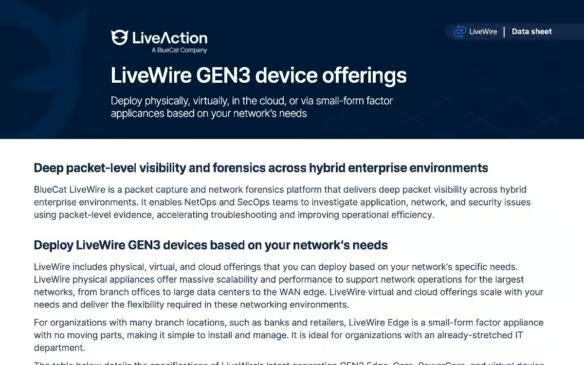
LiveWire GEN3 device offerings
BlueCat LiveWire is a packet capture and network forensics platform that provides deep packet-level visibility across hybrid enterprise environments to help…

Get total control of your DDI infrastructure with Micetro’s unified API
Stop juggling between network tools and use Micetro’s RESTful API for complete control over your DDI infrastructure and cloud environment.
BlueCat MCP servers bring network intelligence to your AI assistant
Our MCP servers provide a standard integration layer that makes it easy to connect the AI tools you already use to BlueCat products.