
Get total control of your DDI infrastructure with Micetro’s unified API
Stop juggling between network tools and use Micetro’s RESTful API for complete control over your DDI infrastructure and cloud environment.



 Key takeawaysKey takeaways are generated with AI assistance. Because automated summaries can occasionally contain errors or miss important context, always refer to the full blog post for complete information.
The article explains how BlueCat Micetro delivers a unified RESTful API to simplify management of DNS, DHCP and IPAM (DDI) across hybrid and multicloud environments, replacing fragmented vendor-specific tools with a single control plane. It describes concrete capabilities—DNS zone and record management across platforms like Microsoft DNS, BIND, Azure DNS and AWS Route 53; DHCP scope, reservation and lease reconciliation across Microsoft DHCP, Kea and Meraki; and IPAM functions including discovery, utilization monitoring and AD Sites integration—and shows how this reduces automation complexity, migration risk, and operational errors. Key outcomes include faster provisioning, consistent governance, improved uptime through automated failover and disaster recovery workflows, and easier cloud adoption with infrastructure-as-code integrations like Ansible and Terraform.
How does the Micetro RESTful API simplify DNS management across different providers?
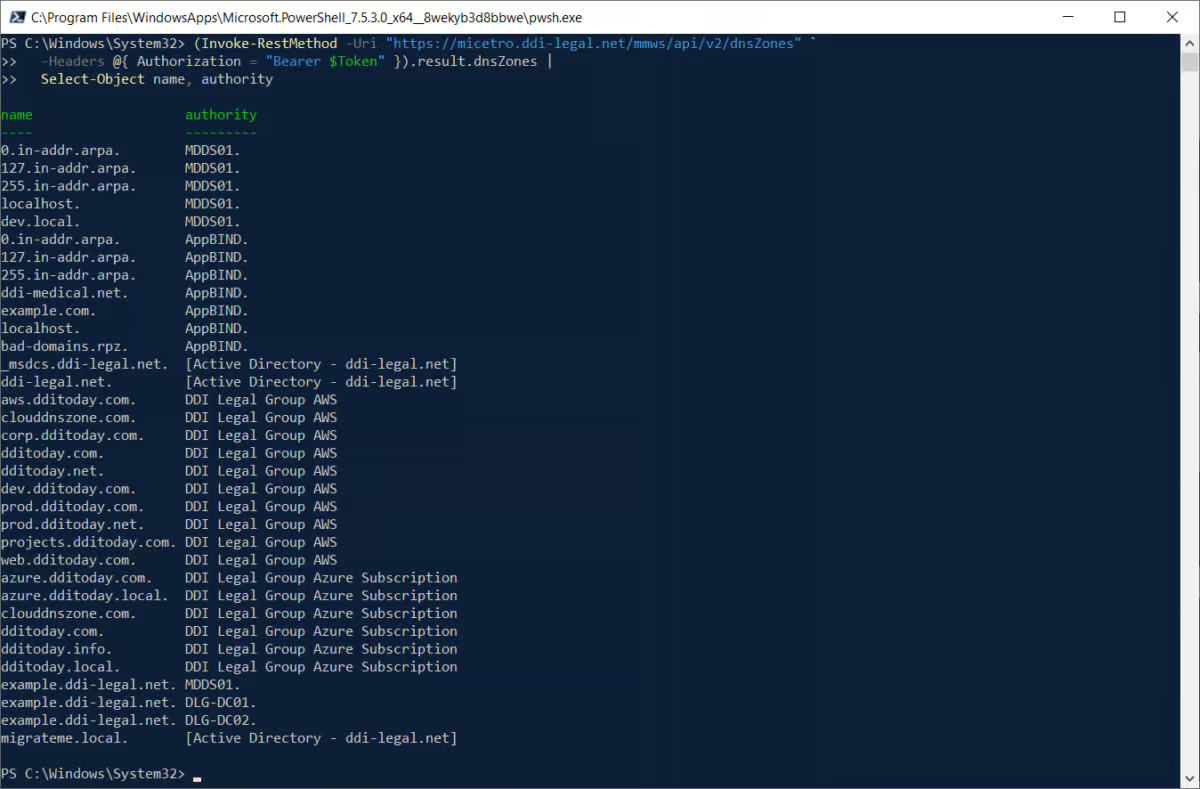
The Micetro RESTful API abstracts vendor-specific DNS APIs into a single, consistent interface so you can create, edit, migrate, or delete zones and manage records (including SRV and NAPTR) across Microsoft Windows Server DNS, BIND, Azure DNS, AWS Route 53, MDDS, NS1, PowerDNS, and Akamai DNSi. A single API request can return zones from multiple backends (for example MDDS, BIND, Microsoft AD DNS, AWS and Azure) and supports orchestration of private zones across cloud providers. This unified surface removes the need to learn multiple SDKs or authentication models and preserves existing orchestration semantics used in the Micetro web UI.
What DHCP and IPAM capabilities can be controlled through Micetro’s API?
Micetro’s API provides programmatic control over DHCP functions such as managing scopes, reservations, pools, exclusions, configuring failover relationships and client classes, and retrieving and reconciling leases across Microsoft DHCP, Kea, ISC DHCP and Cisco Meraki as well as MDDS. For IPAM, the API enables creation and management of address spaces, ranges and subnets, running discovery, monitoring utilization, and triggering workflows based on thresholds. It also integrates with Active Directory Sites and Services for directory-aware subnet and IP address management with support for multi-forest environments.
What operational and risk-reduction benefits does using Micetro’s unified API provide?
Using Micetro’s unified API reduces complexity and operational risk by replacing multiple vendor-specific scripts and SDKs with a single RESTful surface, enabling consistent workflows whether you’re interacting with on-premises systems or cloud providers. This simplifies automation and orchestration, allows DDI to be treated as code (with native Ansible modules and Terraform providers), accelerates cloud migrations by preserving orchestration semantics, and insulates automation from backend vendor API changes. Operational benefits include faster provisioning via self-service APIs, consistent governance and compliance enforcement, improved uptime through automated failover and recovery workflows, and reduced training overhead because teams learn one API rather than many.
In today’s hybrid and multicloud world, most organizations operate core network services—DNS, DHCP, and IP address management (together known as DDI)—across a patchwork of tools.
Whether it’s Microsoft DNS/DHCP, ISC BIND, Kea, Azure, AWS, Cisco Meraki, or something else, each has its own API model, management interface, and operational nuances. This flexibility supports hybrid and multicloud strategies, but it also creates fragmentation. That makes integration harder, automation slower, and change riskier.
BlueCat Micetro, a DDI orchestration platform that provides a non-disruptive overlay across on-premises, hybrid, and multicloud environments, offers a single, consistent control plane instead of forcing teams to adapt to the quirks of each underlying infrastructure tool. At the core of this approach is the Micetro RESTful API—a unified API that abstracts vendor-specific complexity and delivers standardized access to your entire DDI estate.
The result is faster automation, safer integrations, and more predictable operations.
In this post, we first explore how the Micetro API helps you take control of your DDI and your cloud environment. We then highlight examples of how it reduces complexity and risk for your network. Finally, we touch on the operational benefits of Micetro’s unified API and how you can see it for yourself.
Take control of your DDI infrastructure with Micetro’s API
Micetro’s RESTful API provides complete programmatic control over your DDI infrastructure. This helps you manage your DNS, DHCP, IP address management (IPAM), and cloud and hybrid environments more effectively and efficiently. Dive into the specifics below to learn how the Micetro API helps you better manage each of these elements.
DNS
- Create, edit, migrate, or delete DNS zones—including Microsoft Windows Server DNS, BIND, Azure DNS, AWS Route 53, Micetro DNS/DHCP Server (MDDS), NS1, PowerDNS, and Akamai’s DNSi AuthServe and Edge DNS
- Manage DNS records, including advanced types like SRV and NAPTR
- Orchestrate private zones across cloud providers
DHCP
- Manage scopes, reservations, pools, and exclusions across Microsoft DHCP, Kea, ISC DHCP, Cisco Meraki, and MDDS
- Configure failover relationships and client classes
- Retrieve and reconcile leases
IPAM
- Create and manage IP address spaces, ranges, and subnets
- Run discovery, monitor utilization, and trigger workflows based on thresholds
- Integrate with Active Directory Sites and Services for directory-aware subnet and IP address management, with multi-forest support
Cloud and hybrid environments
- Native integrations with AWS Route 53, Azure DNS, and associated IPAM resources
- Cisco Meraki IPAM and subnet orchestration
- Uniform zone and subnet management in the data center or cloud
The Micetro API uses the same orchestration engine as the web UI. As a result, you can execute nearly every action available in the UI through API endpoints.
How a unified API reduces complexity and risk
A unified API for DDI management not only offers complete programmatic control, but it also reduces complexity and risk. Below are specific examples of how the Micetro API increases the efficiency and reliability of your core network operations.
- Simplified automation and orchestration: Instead of juggling multiple vendor-specific SDKs, scripts, and authentication methods, Micetro provides a single RESTful API surface. Whether you’re adding a DNS record in BIND, reserving an IP address in Kea, or provisioning a new subnet in Azure, the workflow looks the same.
- Infrastructure as code: Micetro’s API lets network teams treat DDI services as code and integrate seamlessly into DevOps pipelines. With native Ansible modules and Terraform providers, IT teams can automate configuration consistently across on-premises and cloud environments.
- Accelerated cloud adoption: As enterprises migrate from on-premises Microsoft DNS to cloud-native services like Azure DNS or AWS Route 53, Micetro provides seamless continuity. The same API used for on-premises management applies to the cloud, reducing migration complexity and risk.
- Operational efficiency: Unified automation reduces errors caused by manual configuration. It also minimizes the training burden because your team learns one API, not five.
- Future-proofing: Micetro’s abstraction layer insulates you from backend changes. If a vendor API changes or a new version of Kea, BIND, or Azure introduces breaking updates, Micetro automatically handles the translation, keeping your automation scripts stable.
Operational benefits of the unified Micetro API
There are several operational benefits of the unified Micetro API, including:
- Faster provisioning: Self-service DNS and IP allocations via API calls
- Consistent governance: Enforce security and compliance policies across all platforms through the same API
- Improved uptime: Automate workflows for failover, scope migration, or disaster recovery across heterogeneous backends
- Cloud agility: Migrate services to Azure or AWS while maintaining the same orchestration workflows
Experience what the Micetro API can do for you
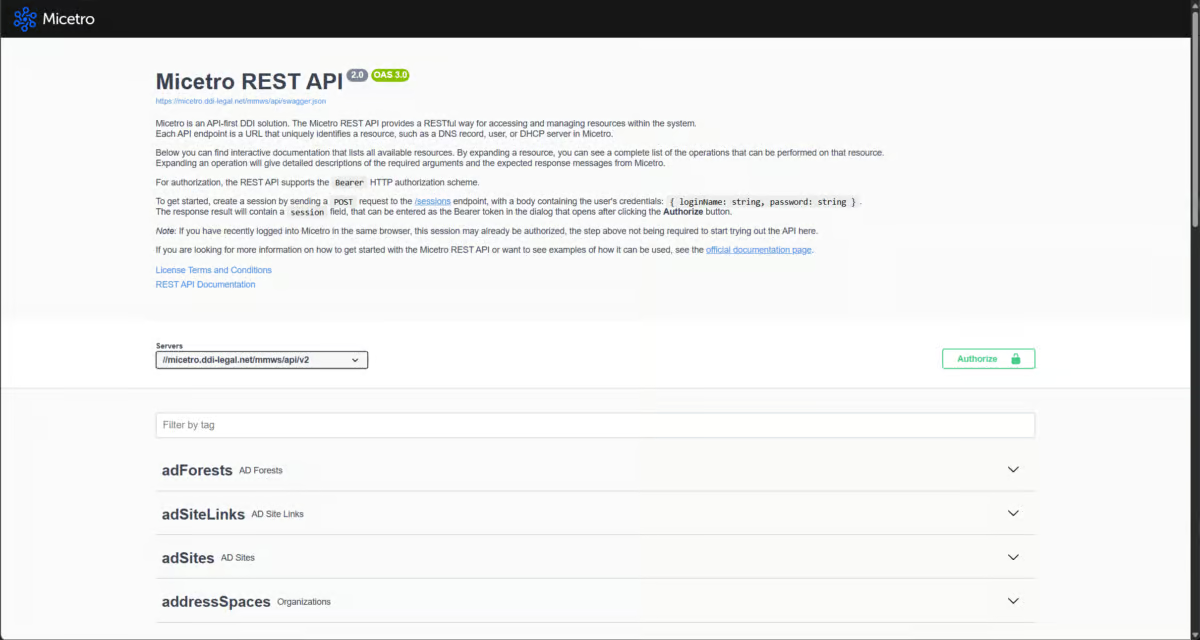
For detailed hands-on guidance and examples to help you take full advantage of Micetro’s orchestration capabilities, check out our whitepaper, Introduction to the Micetro REST API (v25.1+).
But the best way to see Micetro’s unified API in action is to book a demo today.
Published in:

Josh Townsend is a Senior Technical Marketing Manager at BlueCat Networks.
Related content

Get answers from the LiveNX data you already have with LiveAssist
Learn how LiveAssist, the AI-powered add-on for LiveNX, turns your network data into fast, guided answers, with value you can see in days.

LiveWire GEN3 device offerings
BlueCat LiveWire is a packet capture and network forensics platform that provides deep packet-level visibility across hybrid enterprise environments to help…

BlueCat MCP servers bring network intelligence to your AI assistant
Our MCP servers provide a standard integration layer that makes it easy to connect the AI tools you already use to BlueCat products.
We bet on Intelligent NetOps two years ago. Infoblox now has too.
With Infoblox acquiring Kentik, BlueCat’s CEO confirms its vision for a single platform unifying DDI, network monitoring, and observability.