
How to Become a DevOps Enabler



Notice: This blog post was originally published on Indeni before its acquisition by BlueCat.
The content reflects the expertise and perspectives of the Indeni team at the time of writing. While some references may be outdated, the insights remain valuable. For the latest updates and solutions, explore the rest of our blog
 Key takeawaysKey takeaways are generated with AI assistance. Because automated summaries can occasionally contain errors or miss important context, always refer to the full blog post for complete information.
This article provides a practical checklist for IT and security professionals who want to become change agents by transforming IT into a secure, available, and agile organization, based on lessons from an RSA virtual conference titled 'DevSecOps – Whose Job Is It Anyway?'. It emphasizes three actionable steps — speak the language of the business, adopt the right mindset and communication practices, and embed best practices into day-to-day operations — to improve prioritization, cross-functional collaboration, and operational reliability. The article also highlights tools and resources (books, community groups, runbooks, automation validation) and presents Indeni’s Automation Platform as a solution that proactively validates network and security device compliance and identifies issues before they escalate.
What does 'speak the language of the business' mean and why is it important?
Speaking the language of the business means understanding how applications, networks, and infrastructure affect business outcomes and SLA commitments so technical teams can prioritize work that delivers measurable value. The article stresses that leaders should grasp throughput, SLAs, and how team actions positively or negatively impact internal customers; this makes resource prioritization more effective. Recommended practices include asking counterparts which content they follow (for example, McKinsey research or HBR sessions) and learning communication skills from resources like ‘Crucial Conversations’ to handle tough discussions with stakeholders.
How can teams embed best practices into daily operations to improve automation adoption?
The article identifies the primary barrier to automation as insufficient talent and limited use of operational runbooks — only 27% of survey respondents reported using runbooks. It recommends embedding security and compliance steps directly into checklists and runbooks so they become part of routine tasks. To increase adoption, make processes drop-dead simple and more efficient than legacy methods, reduce waste by simplifying toolsets, and employ solutions that automate validation of best practices to double-check work and catch well-intentioned errors.
What role does mindset and communication play in fostering DevOps and security collaboration?
Mindset and communication are presented as essential because teams cannot be experts in everything; leaders must empathize with other departments and find pragmatic, cross-functional solutions. The article suggests cultivating the right mindset through stories like ‘The Phoenix Project’, joining peer communities (for example, Indeni Crowd), and avoiding coercive incentives in favor of creative recognition programs (sample awards such as ‘Warrior Award’ or ‘Smokey the Bear Award’). These practices help break down silos, encourage feedback without blame, and reward behaviors that promote DevOps culture and security ownership.
Are you striving to be a change agent? If yes, see below for a checklist of resources to help you on your journey of transforming IT to a secure, available and agile organization.
Recently RSA hosted a virtual conference titled, DevSecOps – Whose Job Is It Anyway? We found this presentation to be very useful and wanted to create a follow up asset for our community of security and network professionals to take the next steps.

Step 1: Speak the language of the business
Regardless of your role, it is a well documented by experts that IT professionals need to understand the relationship between the applications, network or infrastructure they support, and how it impacts the business.
As a leader it is even more pressing for you to understand the SLA commitments in place, in addition to how you can enable greater business results (for example by increasing the throughput of a specific part of the network). With an understanding of how your teams actions positively or negatively impact internal customers, you will be more effective at prioritizing your teams resources. Listen to the founder of Indeni, Yoni, describe how he leads in the areas of network operations and automation.
How to do this? Here are the best resources from our community:
- Ask your counterparts what type of content they follow, for example:
a. Solving the productivity puzzle by McKinsey Research
b. Whiteboard Session 3 Myths of Collaboration by Harvard Business Review
- Tough conversations are just that, tough. Learn how to do them less awkwardly:
a. Crucial Conversations – Tools for Talking when Stakes Are High

Step 2: Have the right mindset and be a great communicator
It is unrealistic to expect individuals on your team, or other departments, to be experts in everything. Someone needs to understand the business, network architecture, devices used, how to create scripts, on top of security and compliance best practices. A fun quote that was mentioned on the webinar was, “You can send someone to clown school, but that won’t make them funny.” Once you internalize this, you can empathize with other teams, and then find pragmatic solutions to better serve those departments.
Three resource links:
- Get your mind right – Many of the issues you are facing someone else has experienced before also. Learn from their mistakes. Read the Phoenix Project
- Find like minds – You need peers to bounce ideas off of each other – Join Indeni Crowd
- Stop using carrots and sticks – Get your messages out in a creative way – For example give cross functional awards for those who embody the DevOps culture you’re trying to create. Sample award names could be:
- The Warrior Award – Someone who is great at breaking down silos
- Eagle Eyes Award – Give to someone who focuses on quality
- Smooth Operator Award – Someone who is great at offering feedback without blame
- Smokey the Bear Award – Someone who is the internal security champion “Only you can prevent a security breach”
- No Fear Award – Someone who takes calculated risks, and doesn’t fear failure

Step 3: Embed best practices in Day-to-Day operations
The #1 barrier to implementation of automation is not having enough talent to complete existing initiatives or to jump start new automation initiatives. In fact, only 27% of survey respondents to Network Security Automation survey indicated that they are using runbooks. Runbooks contain checklists and processes for operations to follow. It is inside these checklists is precisely where security and compliance needs to be interjected. Now, what if no one is reading your documentation, in a runbook or otherwise?
If you want someone do something, you have to make it drop dead simple. Better yet, make it easier for them to perform the same task but with greater efficiency.
Resource links:
- Relentlessly remove waste – Reduce and/or simplify the tools that are provided to those departments to do their job
- Automate validation of best practices – Leverage solutions that double check the work of your team members, and catch well meaning errors.
Final step: Facilitate DevOps in Network and Security Teams
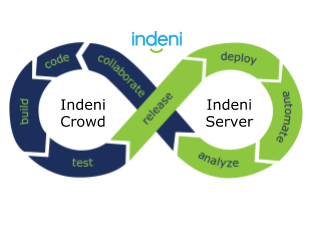
With the Indeni Automation Platform, operations has a personal assistant proactively identifying issues before they become major events. Indeni continuously validates network and security devices are operating based on security and compliance best practices. Learn more by downloading How Indeni Works Technical White Paper or Download Indeni.
Related content

Get answers from the LiveNX data you already have with LiveAssist
Learn how LiveAssist, the AI-powered add-on for LiveNX, turns your network data into fast, guided answers, with value you can see in days.

Get total control of your DDI infrastructure with Micetro’s unified API
Stop juggling between network tools and use Micetro’s RESTful API for complete control over your DDI infrastructure and cloud environment.

BlueCat MCP servers bring network intelligence to your AI assistant
Our MCP servers provide a standard integration layer that makes it easy to connect the AI tools you already use to BlueCat products.
We bet on Intelligent NetOps two years ago. Infoblox now has too.
With Infoblox acquiring Kentik, BlueCat’s CEO confirms its vision for a single platform unifying DDI, network monitoring, and observability.