
Automate it all in Integrity with REST v2 API-first DDI management
Discover API-first DDI with Integrity X by using REST v2 to automate DNS, DHCP, and IPAM for scalable, secure network operations.



 Key takeawaysKey takeaways are generated with AI assistance. Because automated summaries can occasionally contain errors or miss important context, always refer to the full blog post for complete information.
The article explains how BlueCat’s Integrity X platform uses an API-first architecture where every UI action is a real REST v2 API call, enabling full automation of DNS, DHCP, and IPAM (DDI) to address complexity in hybrid network environments. It highlights REST v2’s OpenAPI-based, standards-compliant design, interactive Swagger exploration, enterprise-grade security, and advanced querying to ensure predictable, scalable automation that integrates with DevOps toolchains. The operational impact includes faster provisioning, improved resilience and security, and reusable automation playbooks that accelerate delivery while future-proofing DDI management with REST v2 as the definitive path forward.
To effectively manage today’s complex, hybrid networks, enterprises need APIs to automate their DNS, DHCP, and IP address management (together known as DDI).
Automation is no longer optional; it’s mission-critical for ensuring performance, resilience, and security.
With an API-first architecture, Integrity X, BlueCat’s platform for unified enterprise DDI management, is built for automation. Every aspect of the platform runs on the REST v2 API, the same interface we put directly in customers’ hands. If it is powerful enough to run Integrity X itself, it is powerful enough to run your automation.
In this post, we first explore how you can automate every action in the Integrity X UI. Next, we delve into Integrity X’s capabilities on the REST v2 API platform and provide automation examples. And finally, we demonstrate how easy it is to apply REST v2 and how Integrity is built for an API-first future.
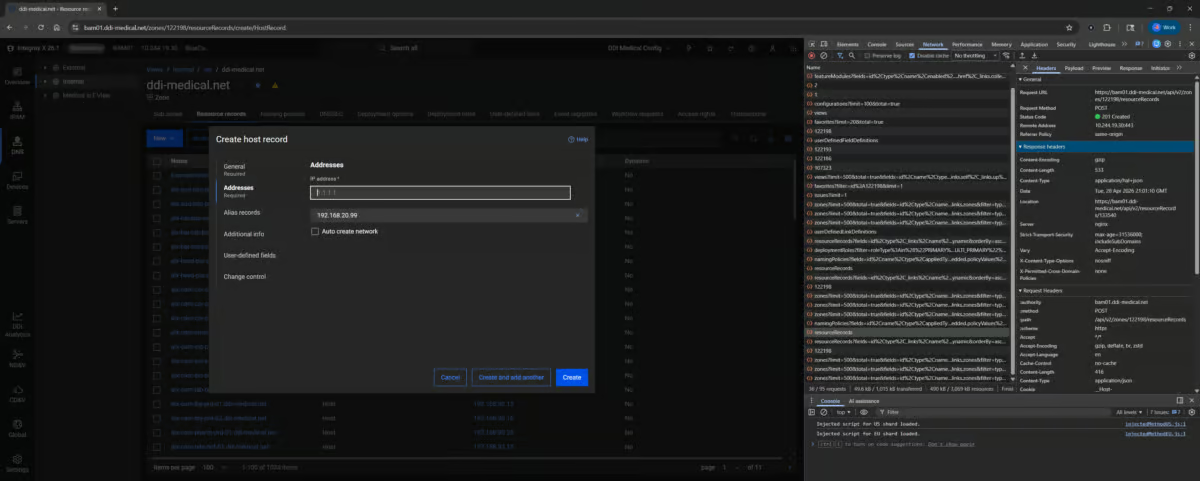
Every action in the Integrity X UI is a real API call
Many DDI management solution vendors expose only partial or outdated APIs. This approach limits automation and forces network teams into brittle workarounds or dependency on professional services.
Integrity X flips this model.
Every action you see in the Integrity X UI is a real API call, fully documented in OpenAPI (OAS3), browsable in Swagger, and aligned with modern DevOps practices. The result is consistency and predictability. Every click, workflow, and automation runs through the same REST v2 engine.
If you can do it in the UI, you can automate it. This empowers network teams to scale with confidence.
Key REST v2 capabilities
Unlike static or limited APIs, REST v2 allows for continuous evolution. You can add new endpoints and capabilities without breaking existing workflows, so customers are never locked into outdated features or left behind.
Key features of Integrity X’s capabilities on the REST v2 API platform include:
- Standards-based design: Engineered on OpenAPI, with JSON and HAL+JSON responses, ensuring seamless interoperability with modern development ecosystems.
- Interactive exploration: Streamline your workflow by testing endpoints directly in Swagger or importing them into Postman, curl, or custom scripts.
- Enterprise-grade security: Robust authentication options—including Basic and OAuth 2.0 bearer tokens—provide secure, production-ready integration.
- Advanced querying: Optimize performance with powerful filtering, embedded collections, and pagination for precise data retrieval at any scale.
- Future-ready architecture: As the new foundation for Integrity X, REST v2 fully replaces v1 functionality. While v1 remains supported for legacy continuity, v2 is the definitive path forward for all new features and enhancements.
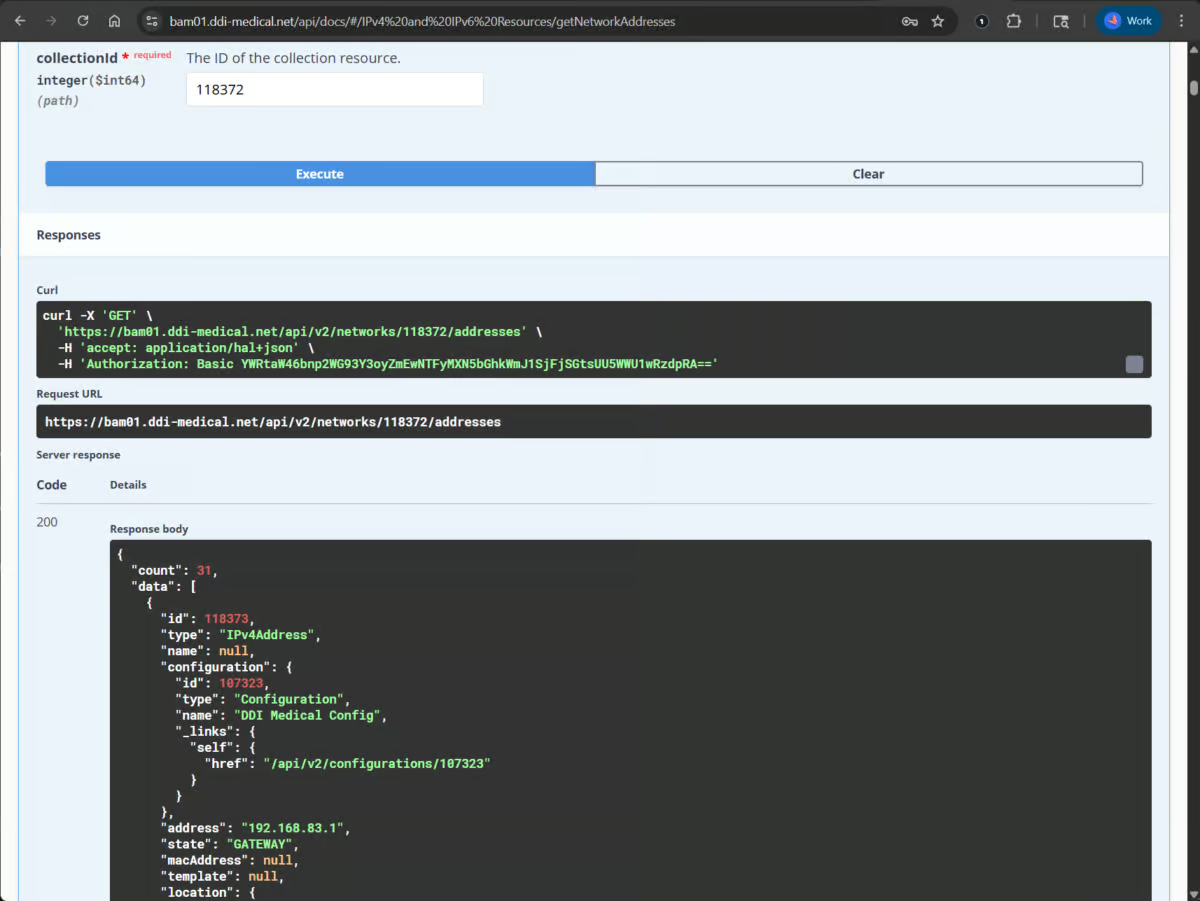
Turn every action into an automation blueprint
Because the Integrity X UI runs directly on the REST API, every manual action serves as a template for automation. Adding DNS records, configuring DHCP ranges, or tagging networks generates real API calls that you can observe, capture, and use to build infrastructure-as-code templates.
Instead of reinventing workflows, teams can transform their daily operations into a scalable, reusable automation library. Below are examples of Integrity X actions that you can automate.
Accelerate deployment and orchestration
- Modern delivery: Integrate DDI into CI/CD pipelines and industry-standard tools like Ansible, Terraform, and ServiceNow.
- Cloud-native agility: Orchestrate blue/green or canary DNS deployments and automate IP assignment across multicloud environments.
- Lifecycle management: Trigger DNS updates in sync with container or virtual machine provisioning and decommissioning.
Scale network operations
- Bulk efficiency: Import large-scale records and perform bulk DNS updates without manual entry.
- Conflict resolution: Streamline IP reconciliation and automatically resolve address conflicts.
- Data integrity: Sync network metadata with configuration management databases and observability platforms to maintain a single source of truth.
Enhance governance and security
- Policy enforcement: Programmatically apply tagging, governance, and compliance policies across the estate.
- Incident response: Automate security playbooks to instantly isolate suspicious domains or redirect traffic.
- Resilience: Standardize and automate database backup, restore, and reset routines to ensure business continuity.
Over time, these tasks form a reusable library of automation playbooks that reduce operational overhead, accelerate delivery timelines, and improve consistency across environments.
Building Integrity X for an API-first future

This video shows just how quickly you can apply REST v2. Within minutes, teams can authenticate, query resources, and update records without touching the UI. Workflows that once consumed hours now take minutes, freeing teams to focus on innovation, strategic projects, and improving security posture.
This is more than a convenience; it translates directly into operational efficiency and faster delivery of business outcomes.
Certainly, Integrity X demonstrates the transformative power of an API-first foundation. Rather than bolting automation onto legacy manual processes, it unifies both worlds into a single, cohesive architecture. This design scales naturally across hybrid and cloud-native environments, supporting modern DevOps pipelines while allowing network teams to pivot as new integrations and compliance requirements emerge.
Every future feature in Integrity X will be built on REST v2, so the automation you implement today is an investment in tomorrow. With Integrity X, automation isn’t an add-on—it is the architecture itself, engineered to evolve with your organization.
Ready to transition your workflows to the power and scale of REST v2 APIs? Book an Integrity discovery session today.
Frequently asked questions
Find answers to common questions about automating in Integrity X using REST v2 API-first DDI management.
Still have questions?
Get real answers from a BlueCat representative.
Published in:

Josh Townsend is a Senior Technical Marketing Manager at BlueCat Networks.
Related content

Get answers from the LiveNX data you already have with LiveAssist
Learn how LiveAssist, the AI-powered add-on for LiveNX, turns your network data into fast, guided answers, with value you can see in days.

Get total control of your DDI infrastructure with Micetro’s unified API
Stop juggling between network tools and use Micetro’s RESTful API for complete control over your DDI infrastructure and cloud environment.

BlueCat MCP servers bring network intelligence to your AI assistant
Our MCP servers provide a standard integration layer that makes it easy to connect the AI tools you already use to BlueCat products.
We bet on Intelligent NetOps two years ago. Infoblox now has too.
With Infoblox acquiring Kentik, BlueCat’s CEO confirms its vision for a single platform unifying DDI, network monitoring, and observability.