
DNS Edge July Release Enables Hybrid Cloud and More



 Key takeawaysKey takeaways are generated with AI assistance. Because automated summaries can occasionally contain errors or miss important context, always refer to the full blog post for complete information.
The article announces BlueCat's July 2018 release of BlueCat DNS Edge which extends DNS Edge service points to Amazon Web Services (AWS) and Microsoft Azure to support hybrid cloud environments. It addresses the real-world problem of cloud application development when data and services are split between on-premises data centers and public clouds by providing prioritized DNS resolution paths, easing migration of zones to the cloud, and reducing attack surface through DNS visibility and policy controls. The outcome described is simpler, more reliable hybrid DNS management—avoiding complex conditional forwarding, enabling namespace prioritization during migration, and allowing policy-based access to keep data and services secure.
How does BlueCat DNS Edge help developers working in hybrid cloud environments?
BlueCat DNS Edge helps developers in hybrid environments by enabling service points to be deployed in AWS or Azure so DNS resolution can be controlled between on-premises and cloud sources. This lets developers focus on building applications rather than managing infrastructure tasks like OS patching or network configuration. By providing multiple namespaces and prioritized resolution order, Edge ensures applications receive answers from the appropriate authoritative source during migration or normal operations, reducing service interruptions caused by misconfiguration.
In what way does Edge simplify migration of DNS zones from data centers to the cloud?
Edge simplifies migration by allowing teams to create multiple namespaces corresponding to the authoritative DNS locations for zones being moved to the cloud or remaining on-premises. Teams can set a prioritized resolution order so if one namespace does not resolve, the next is attempted until an answer is returned. This approach eliminates the need for complex conditional DNS forwarding rules that require careful management and reduces the risk of service interruption from configuration errors during migration.
What security and operational benefits does the July 2018 Edge release provide?
The July 2018 release extends Edge visibility, control, and detection capabilities into AWS and Azure, giving networking teams control over DNS resolution paths and the ability to set policies that restrict access to DNS data and services to only the applications that require them. This reduces the attack surface and misuse of data and services by combining DNS-level visibility with policy-based access controls. Operationally, the prioritized namespace resolution and cloud-deployed service points decrease reliance on fragile forwarding rules and lower the chance of outages caused by migration or misconfiguration.
BlueCat continues its commitment and support of cloud-based infrastructures by extending BlueCat DNS Edge™ visibility, control, and detection capabilities to commercial cloud environments.
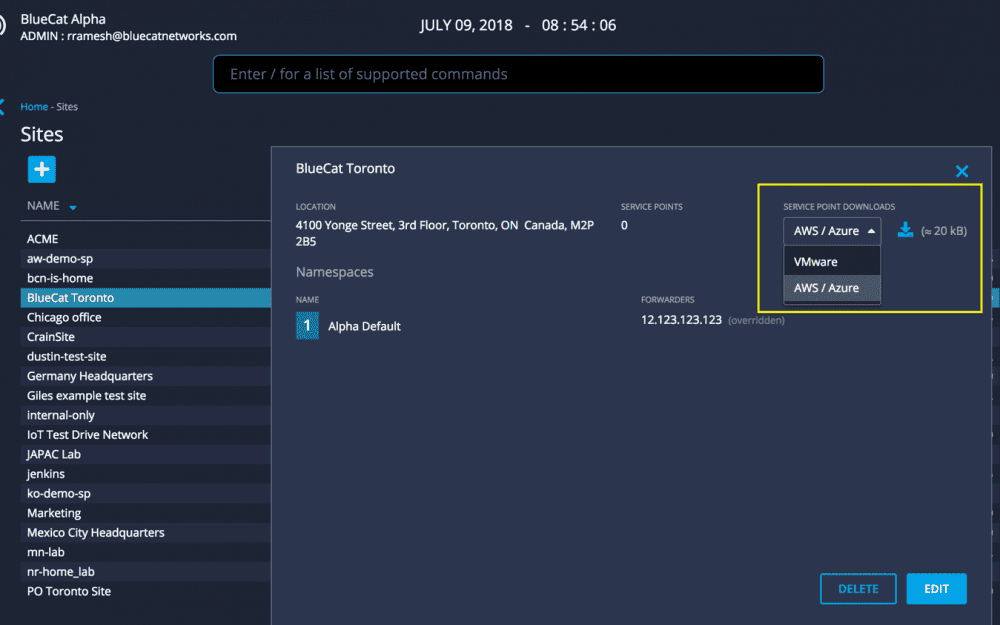
The July 2018 release of Edge, among additional updates, extends service points to be deployed in Amazon Web Services (AWS) or Microsoft Azure.
Leading benefits Edge provides within AWS and Azure include:
- Enabling cloud app developers faced with data stored in hybrid environments
- Easing data and service migration to the cloud
- Reducing attack surface and misuse of data and services
As organizations adapt to cloud services and capabilities, cloud app developers are running into hurdles trying to work within hybrid environments. For various reasons, some IT processes, computing power, and data will need to reside within on-premises data centers while others are moved to the cloud. Many leading organizations insist their proprietary applications and top-secret data remain in a data center they own or in other central services that are not tied to cloud environments. Other data can live within the cloud. Yet building applications in AWS or Azure allows developers to focus on building applications, not setting up servers or services. Instead of spending time on OS patching, network configuration, and more, developers can focus on producing the content or services they want to offer to customers. With Edge service points in AWS or Azure, our customers can control the DNS resolution path to hybrid on-premises and cloud sources in a prioritized order.
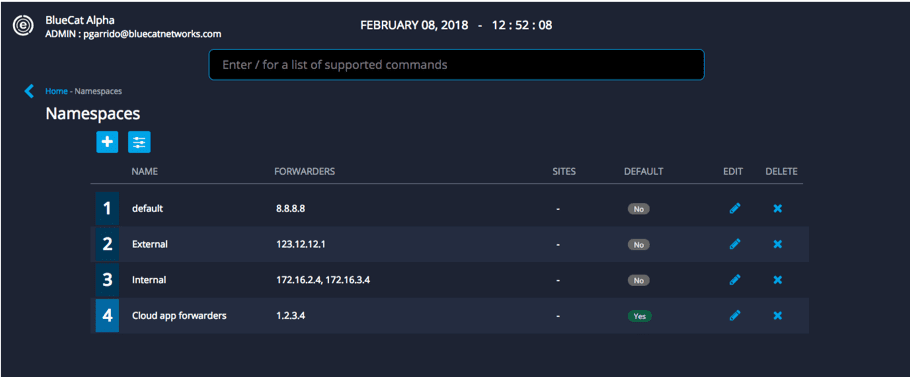
Data and service migration to the cloud also becomes easier. With control and flexibility over how DNS queries are resolved, networking teams can avoid burdensome methods like complicated conditional DNS forwarding rules that require careful management and upkeep. Edge changes the rules to ease the process by simply setting up multiple namespaces, each for the authoritative DNS for where zones are being migrated to in the cloud and from the data center. Edge allows for teams to prioritize the order for each namespace to be resolved to. Should one not resolve as expected, the next will be attempted until an answer is received. No longer will services be interrupted by configuration errors during migration. Edge makes it simple and easy.
Finally, because Edge provides visibility and control of the DNS data itself, it can help keep data safe from attacks and misuse. Simply set policies allowing access to data and services to applications that require access to do their job.
The July 2018 release of BlueCat DNS Edge is now available.
Published in:

Mark is a Senior Product Marketing Manager at BlueCat Networks.
Related content

Get answers from the LiveNX data you already have with LiveAssist
Learn how LiveAssist, the AI-powered add-on for LiveNX, turns your network data into fast, guided answers, with value you can see in days.

Get total control of your DDI infrastructure with Micetro’s unified API
Stop juggling between network tools and use Micetro’s RESTful API for complete control over your DDI infrastructure and cloud environment.

BlueCat MCP servers bring network intelligence to your AI assistant
Our MCP servers provide a standard integration layer that makes it easy to connect the AI tools you already use to BlueCat products.
We bet on Intelligent NetOps two years ago. Infoblox now has too.
With Infoblox acquiring Kentik, BlueCat’s CEO confirms its vision for a single platform unifying DDI, network monitoring, and observability.