
DNS glossary

What is a nameserver?

Abstract isometric UI showing network ranges, usage bars, region names (EMEA/APAC), and a purple "Deploy" button
Key takeawaysKey takeaways are generated with AI assistance. Because automated summaries can occasionally contain errors or miss important context, always refer to the full blog post for complete information.

A nameserver is a DNS server that translates domain names into IP addresses and other data by either holding authoritative zone records or acting as a recursive resolver querying other servers on behalf of clients. Nameservers are fundamental to network operations, but poor management practices such as lame delegations, insufficient redundancy, and stale records can cause visible outages and user disruption. Proper nameserver deployment requires at least two servers on separate networks, careful monitoring for consistency, DNSSEC signing, and security controls to prevent abuse and cache poisoning attacks.

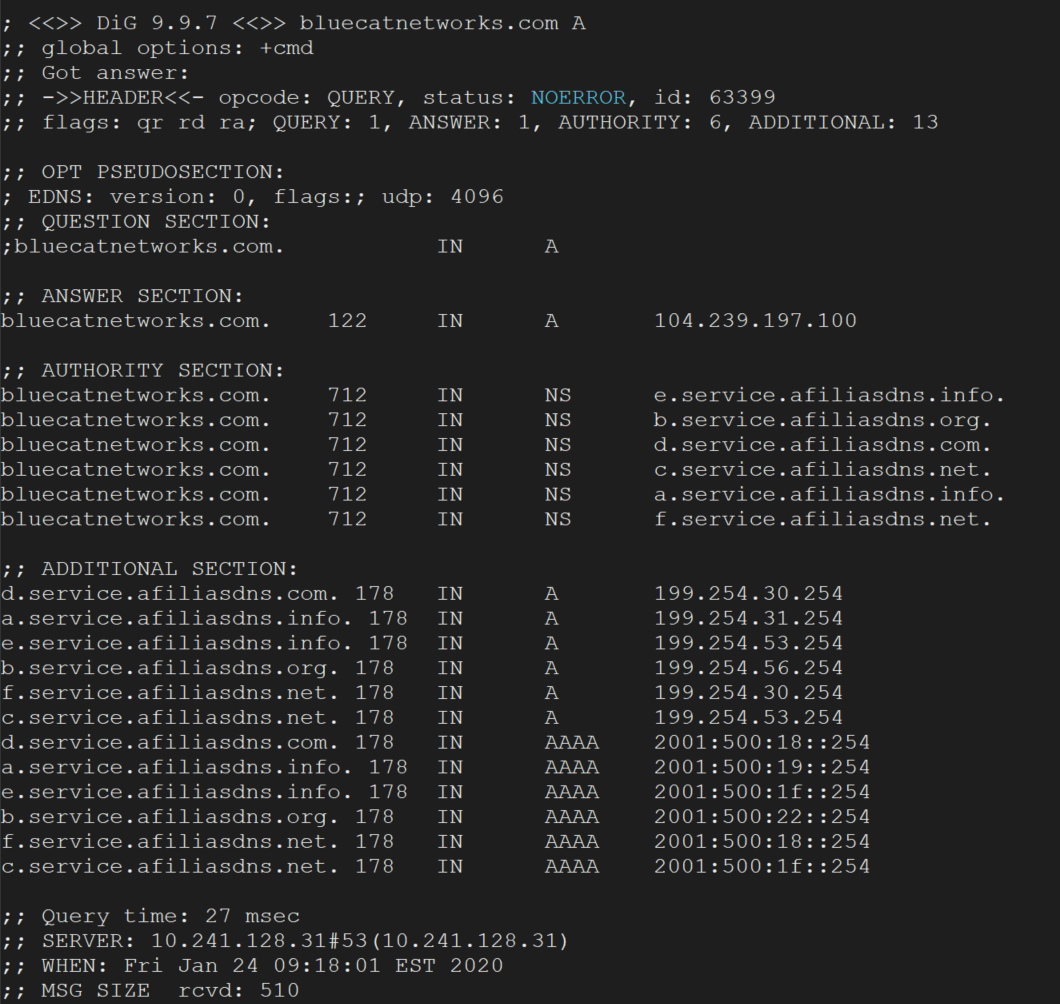
  • Nameservers operate in two primary roles—authoritative servers that hold and return zone data, and recursive resolvers that cache answers and query other servers to resolve names for clients.
  • The DNS root zone is served by 13 named root server identities operating through multiple anycast instances globally, and enterprises increasingly run their own authoritative and recursive nameservers as cloud and hybrid environments expand zone complexity.
  • Common nameserver failures include lame delegations where listed servers do not answer for the zone, mismatched NS record sets between parent and child zones, and shared failure paths when multiple servers sit behind the same network link.

Nameserver at a glance

AttributeValue
Full nameNameserver
CategoryDNS server role
Defined inRFC 1034 and RFC 1035
Protocol and portDNS over UDP and TCP, port 53
OSI layerLayer 7 (application)
Primary useAnswering DNS queries with authoritative or resolved data
Related termsAuthoritative nameserver, Recursive resolver, Root nameserver, DNS zone, Resource record

How nameserver works

A nameserver receives a DNS query, checks what it knows, and either answers or points the client toward a server that can. The behavior depends on whether the server is authoritative, recursive, or both.

  1. Receive the query: The nameserver gets a query containing a name, a record type and a class, usually over UDP on port 53.
  2. Check local data: An authoritative server looks in its zone data. A recursive server checks its cache for a stored, unexpired answer.
  3. Answer or refer: If the server has the data, it returns the records. If not, an authoritative server returns an error or a referral to the delegated nameservers for a child zone.
  4. Recurse when needed: A recursive resolver with no cached answer queries a root nameserver, then top-level domain nameservers, then the zone's authoritative servers, following referrals until it gets an answer.
  5. Return and cache: The resolver sends the final answer to the client and caches it for the time set by the record's time to live.

Responses that exceed the size limit for UDP, or that need reliability, are retried over TCP, as described in the DNS standards. Zones are normally served by at least two nameservers, with secondary servers copying data from a primary through zone transfers.

Why nameserver matters in enterprise networks

Nameservers underpin nearly every network connection, because applications resolve a name before they connect. The root zone is served by 13 named root server identities, each operated through many anycast instances worldwide. Enterprises run their own authoritative and recursive nameservers for internal zones, and the size and number of those zones grow with cloud and hybrid environments.

Poor management causes visible outages. Lame delegations, where a listed nameserver does not answer for the zone, produce slow or failed lookups. A single nameserver, or several that share one network path, creates a single point of failure, and the DNS standards call for redundant servers. Stale records and inconsistent secondary copies send users to wrong or dead destinations.

Nameservers are also a security boundary. Open recursive resolvers can be abused in reflection and amplification attacks, and unprotected caches can be poisoned with forged answers. Controls include restricting recursion to trusted clients, rate limiting responses, signing zones with DNSSEC, and monitoring query logs for unusual patterns.

Nameserver vs Recursive DNS server

A nameserver is the general category of DNS server software or host, while a recursive DNS server is one role that resolves names on behalf of clients by querying other servers. What is Recursive DNS server?

AttributeNameserverRecursive DNS server
Scope of termAny server that answers DNS queriesA server performing the resolver role
Source of answersZone data it holds, or a cache, depending on roleOther nameservers, plus its own cache
Typical clientsResolvers or end hostsStub resolvers on end hosts
Holds zone dataYes when authoritativeNo, except local overrides or cached data

Nameserver vs Authoritative DNS server

A nameserver can be authoritative, recursive or both, while an authoritative server specifically answers from zone data it is configured to serve. What is Authoritative DNS server?

AttributeNameserverAuthoritative DNS server
Scope of termAny DNS-answering serverA server that serves a zone's own data
Answer originZone data or cacheZone files or a zone database
Queries for other zonesRecursive role can resolve themReturns a referral or refusal

Common nameserver issues

An NS record at the parent points to a server that does not answer authoritatively for the zone, often after a migration or decommissioning. Resolvers see timeouts or SERVFAIL on some queries and slow lookups on others.

The NS records published in the parent zone differ from those in the zone itself, usually because only one side was updated. Resolvers may use different servers depending on which set they cache, which makes failures intermittent.

Secondary nameservers fall behind because zone transfers fail or the SOA serial was not incremented. Clients get different answers depending on which server they reach.

A server that is meant to be authoritative also answers recursive queries from any source. It can then be abused for amplification attacks and cache probing.

All listed nameservers sit behind the same network link, subnet or virtualization host. One fault takes the whole zone offline even though several servers are listed.

See how unified DDI simplifies network operations

Manage DNS, DHCP and IP addresses from one platform with automation, visibility and control built in.

Nameserver FAQ

Related terms

Article

Authoritative DNS server / Authoritative name server

Provides original and definitive answers to DNS queries.

Learn more
Article

Recursive DNS server

Responsible for providing the proper IP address of the intended domain name to the requesting host; the first servers contacted as the result of a request.

Learn more
Article

Caching DNS server

A server that handles recursive requests from clients.

Learn more
Article

NS record

A DNS record that provides a list of the authoritative name servers responsible for the domain.

Learn more
Article

DNS zone

A distinct, contiguous portion of the domain name space for which administrative responsibility has been delegated to a single manager.

Learn more
Article

DNS root server

A name server that directly answers requests for records in the root zone and answers other requests by returning a list of authoritative name servers for the appropriate top-level domain.

Article

DNS server

Also called a DNS nameserver, it stores DNS records and responds to and resolves DNS queries from devices. Learn More

Learn more
Article

Forwarding DNS Server

A DNS server on a network that forwards DNS queries for external DNS names to DNS servers outside that network.
Learn more