

Blog
DNS glossary

 Key takeawaysKey takeaways are generated with AI assistance. Because automated summaries can occasionally contain errors or miss important context, always refer to the full blog post for complete information.
A DNS stub resolver is a client-side software component that forwards DNS queries from applications to a configured recursive resolver without performing iterative lookups itself, relying entirely on the resolver's response. Because every networked device includes a stub resolver and its configuration affects all application name lookups, misconfigurations—such as unreachable resolver addresses, stale caches, or incorrect search suffixes—cause intermittent failures, slow page loads, and application timeouts even when network connectivity is healthy. Operations teams manage stub behavior indirectly through DHCP distribution and endpoint management tools, while also facing security considerations around unencrypted DNS traffic and the potential for applications to override resolver settings with encrypted transports like DNS over TLS or DNS over HTTPS.
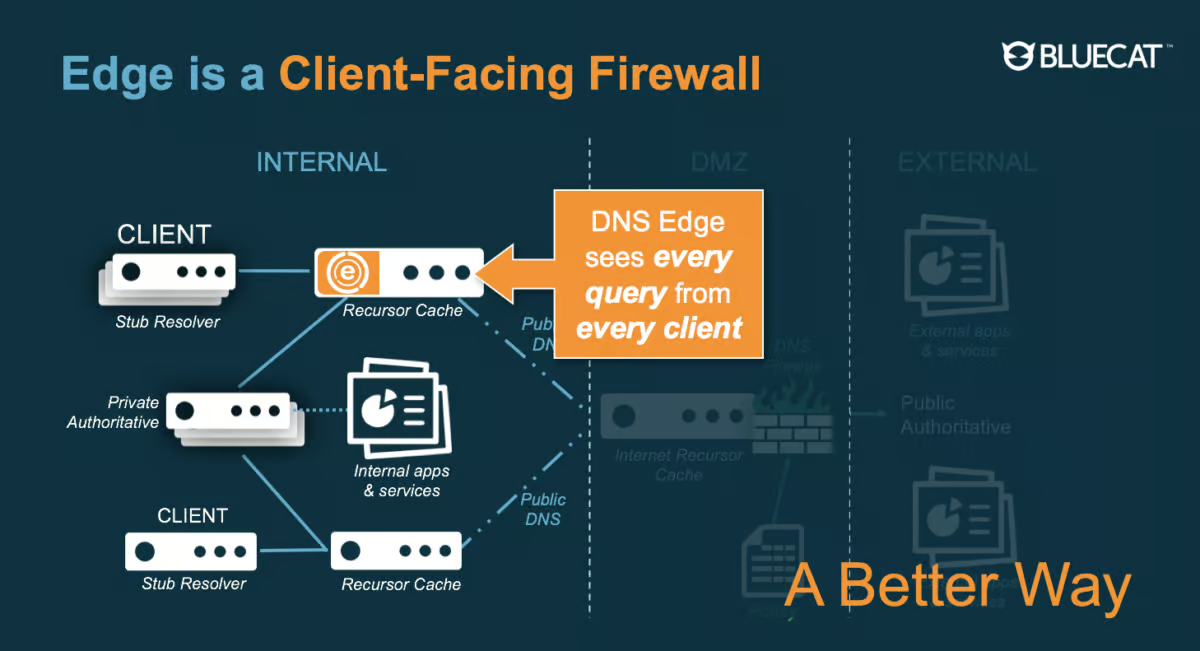
A stub resolver sits between applications on a device and a recursive resolver. It performs no iterative lookups of its own, so its work is limited to passing queries along and handing back results.
If the first configured resolver does not respond, the stub typically retries or tries the next one in its list. Many stubs can also use encrypted transports such as DNS over TLS or DNS over HTTPS to reach the recursive resolver.
If the first configured resolver is down, the stub waits for a timeout before trying the next one, so users see multi-second delays on every lookup. Failover timing varies by operating system, which makes the symptom inconsistent across devices.
Short names are expanded using the configured search domains, so a lookup may generate several failed queries before one succeeds. A wrong suffix list can also resolve a short name to an unintended host.
A local cache can keep returning an old address after a record is changed, even though the recursive resolver already has the new one. Flushing the client cache clears the symptom, which points to the stub rather than the server.
When a VPN client changes resolver settings, internal names may fail off the VPN or public names may go to the internal resolver. Mixed resolver lists in which only some servers know internal zones produce intermittent failures.
A wrong DNS server option in a DHCP scope gives every client in that subnet the same bad resolver address. Failures then appear across many devices at once while IP connectivity still works.

 Article
Responsible for providing the proper IP address of the intended domain name to the requesting host; the first servers contacted as the result of a request.
Article Demand for information sent from a user’s computer (DNS client) to a DNS server.
Article A kind of query in which the DNS server will do all the job of fetching the answer and giving it back to you; the DNS server might also query other DNS servers on your behalf.
Article The standard mechanism to dynamically assign IP addresses within a network.
Article A DNS server on a network that forwards DNS queries for external DNS names to DNS servers outside that network.
Article Also called a DNS nameserver, it stores DNS records and responds to and resolves DNS queries from devices. Learn More
Article A setting for each DNS record that specifies how long a resolver is supposed to cache the DNS query before it expires.
Learn why Adaptive DNS is the foundation for scalable, secure networks and critical to all of your digital transformation strategies.
Read more
The first DNS persona in this 3-part series, DNS as Facilitator is the naive resolver in helping malware spread throughout your networks.
Read more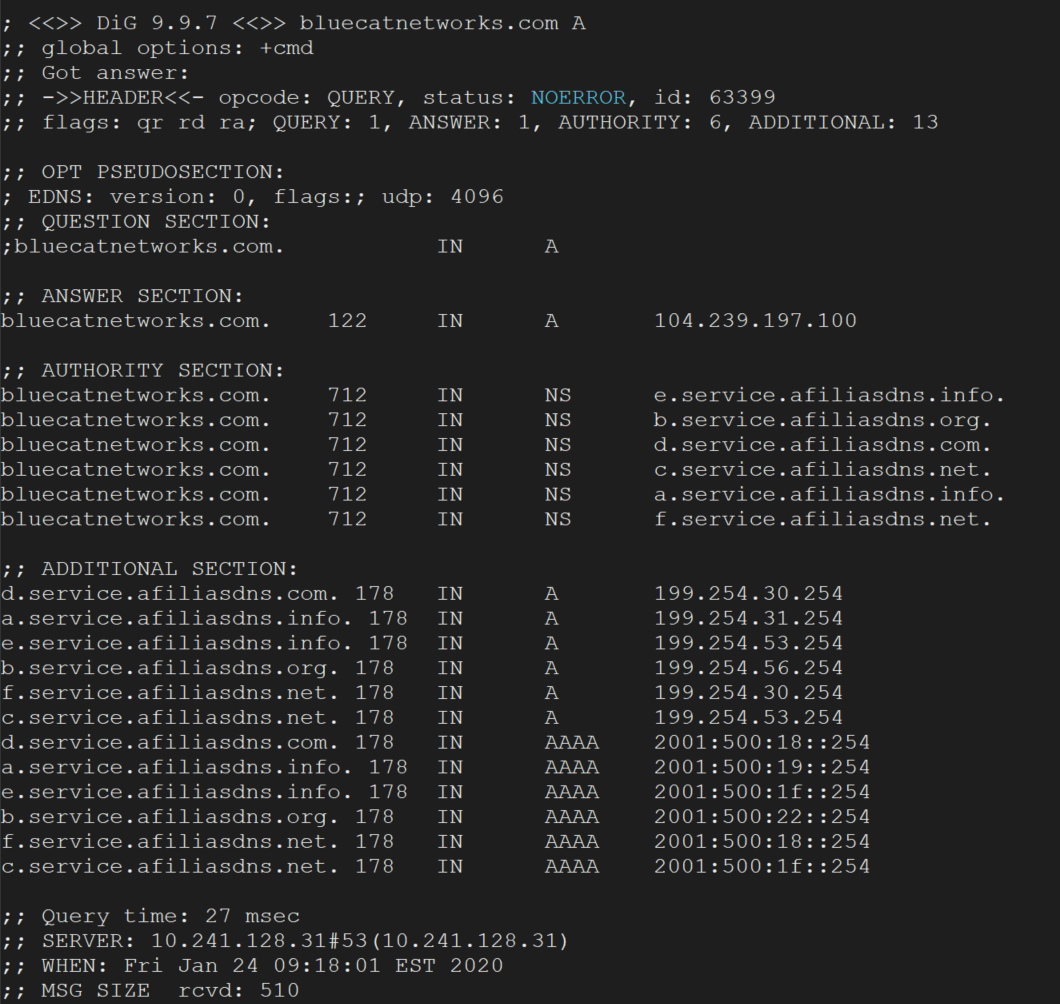
There are dozens of DNS record types. Understanding the most common ones can help you detect threats and keep on top of what's happening…
Read more
DNSSEC authenticates DNS queries and responses by using cryptographic digital signatures. Learn more and how BlueCat can help to make implementation easier.
Read more
Global Server Selector provides easy configuration and automatically updates DNS for highly available access to distributed applications and services.
Read more