
Blog
DNS glossary

 Key takeawaysKey takeaways are generated with AI assistance. Because automated summaries can occasionally contain errors or miss important context, always refer to the full blog post for complete information.
A DNS query is a request message sent by a client to a DNS server asking for records matching a specific domain name, record type, and class, answered according to RFC 1035 specifications. The query initiates nearly every network connection and serves as a direct measure of DNS service demand, with volume analysis by record type, client, and response code revealing capacity needs and identifying misconfigurations. Monitoring query patterns—including spikes in NXDOMAIN responses, query floods, and truncated UDP responses—is critical for operational reliability and security, as unmonitored query traffic allows problems to surface only as user complaints rather than being proactively resolved.
A DNS query carries a question made of a name, a record type and a class. The client sends it to a resolver, which either answers from its cache or works through the DNS hierarchy to find the answer.
Queries normally use UDP, and the client retries over TCP when a response is truncated. The response code reports the outcome, such as no error or NXDOMAIN for a name that does not exist. Extensions such as EDNS and encrypted transports like DNS over TLS change how queries are carried, not what they ask.
A large burst of queries, often for random names or from spoofed sources, can exhaust resolver CPU, sockets or upstream bandwidth. Symptoms are rising latency, SERVFAIL or timeouts, and a query rate far above the normal baseline.
A misconfigured client or application that ignores TTL and caching can send the same query many times per second. It shows up in logs as one client dominating the top-talker list for a single name.
A sudden rise in NXDOMAIN responses often traces to a broken application, a wrong search domain suffix or a stale configuration pointing at a removed name. Clients may also append several search suffixes, multiplying failed queries per lookup.
When an answer exceeds the size a client accepts over UDP, the server sets the truncation flag and the client must retry over TCP. Firewalls that block TCP port 53 cause intermittent failures for large responses such as those with DNSSEC data.
Clients configured with a public or stale resolver bypass internal DNS, so internal names fail to resolve or return different answers. This often appears after DHCP scope changes or on devices with hard-coded DNS settings.

 Article
A kind of query in which the DNS server will do all the job of fetching the answer and giving it back to you; the DNS server might also query other DNS servers on your behalf.
Article A DNS request that states, “Give me the answer or give me any information that will help me find the answer.” The nameserver will respond back from its cache or zone files but will not contact other DNS servers.
Article Responsible for providing the proper IP address of the intended domain name to the requesting host; the first servers contacted as the result of a request.
Article DNS response code indicating the DNS query failed because the domain name queried does not exist.
Article A setting for each DNS record that specifies how long a resolver is supposed to cache the DNS query before it expires.
Article A hierarchical naming system that enables communication across devices in a network.
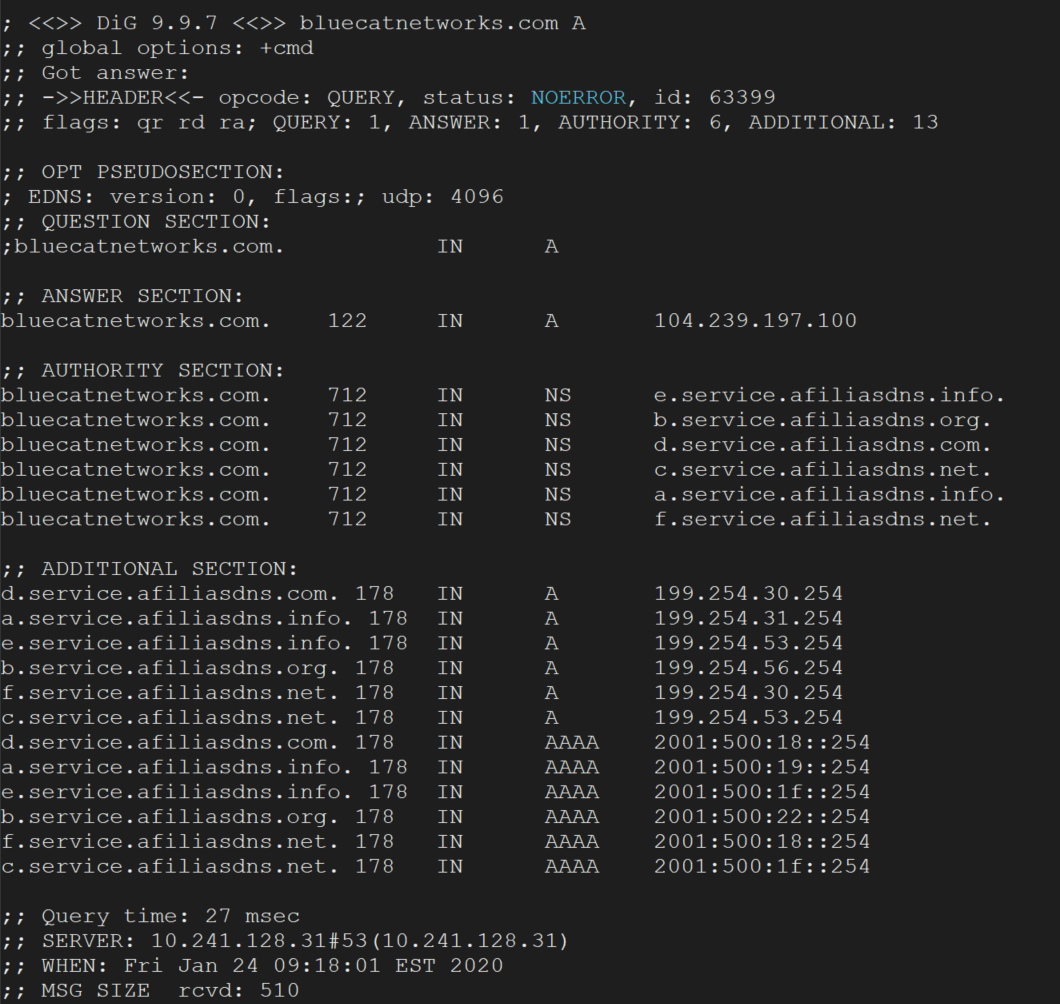
There are dozens of DNS record types. Understanding the most common ones can help you detect threats and keep on top of what's happening…
Read moreEvery DNS query gets a response. Stay on top of your network activity with BlueCat by understanding the four most common DNS response codes.
Read more
Bad actors know that DNS makes a great weapon in producing massive amounts of traffic for successful DDoS attacks. Here's how.
Read more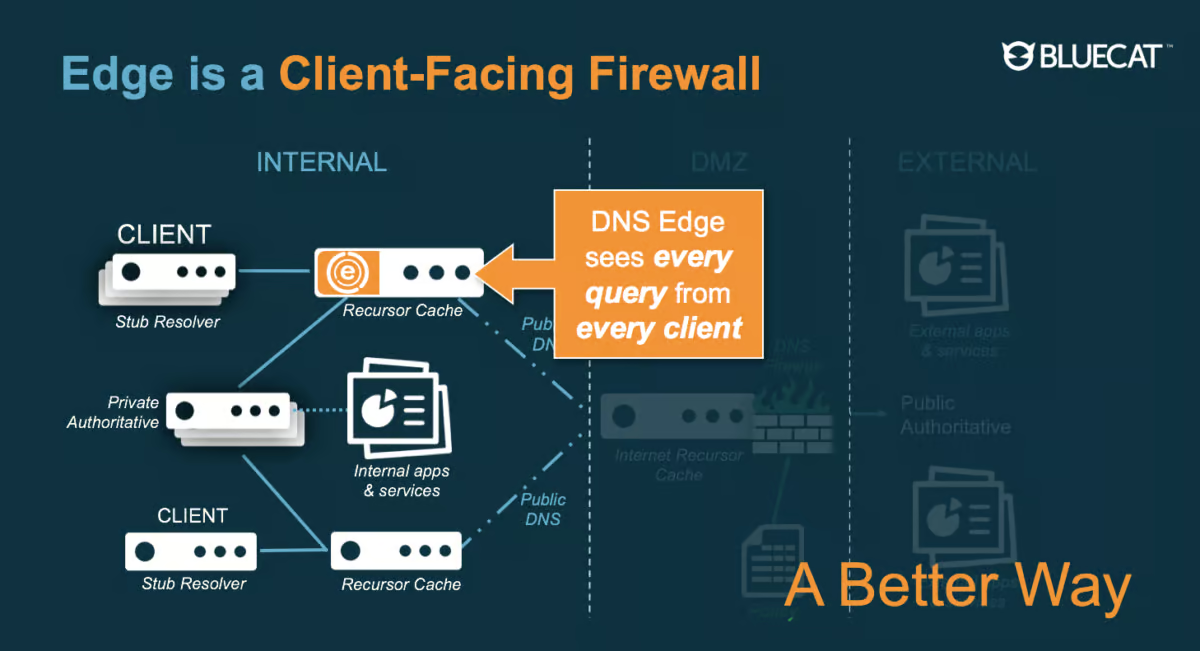
Learn why Adaptive DNS is the foundation for scalable, secure networks and critical to all of your digital transformation strategies.
Read more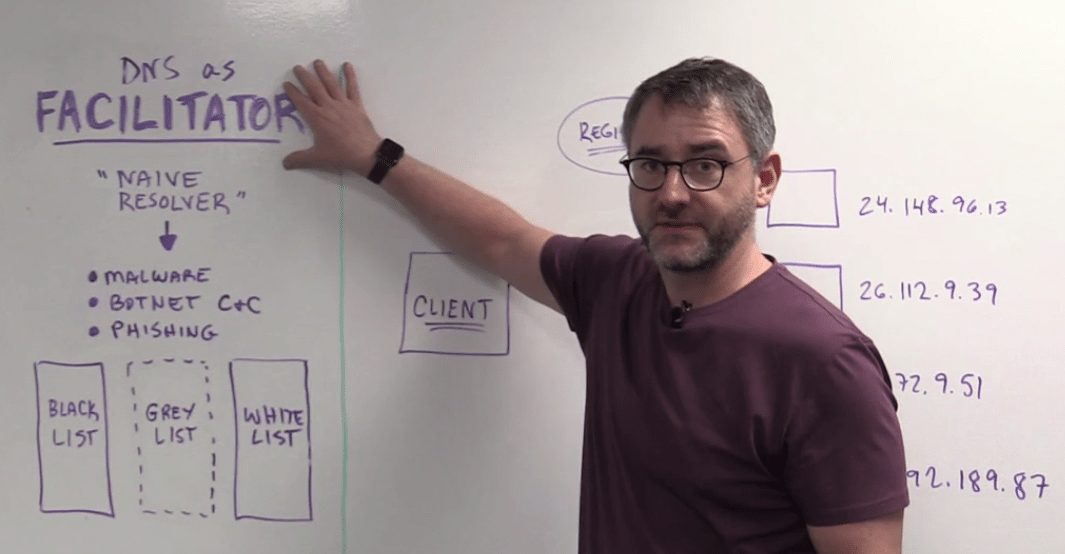
The first DNS persona in this 3-part series, DNS as Facilitator is the naive resolver in helping malware spread throughout your networks.
Read more