

Blog
DNS glossary

 Key takeawaysKey takeaways are generated with AI assistance. Because automated summaries can occasionally contain errors or miss important context, always refer to the full blog post for complete information.
A recursive query is a DNS request where the queried name server performs full name resolution on the client's behalf and returns either a final answer or an error, as opposed to a referral. The client signals this intent by setting the recursion desired (RD) flag in the DNS message header, and the resolver contacts other authoritative servers as needed, caching results and returning only the final outcome. Recursive resolvers are critical to application performance and availability, but require careful security hardening through access control lists to prevent abuse as open resolvers in denial-of-service attacks and protection against cache poisoning.
In a recursive query, the client sets the recursion desired (RD) flag in the DNS message header. The receiving server, if it offers recursion, takes on the work of resolving the name and returns only the final result.
The client sees one request and one response, however many servers the resolver contacts. A server may refuse recursion, in which case it answers only from its own data or returns a referral or refusal. Authoritative-only servers typically do not offer recursion.
A resolver that answers recursive queries from any source address can be used in reflection and amplification attacks. Restrict recursion with access control lists to internal client ranges and check that it is not reachable from the internet.
Clients receive REFUSED responses when their subnet is missing from the resolver's allowed list. This often appears after a new subnet is deployed and the access list is not updated.
After a restart or cache flush, every query becomes a cache miss and triggers a full walk from the root. Users see slow page loads until the cache warms again.
When an authoritative server for a zone is unreachable or returns lame delegations, the resolver cannot finish resolution and returns SERVFAIL. The client only sees a failure, so the fault is found by tracing the iterative queries on the resolver.
A resolver keeps answers until the TTL expires, so a changed record may not appear for some clients. Engineers see inconsistent results between resolvers after a change until caches expire or are flushed.

 Article
Responsible for providing the proper IP address of the intended domain name to the requesting host; the first servers contacted as the result of a request.
Article A DNS request that states, “Give me the answer or give me any information that will help me find the answer.” The nameserver will respond back from its cache or zone files but will not contact other DNS servers.
Article Demand for information sent from a user’s computer (DNS client) to a DNS server.
Article Provides original and definitive answers to DNS queries.
Article A setting for each DNS record that specifies how long a resolver is supposed to cache the DNS query before it expires.
Article Exploits the DNS protocol to tunnel malware and other data through a client-server model.
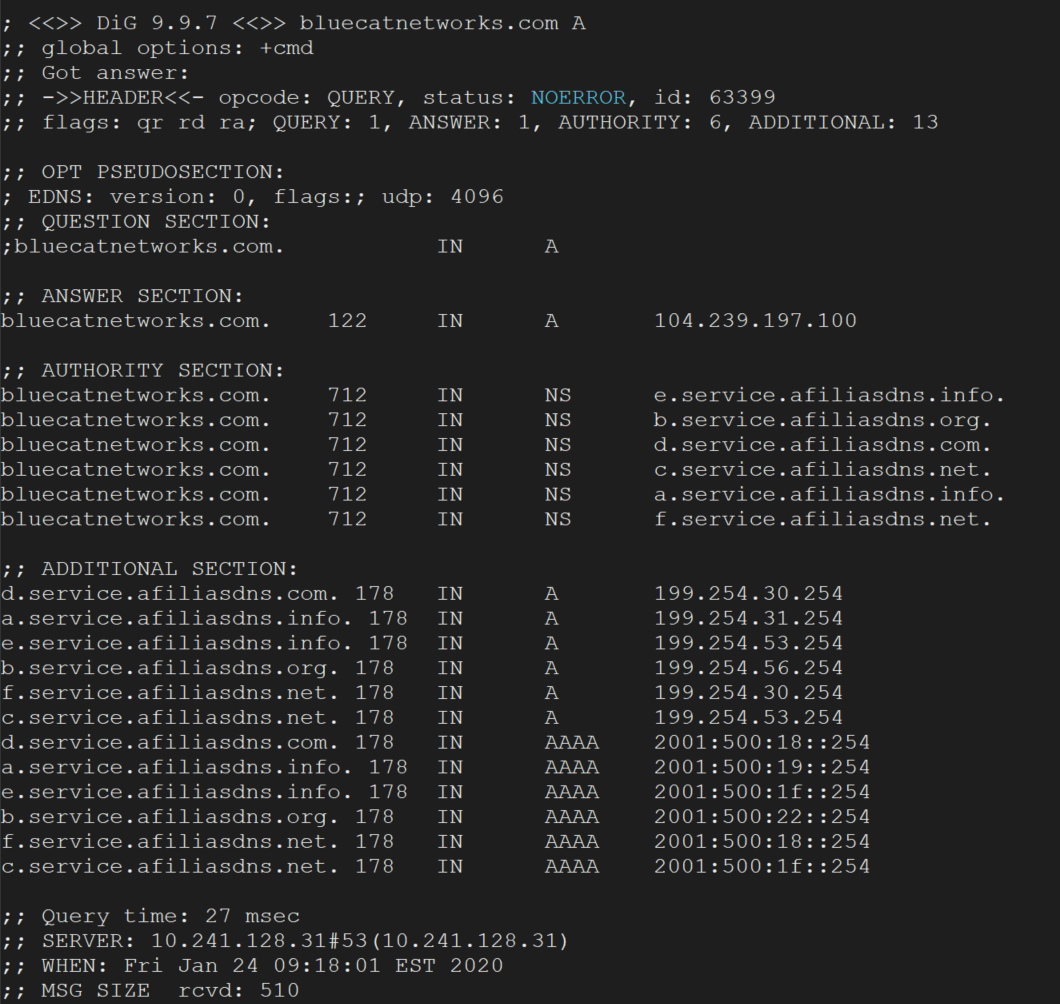
There are dozens of DNS record types. Understanding the most common ones can help you detect threats and keep on top of what's happening…
Read moreEvery DNS query gets a response. Stay on top of your network activity with BlueCat by understanding the four most common DNS response codes.
Read more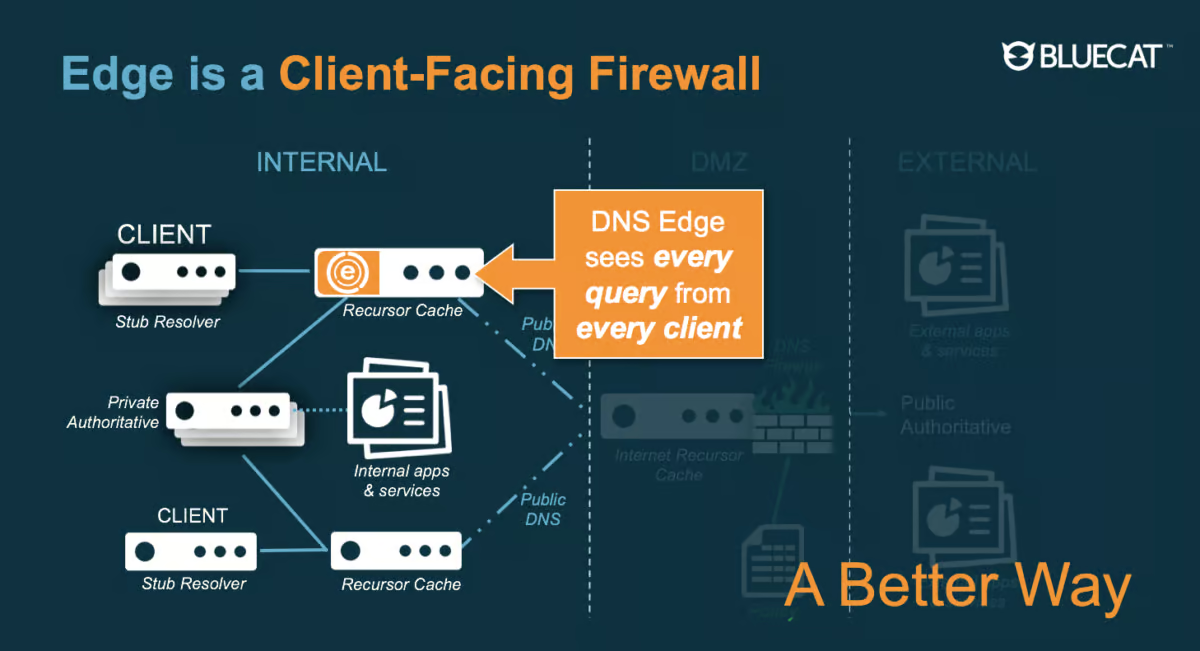
Learn why Adaptive DNS is the foundation for scalable, secure networks and critical to all of your digital transformation strategies.
Read more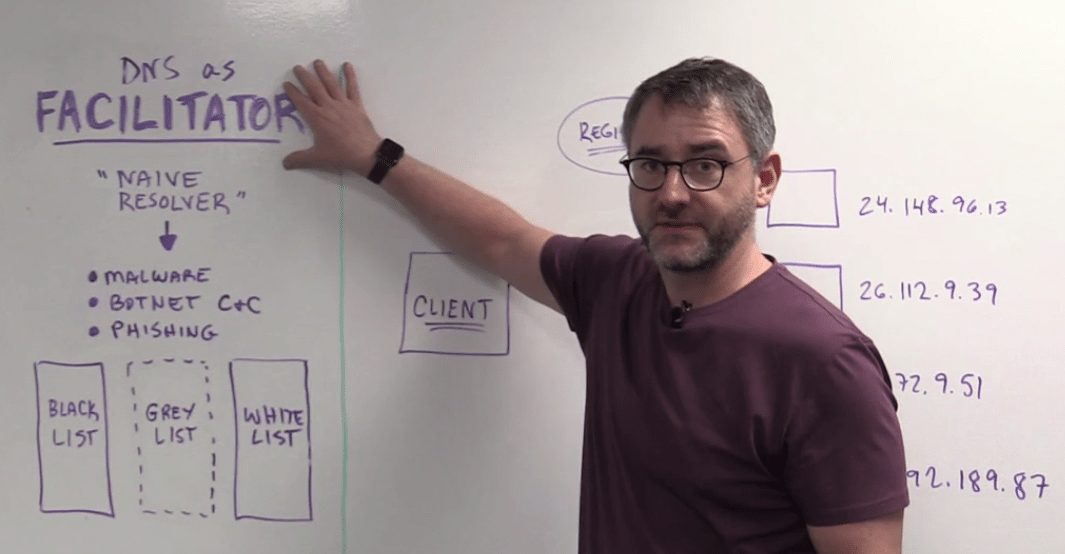
The first DNS persona in this 3-part series, DNS as Facilitator is the naive resolver in helping malware spread throughout your networks.
Read more
DNSSEC authenticates DNS queries and responses by using cryptographic digital signatures. Learn more and how BlueCat can help to make implementation easier.
Read more