
Blog
DNS glossary

 Key takeawaysKey takeaways are generated with AI assistance. Because automated summaries can occasionally contain errors or miss important context, always refer to the full blog post for complete information.
DNS delegation is a hierarchical mechanism that transfers authority for a subdomain to a separate set of authoritative name servers through NS records published in the parent zone, enabling the DNS namespace to scale by distributing management responsibility across organizations and teams. The process involves creating a child zone on target name servers, adding corresponding NS records in the parent zone, and optionally publishing glue records when a nameserver's hostname resides within the delegated subdomain. Poorly managed delegation is a common source of DNS failures—including lame delegations, mismatched NS record sets, missing glue, and broken DNSSEC chains—making regular audits and consistency monitoring essential to prevent intermittent outages and security risks.
Delegation works by placing pointers in the parent zone that tell resolvers where the child zone's authoritative servers are. The child zone then answers for every name beneath the delegation point.
The parent does not hold the child's data beyond the NS and glue records, so the child can change its records freely. The NS records in the child zone should match those in the parent, or resolution can become inconsistent. If DNSSEC is used, the parent also publishes a DS record to link the chain of trust to the child.
The parent lists NS records for servers that do not answer authoritatively for the child zone, often after a provider migration or a decommissioned server. Resolvers see SERVFAIL or timeouts on some queries, and failures look intermittent because they depend on which listed server is chosen.
The NS records in the parent differ from the NS records inside the child zone, usually because one side was updated and the other was not. Different resolvers cache different sets, so behavior varies and changes are slow to take effect.
A name server inside the delegated zone has no glue in the parent, or the glue holds an old IP address. Resolvers cannot reach the child servers, and the whole subdomain fails to resolve after a server renumbering.
The parent still holds a DS record for a key the child no longer uses, such as after a key rollover or a move to another provider. Validating resolvers return SERVFAIL for the subdomain while non-validating resolvers answer normally.

 Article
An NS record is a DNS record that provides a list of the authoritative name servers responsible for a domain.
Article A DNS glue record is an address record stored in a parent DNS zone that helps resolvers locate the authoritative name servers for a delegated domain.
Article A DNS zone is a contiguous portion of the domain name space for which administrative responsibility and authority have been delegated to a single manager.
Article An authoritative DNS server provides original and definitive answers to DNS queries.
Article A DNS namespace is the hierarchical structure of domains that form a complete domain name in the DNS system.
Article DNSSEC (Domain Name Service Security Extension) is a mechanism that uses cryptography to authenticate DNS data and verify the integrity of DNS queries and responses.
Article TTL (time to live) is a setting for each DNS record that specifies how long a resolver caches the DNS query before it expires.
Article A recursive DNS server is the first server contacted by a requesting host; it retrieves the proper IP address of the intended domain name and returns it to the requester.

DNSSEC authenticates DNS queries and responses by using cryptographic digital signatures. Learn more and how BlueCat can help to make implementation easier.
Read more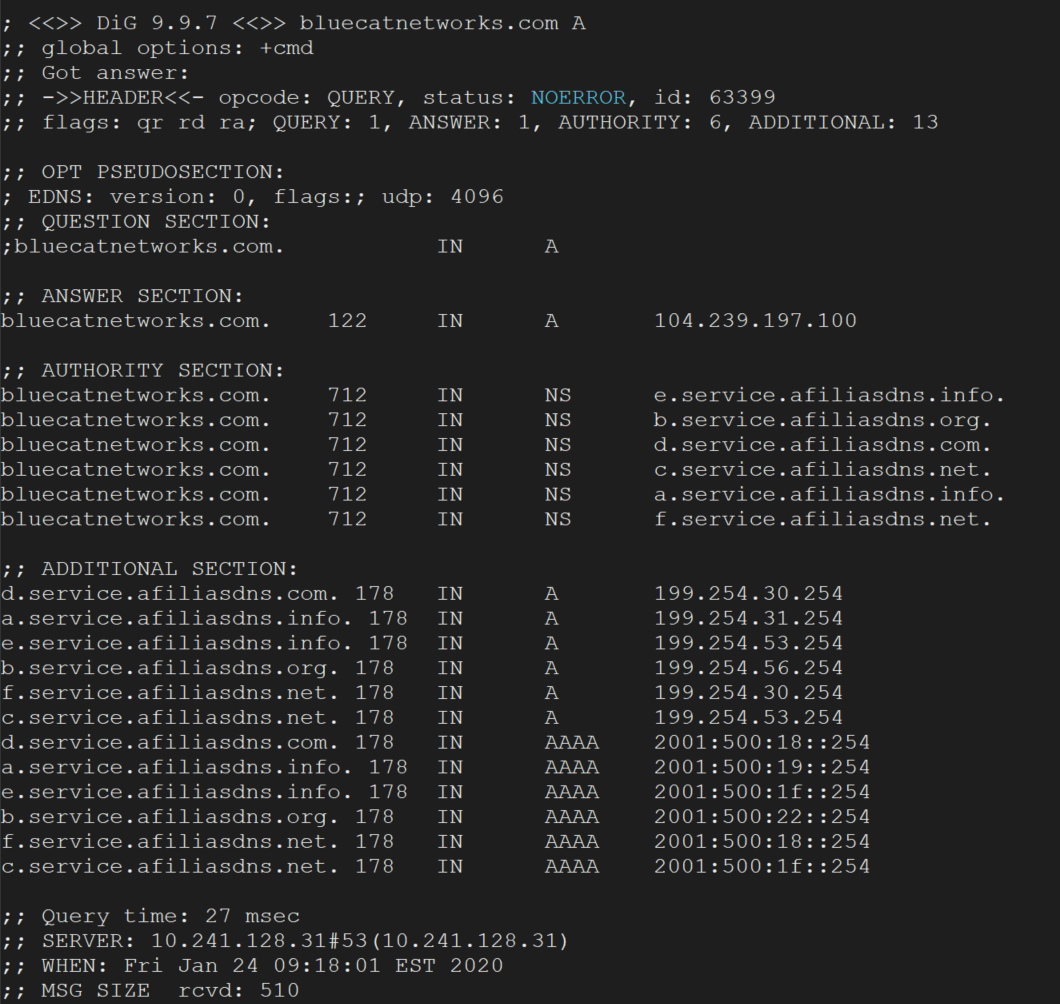
There are dozens of DNS record types. Understanding the most common ones can help you detect threats and keep on top of what's happening…
Read more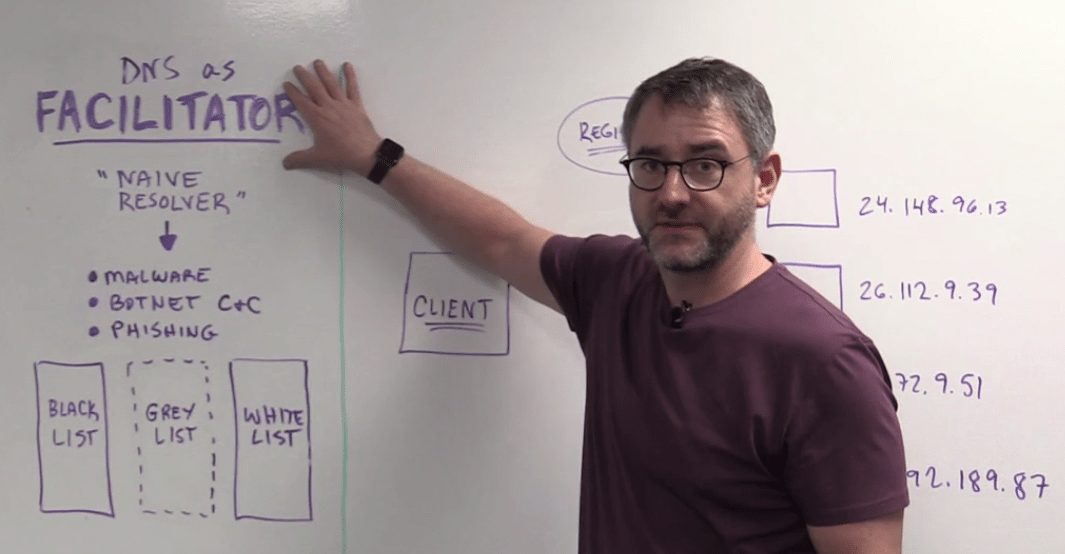
The first DNS persona in this 3-part series, DNS as Facilitator is the naive resolver in helping malware spread throughout your networks.
Read more
BlueCat’s intelligent DNS simplifies DNS management across environments, reduces complexity, and avoids costly errors.
Read more
Core Windows Server networking fundamentals keep DNS, DHCP, and AD reliable at scale while BlueCat Integrity centralizes visibility, automation, and control
Read more