

Know the eight most common DNS record types
There are dozens of DNS record types. Understanding the most common ones can help you detect threats and keep on top of what's happening…
Read moreA DNS glue record is an A or AAAA record published in a parent zone that provides the IP address of a name server whose hostname resides within the delegated child zone, resolving the circular dependency that would otherwise occur during DNS resolution. Glue records are essential for zones where name servers are named inside the zone they serve (such as ns1.example.com serving example.com), and they are managed through registrars or registry interfaces rather than from the child zone's own files. Stale, missing, or mismatched glue records cause real outages and inconsistent query results, making regular audits and updates critical to maintain zone reachability and prevent resolver failures.
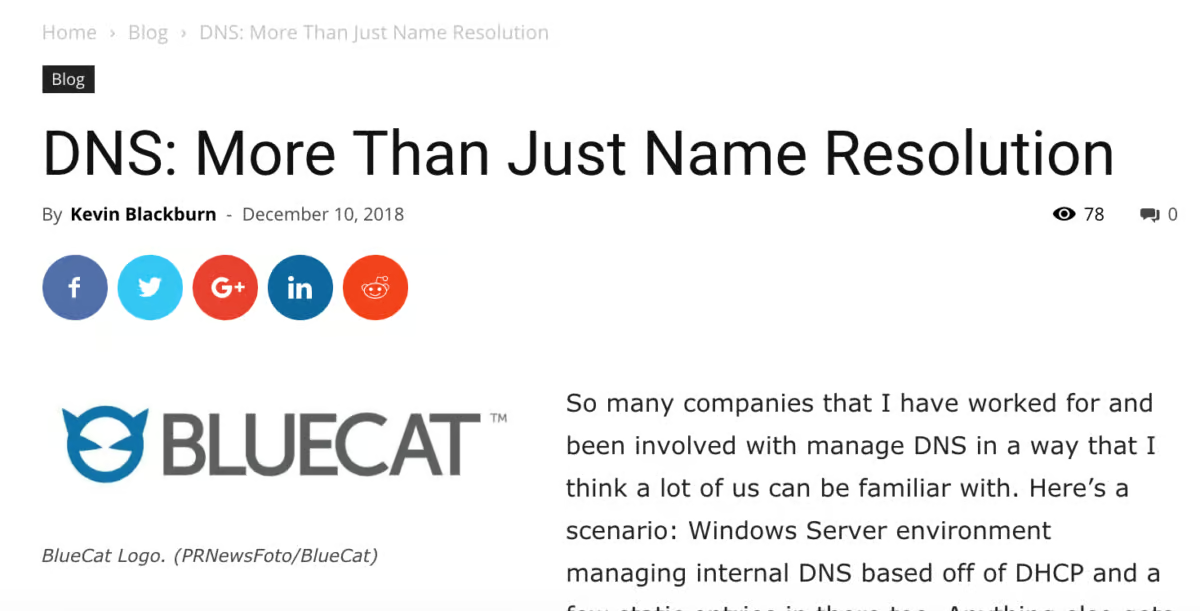
Glue is needed only when a delegated zone's name server has a name inside that same zone. The parent zone publishes the name server's address alongside the delegation so a resolver can continue without a circular lookup.
Without glue, the resolver would have to look up ns1.example.com, which requires reaching example.com's servers, which requires that very address. Name servers outside the delegated zone do not need glue, because their addresses can be resolved through other zones. Glue is held at the parent, typically through the registrar, and is not controlled from the child zone's own files.
A name server is given a new IP address and the child zone is updated, but the glue at the registrar is not. Resolvers following the referral go to the old address, so some queries time out while others succeed, depending on caching and which servers answer.
A delegation names ns1.example.com for example.com but no glue was supplied. Resolvers cannot find the server address without querying that server, so lookups fail with SERVFAIL or time out, and the zone appears unreachable.
The address in the parent glue differs from the A record in the child zone. Resolvers that trust the parent glue and those that later cache the child answer see different addresses, which produces inconsistent results that are hard to reproduce.
Glue is entered for name servers hosted in a different zone, such as a provider domain. The extra records go out of date when the provider changes addresses, and the parent may ignore or reject them.
Only an A record is registered for an in-zone name server that also answers over IPv6. IPv6-only resolvers cannot follow the referral to that server, so reachability varies by client network.