
Blog
DNS glossary

 Key takeawaysKey takeaways are generated with AI assistance. Because automated summaries can occasionally contain errors or miss important context, always refer to the full blog post for complete information.
An iterative query (also called a non-recursive query) is a DNS request where a nameserver returns either the best answer it has from its own data and cache or a referral to other nameservers closer to the answer, placing responsibility on the asking party to follow referrals. This design forms the foundation of global DNS distribution, allowing root and top-level domain servers to handle enormous query volumes by answering only from their own data rather than performing full resolution for every client. For network operations, understanding iterative queries is critical for proper server configuration, security hardening against DNS amplification attacks, and effective troubleshooting of resolution failures and intermittent DNS faults.
In an iterative query, the queried server answers only from what it already knows, such as its own zone data or cache. It never sends queries to other servers to complete the answer. The asking party is responsible for following any referral.
Recursive resolvers commonly use iterative queries when resolving names, starting at the root servers and working down through the top-level domain and the authoritative servers. An authoritative server that does not offer recursion behaves this way for every query it receives. Responses are cached according to record time to live values, which reduces repeat queries.
Some assume an iterative answer is always built from scratch. A server answering iteratively can answer from its cache as well as from zone data, and a recursive resolver relies on its cache to avoid repeating iterative lookups.
Stub resolvers on endpoints normally send recursive queries to a configured resolver. The iterative queries happen between the recursive resolver and the authoritative servers, so packet captures on a client rarely show referrals.
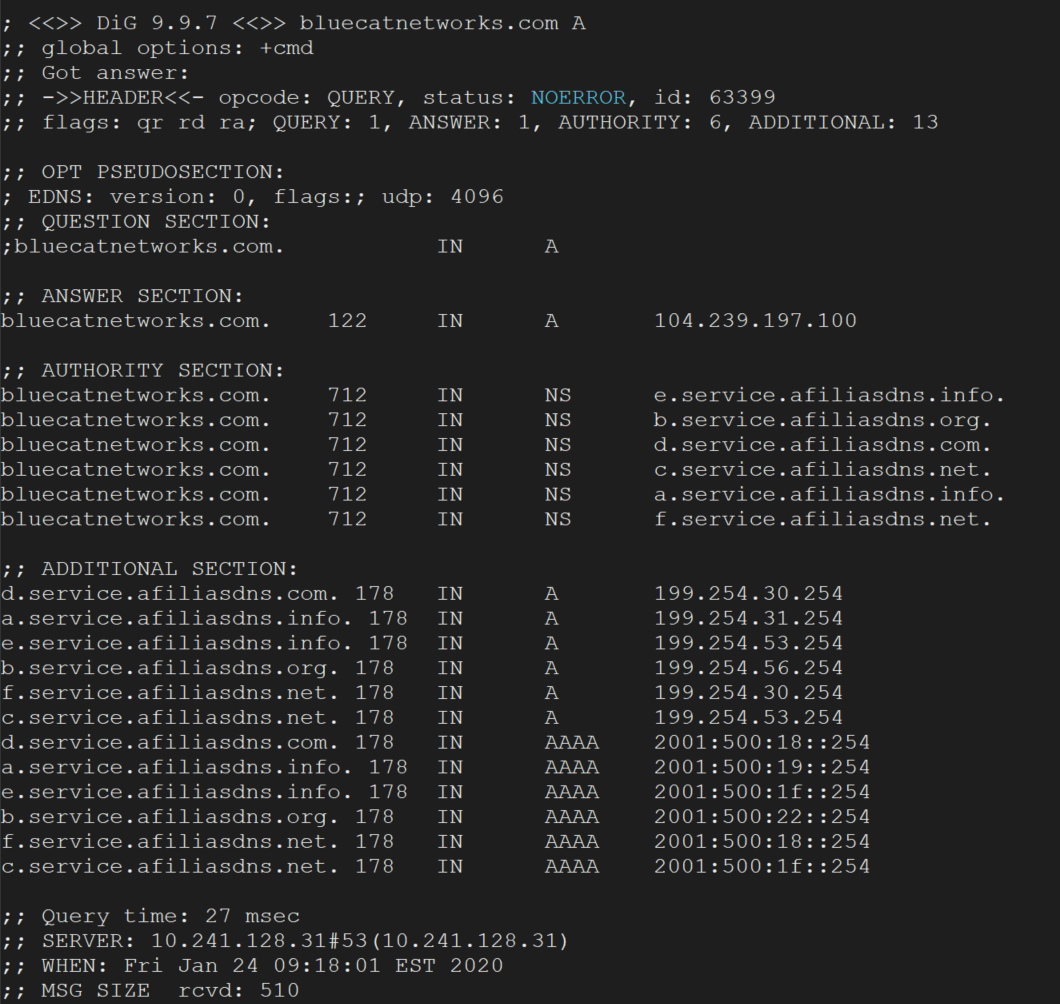
A response with no answer section but with NS records in the authority section is a normal referral. Engineers new to DNS sometimes read it as a broken server when it is the expected reply from a parent zone.
Enabling recursion on an authoritative server for convenience exposes it to abuse such as use in amplification attacks and mixes two roles. Best practice is to separate authoritative and recursive functions or restrict recursion to trusted clients.
A REFUSED response to a recursive query usually means the server will not recurse for that source, not that it answered iteratively. Checking the recursion available flag and access control lists on the server finds the cause.

 Article
A recursive query is a DNS query in which the DNS server retrieves the answer by querying other DNS servers on behalf of the requester and returns the result.
Article A recursive DNS server is the first server contacted by a requesting host; it retrieves the proper IP address of the intended domain name and returns it to the requester.
Article An authoritative DNS server provides original and definitive answers to DNS queries.
Article A DNS Root Server is a name server that answers requests for records in the root zone and directs other requests to authoritative name servers for appropriate top-level domains.
Article A DNS query is a request for information sent from a device to a DNS server asking it to resolve a domain name.
Article A DNS stub resolver is the component on a client device that initiates and facilitates DNS queries to recursive resolvers.
Article DNS delegation is the process of assigning responsibility for managing a domain or subdomain to separate authoritative DNS servers.
There are dozens of DNS record types. Understanding the most common ones can help you detect threats and keep on top of what's happening…
Read more
Many factors affect how you decide to set time to live (TTL) for DNS servers. Learn more, plus how BlueCat Edge's TTL features can…
Read moreEvery DNS query gets a response. Stay on top of your network activity with BlueCat by understanding the four most common DNS response codes.
Read more
At a basic level, an NXDOMAIN response means “that site does not exist.” But it can also provide critical clues about your network’s security.
Read more
How does DNS impact your digital transformation plans?
Read more