DNS Best Practices: Architectures that Work
DNS is a core network service. You’d be hard pressed to think of a service, public or private, that doesn’t rely on DNS at…
Read morePrivate DNS is a DNS deployment model that resolves internal resource names exclusively for clients on a private network, keeping internal zone data off the public internet through network controls such as firewall rules and routing. Organizations implement private DNS to prevent exposure of sensitive infrastructure like database hosts and management interfaces, while maintaining consistency of internal records across multiple sites, data centers, and cloud networks. Misconfiguration risks such as query fallthrough to public resolvers or stale records across disconnected systems can cause service failures and security exposure, requiring deliberate design, monitoring, and redundancy to ensure reliable name resolution and operational resilience.

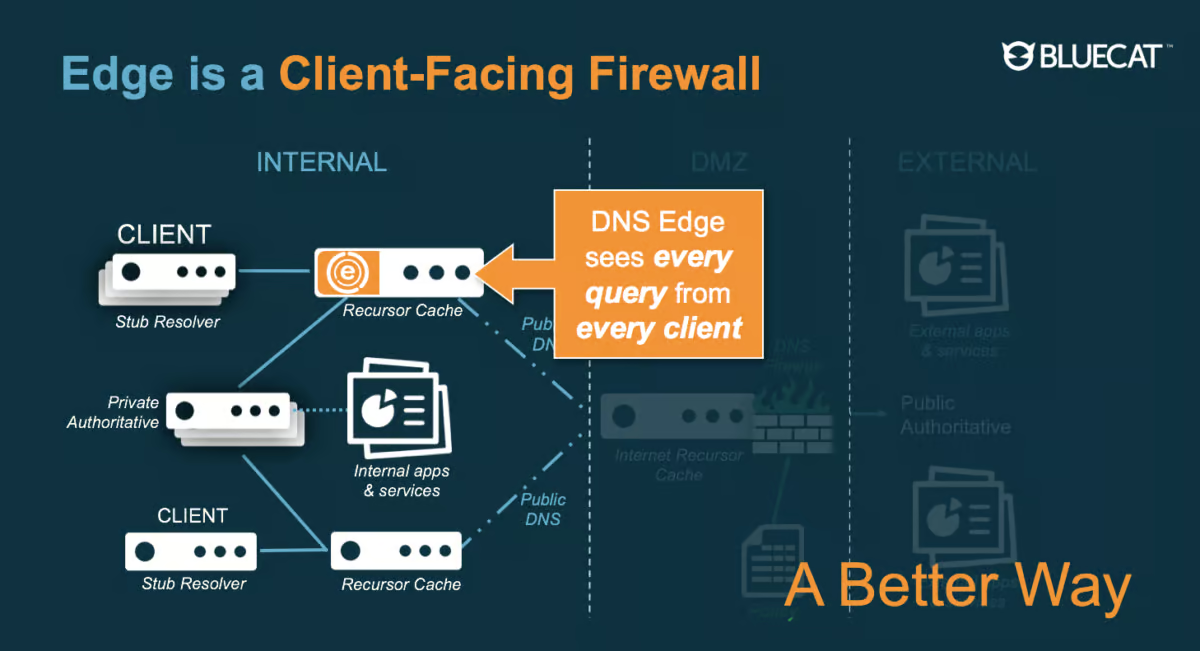
Private DNS works by directing internal clients to DNS servers that hold internal zones and are reachable only from the private network. Public names are still resolved, usually by forwarding.
Private DNS is a deployment choice, not a separate protocol. It uses standard DNS and relies on network controls, such as firewall rules and routing, to keep the servers reachable only from inside. Cloud providers also offer private zones that apply the same idea to virtual networks.
Devices configured with a public resolver, or browsers and operating systems using encrypted DNS to a public provider, cannot resolve internal names. Users see NXDOMAIN or timeouts for internal hosts while public sites work.
When internal zones are copied or edited by hand at several locations, records differ between servers. The same name resolves to different addresses depending on which site the client queries.
Workloads in cloud networks cannot resolve on-premises zones, and on-premises clients cannot resolve cloud private zones, when conditional forwarding is not set up in both directions. The symptom is name resolution failing only across the boundary.
Reverse zones for private address ranges are often not maintained alongside forward zones. Logs show raw IP addresses, and some applications fail PTR checks.
If only one internal DNS server is configured for clients, an outage or maintenance window breaks nearly every internal service at once. Redundant servers in separate failure domains prevent this.