



DNS, DHCP, and IPAM

What is DDI?

Stacked server blocks with interconnected blue network and service icons representing DNS/DDI infrastructure components

What do DNS, DHCP, and IPAM each do?

DNS, DHCP, and IPAM each handle one part of the same job: getting a device onto the network and making it reachable. IPAM is the plan, DHCP puts the plan into practice, and DNS makes the result findable by name. Each one depends on data the other two produce, which is why they are managed together.

IPAM plans addresses

IP address management defines subnets, ranges, and reservations, and records which device holds which address. It is the source of truth the other two services draw from, and the first place an engineer looks when an address is in question.

DHCP leases addresses

DHCP assigns addresses from defined scopes, along with the gateway, DNS servers, and domain a device needs, then renews or reclaims them over time. When a scope drifts from the IPAM plan, the result is conflicts or exhaustion.

DNS resolves names

DNS answers the first question every application asks: where is this name? Its A, AAAA, and PTR records point names to the addresses DHCP leases and IPAM tracks. When a lease changes and the record does not, connections fail.

DDI keeps them in sync

A standalone IPAM tool only records addresses. DDI connects the address plan, the lease, and the DNS record, so one change updates all three at once and every change leaves a history behind it that teams can audit.

How do DNS, DHCP, and IPAM work together?

When a device joins a network, DHCP leases it an address from a range IPAM has defined, DNS registers a name for it, and IPAM records the result. DDI keeps those three records in agreement automatically.

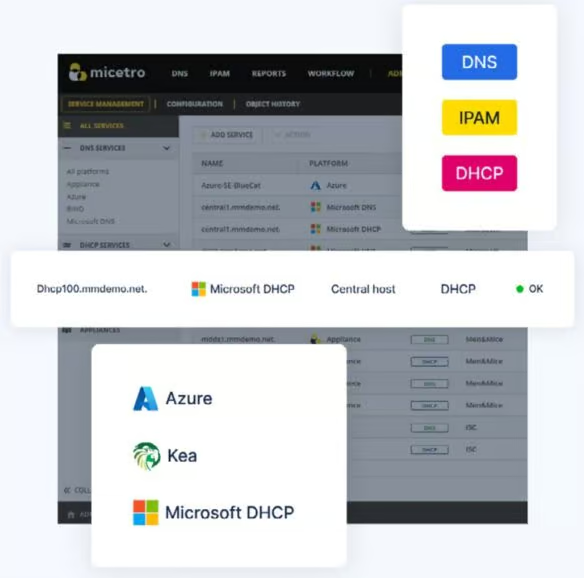
BlueCat interface showing integrated DNS, IPAM, and DHCP services with Azure, Kea, and Microsoft DHCP options

IPAM holds 10.20.4.0/24 for VLAN 20, reserves .1 to .20 for the gateway and servers, and hands .21 to .250 to DHCP as a scope.

A laptop joins VLAN 20 and gets 10.20.4.57 with an eight-hour lease, the gateway, DNS servers, and the domain corp.example.com.

A dynamic update creates an A record for laptop-jsmith.corp.example.com and a PTR record pointing back. Dual-stack networks add an AAAA record.

IPAM marks 10.20.4.57 as leased with the laptop’s MAC address, hostname, and lease expiry, and updates subnet usage.

Servers resolve the laptop by name, security traces the IP to an owner, and capacity reports stay accurate. If any record is off, all three break.

What breaks when DNS, DHCP, and IPAM are managed separately?

When the three services live in separate tools, their records drift apart. Addresses get assigned twice, names point to the wrong place, scopes run out without warning, and nobody can show who changed what.

Spreadsheet IPAM drifts from reality

IPAM says an address is free, but a device already holds it. Hand-updated spreadsheets can’t keep up with live leases, so duplicate IPs and failed deployments follow.

Scopes and DNS records fall out of step

Scopes are sized without the IPAM plan and DNS records aren’t cleaned up when leases change. The result is scope exhaustion, stale records, and outages hard to trace.

AD replication limits control and history

A record changed on one domain controller doesn’t appear on another. Native tools offer limited access control and change history, so audits stall and knowledge sits with one admin.

Forwarders and stub zones quietly go stale

Cloud and on-premises DNS are managed in separate tools, and conditional forwarders are never revisited. Lookups between environments slow down or fail, and cloud migrations stall.

Acquisitions bring overlapping IP space

Two networks arrive with the same private ranges and duplicate zone names. Integration stalls for months while teams reconcile subnets, rename zones, and rebuild forwarding by hand.

IPv6 outgrows any spreadsheet

A single /64 holds more addresses than a spreadsheet can track, and devices can self-assign outside DHCP. Dual-stack rollouts start with no reliable inventory of who owns what.

EMA found 98% of organizations say DDI plays a role in their network source-of-truth strategy. Far fewer get it right.

58%

40%

reported DDI-related security incidents

35%

call their DDI strategy completely successful

Do you need a dedicated DDI platform?

How does DDI relate to hybrid cloud and DNS security?

DDI is the foundation for both. Hybrid networks need one record of names and addresses across environments, and DNS security needs an accurate picture of what should exist before it can spot what shouldn’t.

Reconcile cloud and on-prem DNS

Cloud DNS zones and on-premises records usually live in separate tools. DDI gives them one shared record of names and addresses, so both sides stay consistent as workloads move between environments.

Keep split-horizon DNS accurate

Split-horizon views, conditional forwarders, and stub zones go stale when they’re managed by hand. Shared IPAM data keeps internal and external answers correct across every environment you run.

Treat DNS as an attack surface

Every device and application depends on DNS, so an unmanaged zone or rogue record is an exposure. A unified record makes unexpected changes visible before they turn into incidents.

Prove who changed what

Role-based access and full change history answer audit requests on demand. Native tools offer limited versions of both, especially across many domain controllers and sites.

Frequently asked questions

Find the right DDI approach for your network

Every network starts somewhere different. Pick the situation that sounds most like yours.

Micetro

I want to keep my existing servers

BlueCat Micetro is an orchestration overlay for Microsoft DNS and DHCP, BIND, Kea, and cloud DNS. It adds central control and change history without migrating services.

Learn more
integrity

Integrity

I’m ready to replace aging servers

BlueCat Integrity is a full-stack, API-first DDI platform that runs DNS, DHCP, and IPAM on one data model, built for large and high-availability networks.

Learn more

Horizon

I want DDI control from the cloud

BlueCat Horizon is a SaaS platform that orchestrates DDI across Active Directory, BIND, Kea, and cloud DNS, while services keep running locally.

Learn more

I’m leaving another DDI vendor

I’m leaving another DDI vendor

See how BlueCat approaches unified DDI and what moving off an appliance-based platform involves, from data migration to cutover planning.

Learn more

I need to automate DDI changes

I need to automate DDI changes

Connect DNS, DHCP, and IPAM to ServiceNow, Ansible, and Terraform so requests stop waiting in a ticket queue and every change follows policy.

Learn more

I need to make the business case

I need to make the business case

Break DDI modernization into the cost lines finance cares about: manual labor, outages, refresh cycles, and licensing.

Learn more

Read more